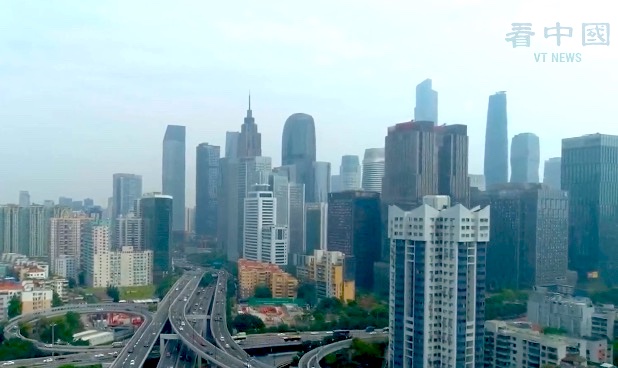
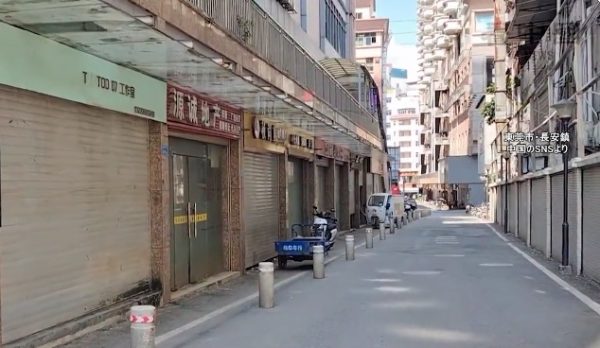
Changqing Street was once one of Dongguan’s busiest commercial areas. Today, it feels unusually quiet.
In a video shared online, a vlogger films the nearly empty street and asks where everyone has gone. The livestreamers who once crowded the sidewalks are nowhere to be seen. Shops close early. The lights that once stayed on late into the night are now turned off.
A similar scene appears in another video filmed on Tutang Street in Changping Town. “There’s almost no one here anymore,” the person filming says. “The streets feel deserted.”
For decades, Dongguan stood at the center of China’s manufacturing boom. Known as the “world’s factory,” the city drew millions of young migrant workers from across the country. Factory jobs were easy to find. Overtime was common. Wages were modest, but workers could still make ends meet.
That reality has gradually faded.
Success
You are now signed up for our newsletter
Success
Check your email to complete sign up
In recent years, Taiwanese-owned and foreign-invested factories have moved their production lines to Southeast Asia, drawn by lower costs and more predictable policies. What remains in Dongguan are industrial parks that once buzzed with activity but now sit largely empty.
Job seekers still move between labor markets and employment agencies, but the listings are sparse. Requirements are higher than before. Age has become a barrier. Skills that once guaranteed factory work no longer suffice. Many workers who relied on physical labor now find themselves quietly shut out.
With the Lunar New Year still more than a month away, more migrant workers are already heading home. The shortage of jobs has pushed many to leave earlier than usual.
Dongguan’s streets have thinned out. Rental apartments stand vacant. Even late-night food stalls are closing ahead of schedule. At train stations, under overpasses, and beside abandoned factory buildings, some workers are sleeping outdoors, wrapped in coats against the cold.
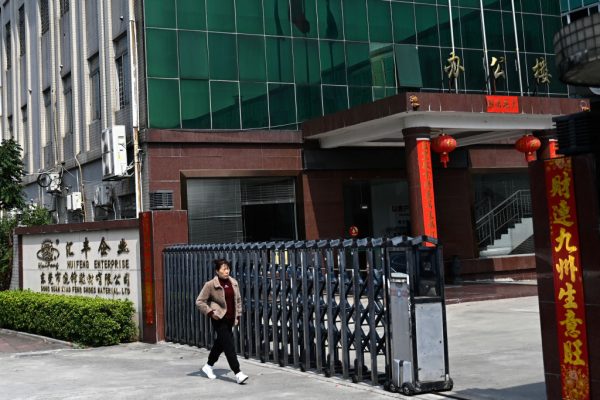
Nowhere else to go
They say they are not homeless. For now, they simply have nowhere else to go.
The nights are cold, and the ground is unforgiving. What weighs on them more heavily, according to those speaking in the videos, is the sense that there is no clear future ahead.
In multiple videos, vloggers describe what factory wages now look like in Dongguan. In smaller and mid-sized factories, monthly pay often falls between 3,000 and 4,000 yuan (USD $560 to $700) a month. Larger factories may offer 4,000 to 5,000 yuan, while salaries above 6,000 yuan (USD $860) have become rare.
“Don’t believe the online job ads claiming 6,000 or 7,000 yuan a month,” one vlogger warns. “Most of those are fake listings from dishonest labor brokers.”
The same vlogger runs a restaurant in Dongguan. He recalls how crowded the city once was. In Chashan, parking an electric scooter outside a shopping mall was nearly impossible. On weekends, Yihua North Road Pedestrian Street was so packed that shop owners had no time to bargain with customers.
Now, he says, the pedestrian street is nearly empty. Shopkeepers complain that hardly anyone comes by anymore.
Industrial parks tell a similar story
Industrial parks across Dongguan tell a similar story. Once symbols of manufacturing prosperity, many now stand half-vacant, their walls covered with “for lease” signs.
According to several vloggers, the rapid expansion of e-commerce has dealt a direct blow to traditional retail. Many estimate that more than 70 percent of brick-and-mortar shops have been forced out of the market.
At the same time, price competition on online platforms has intensified. Merchants cut prices to chase traffic, squeezing margins to the point where small and mid-sized factories can no longer survive. One by one, they shut down.
A restaurant owner recalls how last year’s National Day holiday brought a steady stream of customers. This year, she says, the store was nearly empty.
In another video, she describes how business has worsened month by month. After visiting nearby shops, she estimates that six out of ten are operating at a loss. Only a small number are breaking even or making modest profits. Most restaurants, she says, have only one or two tables occupied.
With the broader economy slowing, customers are spending more cautiously. The pressure has left her anxious and struggling to sleep.
Others point to rising living costs. In one video, a resident describes buying four apples for 30 yuan. A single loaf of bread costs 20 yuan. She says she no longer remembers when everyday prices became so high.
Another speaker claims that roughly 85 percent of street-level shops in Dongguan are losing money, while only a small fraction remain profitable. Staffing shortages mean that one person often does the work of two, she adds.

Why are people leaving Dongguan?
Low pay comes up repeatedly in the videos. Compared with last year, vloggers say the workforce has shrunk by more than half. Streets that once felt crowded on weekends now appear sparsely populated.
Many workers have returned to their hometowns, where life may be more stable and rent is not required. In Dongguan, many factories no longer provide meals or housing. Monthly wages are often just enough to cover basic expenses, leaving little room to save.
In a video recorded in December 2025, a migrant worker speaks from Dongguan East Railway Station at 2 a.m. He says the cold is biting and the wind is strong. He has no money for a bus ticket and cannot find work, so he sleeps at the station. He says he regrets coming to Dongguan and no longer knows what path lies ahead.
Xiao Wei, a worker from rural Yueyang in Hunan province, said he left Dongguan early after losing his job. By late November, he said, there were virtually no positions left. Many factories had either relocated or shut down.
He does not plan to return to Guangdong after the Lunar New Year. He says that although there is little work back home, at least he will not go hungry.
Once a symbol of China’s manufacturing rise, Dongguan is now watching its factories move out.
Yang, the owner of Borun Leather in Dongguan, said in a recent Douyin video that four major luxury-goods manufacturers, including Lita Group, Universal, Weishi Leather, and Times Group, have all relocated production to Southeast Asia. His own company invested 40 million yuan, or about 5.6 million U.S. dollars, to build a factory in Cambodia, which is now fully operational.
Yang said the decision was driven largely by uncertainty surrounding U.S. tariffs. Foreign brands, he said, are reluctant to place orders because they fear sudden tariff increases could erase their profit margins.
Dongguan’s largest shoe factory in Houjie, Oasis Footwear, has moved production to Vietnam. On November 18, Jinbao Electronics, a factory that once employed more than 10,000 workers and had operated in Chang’an for over two decades, also relocated its operations to Thailand.