By Gao Yun
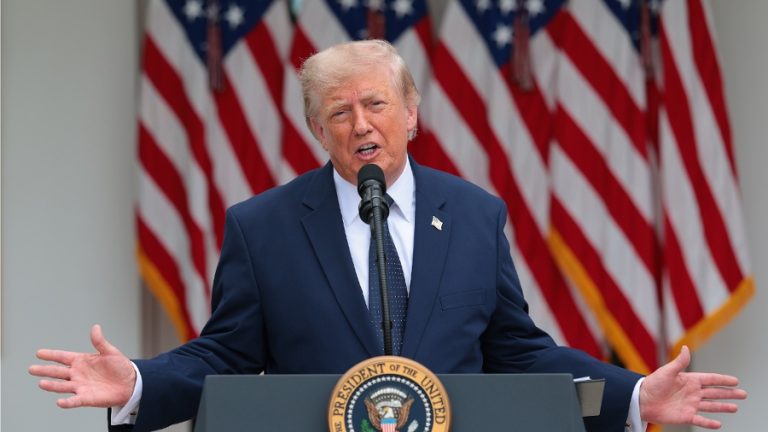
U.S. President Donald Trump has long warned that if Venezuela continues to be involved in transnational drug trafficking, the United States would take necessary actions, including military measures. Venezuelan President Nicolás Maduro, meanwhile, has repeatedly accused the U.S. of attempting to pressure him to step down.
On Saturday, Jan. 3, the U.S. launched a large-scale military operation in Venezuela and announced the capture of Maduro and his wife, Cilia Flores, who were then airlifted out of the country. U.S. Attorney General Pam Bondi stated that the couple will face charges under indictments in New York.
The White House also stated that the U.S. is in an armed conflict with transnational drug trafficking groups, with the operation aimed at cutting off drugs from entering the U.S. U.S. officials claim that the Maduro government has long tolerated or even supported international drug trade.
According to the Associated Press citing U.S. government data, since early September 2025, the U.S. military has carried out at least 35 known strikes on ships suspected of drug trafficking in South American and Caribbean waters.
Success
You are now signed up for our newsletter
Success
Check your email to complete sign up
To support these operations, the U.S. deployed its largest regional naval and air forces in recent years, including missile destroyers, amphibious assault ships, aircraft carriers, F-35 fighter jets, and submarines armed with cruise missiles.
Timeline of operations on Venezuela:
- January 20, 2025 — Trump signs an executive order allowing criminal organizations, including Venezuela’s drug trafficking group “Sun Cartel” and street gang “Tren de Aragua,” to be designated as “foreign terrorist organizations.”
- February 20 — The Trump administration officially lists eight Latin American criminal organizations as foreign terrorist organizations, providing a legal basis for subsequent military and law enforcement actions.
- August 19 – September 2025 — U.S. forces begin assembling near Venezuela, Caribbean, and South American coasts, deploying missile destroyers, amphibious assault ships, F-35 jets, and nuclear submarines carrying cruise missiles, with about 6,000 sailors and Marines aboard.
- September 2 — U.S. military conducts its first strike against a ship suspected of drug trafficking, reportedly operated by the “Tren de Aragua” gang, departing from Venezuela.
- Mid-September – Early October — Multiple strikes are carried out against suspected drug trafficking ships. Trump emphasizes that the operations target known smuggling routes to block cocaine and fentanyl entering the U.S.
- October 2 — According to an internal government memo obtained by the AP, Trump declares the “Sun Cartel” illegal combatants, confirming that the U.S. is in an “armed conflict” with the group.
- Mid-Late October — U.S. expands strikes to the Eastern Pacific, targeting suspected drug vessels.
- October 24 — The U.S.’s most advanced aircraft carrier, the USS Gerald R. Ford, is deployed to the region, marking a clear escalation in military deterrence.
- Early to Mid-November — U.S. military continues anti-drug operations in the Caribbean and Eastern Pacific, with over 20 known strikes carried out.
- November 11 — Venezuela announces large-scale military exercises, calling them defensive drills in response to U.S. military buildup.
- November 16 — USS Gerald R. Ford arrives in the Caribbean, increasing U.S. forces in the region to approximately 12,000 personnel. Defense Secretary Pete Hegseth names the operation “Operation Southern Spear.”
- December 4 — According to Southern Command, a 22nd strike in the Eastern Pacific against another suspected drug trafficking vessel results in four deaths.
- December 10 — U.S. seizes a tanker near Venezuelan waters carrying about 2 million barrels of heavy crude oil, alleging involvement in an “illegal oil network supporting foreign terrorist organizations.”
- December 15 — Southern Command announces strikes on three suspected drug ships in the Eastern Pacific, causing eight deaths.
- December 16 — Trump announces a blockade on all sanctioned tankers entering or leaving Venezuela, claiming Venezuelan oil is used to fund drug trafficking and other crimes.
- December 17–18 — U.S. military carries out additional strikes on suspected drug vessels in the Eastern Pacific, causing a total of nine deaths.
- December 20 — Secretary of Homeland Security Kristi Noem states that the Coast Guard, with Pentagon support, intercepted a second tanker near Venezuela. Trump confirms the Coast Guard is pursuing another tanker, labeled part of a “shadow fleet.” A U.S. strike in the Eastern Pacific results in four deaths.
- December 29 — Trump tells reporters that the U.S. struck a facility handling suspected drug shipments. He declines to reveal who conducted the strike, its location, or whether it occurred inside Venezuela.
- December 30 — Sources report the CIA conducts its first drone strike inside Venezuela targeting a suspected drug facility. Venezuela does not acknowledge the strike. Southern Command announces strikes on three more suspected drug vessels.
- December 31 — The U.S. sanctions four companies operating in Venezuela’s oil sector and designates four additional tankers as blocked property, claiming they are part of a large shadow fleet evading U.S. sanctions. Two additional strikes kill five individuals accused of trafficking along known drug routes.
- January 1, 2026 — Maduro states on national television that Venezuela is willing to negotiate with the U.S. on drug trafficking but insists Washington intends to replace his government.
- January 3, 2026 — The U.S. conducts a “large-scale strike” in Caracas, capturing Maduro and Flores and airlifting them out. Attorney General Pam Bondi states they will face charges under New York indictments. Maduro had already been indicted in 2020 on charges related to “drug terrorism.”
Trump, in a Fox News interview, compares the operation to U.S. strikes against Iran, saying, “I think this one may be more complicated. I’ve never seen anything like this.” He added that the attack was planned four days in advance and awaited optimal weather conditions.