By Li Jingyao
In the weeks following the Chinese Communist Party’s Fourth Plenum, a series of unusual developments in Beijing began to draw heightened attention from political observers, particularly those tracking elite power dynamics.
Within a single month, five senior officials at vice-ministerial rank or above in the Xinjiang region were removed, placed under investigation, or died under unexplained circumstances. All had previously served under Ma Xingrui during his tenure as the region’s Party secretary.
At the same time, a pattern of conspicuous appearances and silences among top figures — including a retired general’s unexpected return to view, the sudden disappearance of a former regional chief, and the temporary absence of the country’s top anti-corruption official — fueled speculation that these events were not isolated. Instead, overseas Chinese analysts and dissident commentators increasingly interpreted them as possible indicators of deeper stress within the Chinese Communist Party’s senior leadership.
A retired general’s unusual appearance sparks talk of military dissent
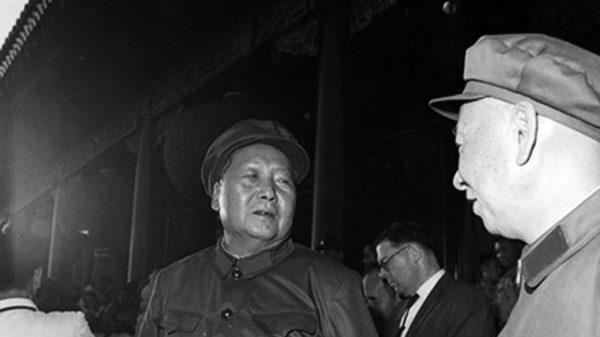
Liu Yuan, the son of former Chinese leader Liu Shaoqi, appeared publicly in Beijing on Nov. 20, the setting and symbolism immediately attracted attention among political observers. Liu, who retired from active military service in 2015 and had remained largely absent from public life for nearly a decade..
Success
You are now signed up for our newsletter
Success
Check your email to complete sign up
The occasion was a symposium marking the 110th anniversary of former CCP general secretary Hu Yaobang’s birth, held at the Great Hall of the People. More striking than Liu’s presence, however, was his attire: he appeared wearing a People’s Liberation Army uniform bearing full general insignia..
Under PLA regulations, retired officers face strict limitations on wearing active-duty uniforms. Liu’s decision to do so was therefore widely interpreted not as a ceremonial oversight, but as a deliberate political signal. As Xi Jinping delivered remarks at the event, Liu sat expressionless among the audience.
Among overseas Chinese commentators, interpretations varied. Some viewed the appearance as a symbolic invocation of Hu Yaobang’s reformist legacy; others saw it as a subtler reminder that military authority in China has historically rested on collective elite consensus rather than personal loyalty to a single leader. More speculative voices suggested Liu may now play a quiet coordinating role among veteran party and military figures — claims that remain unverified but persistent.
A senior Xi ally vanishes from key meetings
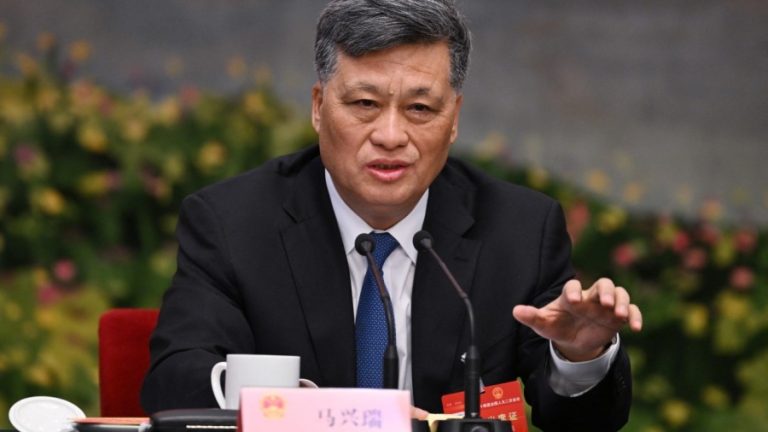
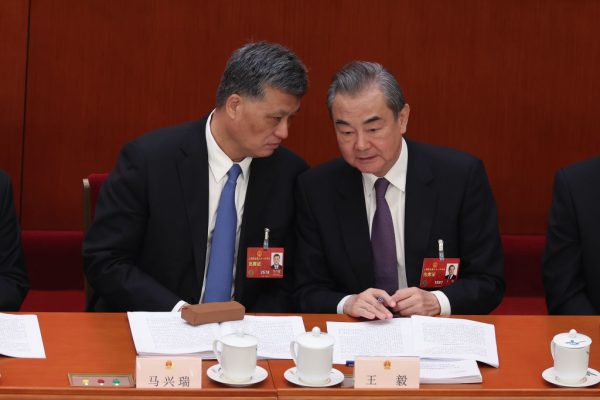
If Liu Yuan’s appearance raised eyebrows, Ma Xingrui’s absence raised alarms.
On November 28, Ma failed to appear at a Politburo collective study session, despite his name appearing first in the official attendance roster. State media footage instead showed Foreign Minister Wang Yi seated prominently at the front. In China’s tightly choreographed political system, such discrepancies are rarely accidental.
Ma was also absent from a Politburo meeting on December 8, and from the Central Economic Work Conference held days later — one of the most consequential annual gatherings for China’s economic leadership. These absences followed his abrupt removal as Party secretary of Xinjiang in July, after which authorities announced only that he would assume “another assignment.”
Five months later, no such assignment has materialized. In elite Chinese politics, prolonged silence often speaks louder than formal announcements. Rumors that Ma is under investigation have circulated steadily online, though no official confirmation has been issued.
Yuan Hongbing, a legal scholar based in Australia known for commentary on CCP elite politics, told Vision Times that Ma’s predicament reflects what he described as a gradual erosion of centralized authority. Yuan claimed that Ma had reached political understandings with senior military figures through family channels, pledging support should Xi Jinping’s position weaken.— assertions that cannot be independently verified but have gained traction in dissident discourse.
Money, weapons, and power: allegations behind the official’s fall
Speculation surrounding Ma’s fall has coalesced around two main lines of allegation.
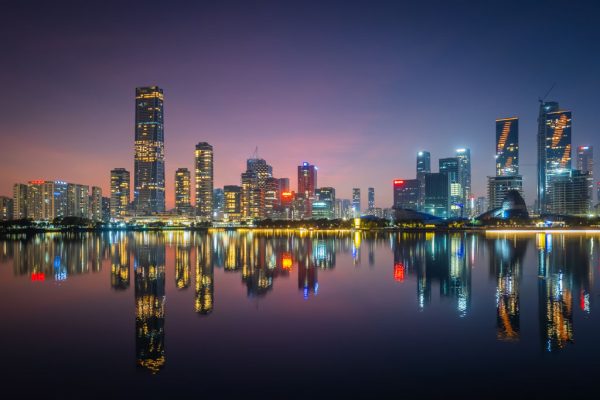
The first concerns Shenzhen Metro’s massive 2016 investment in China Vanke, completed while Ma served as Shenzhen Party secretary. As Vanke’s financial position deteriorated in subsequent years, Shenzhen Metro reportedly absorbed losses running into the hundreds of billions of yuan. Critics have questioned whether political influence or family connections played a role in the deal’s approval and structure.
The second line of suspicion focuses on Ma’s earlier career in China’s defense and aerospace sector, where he spent more than a decade. Recent anti-corruption probes in that industry have cast a shadow over former executives and officials alike, fueling speculation that Ma may be implicated.
More extreme allegations have circulated online. Anti-CCP blogger Jiang Wanzheng has claimed that Ma controlled infrastructure funds totaling 3.3 trillion yuan during his tenure in Xinjiang and diverted more than 100 billion yuan for personal use, allegedly sharing proceeds with figures including Peng Liyuan and Li Xi. These claims remain unverified and illustrate the rumor-saturated environment that often surrounds elite political struggles in China.
A chain of purges targets those linked to the disgraced official
Whatever the truth of the allegations, events in Xinjiang have followed a familiar and ominous pattern.
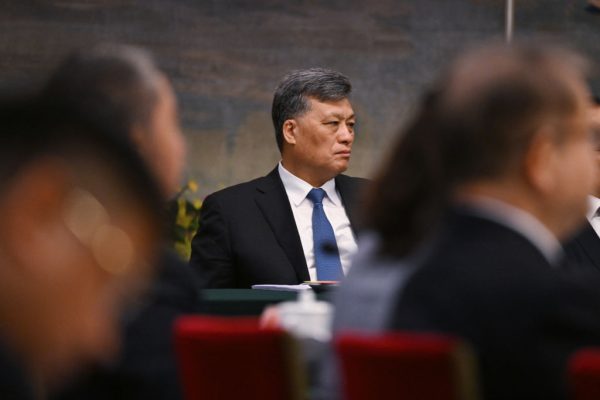
After a central inspection team entered the region in late July, a cascade of cases quickly followed.Within weeks, five senior officials at vice-ministerial rank or above were removed, investigated, or died under unusual circumstances. All had worked closely under Ma Xingrui during his tenure as Party Secretary.
Among them were Liu Chen, deputy head of Xinjiang’s Political and Legal Affairs Commission; Jin Zhizhen, a vice-chairman of the regional political advisory body; Jiang Xinjun, discipline chief of the Xinjiang Production and Construction Corps; Urumqi deputy Party secretary Ma Zhijun; and Xinjiang executive vice governor Chen Weijun.
Chen’s case drew particular attention because of his close working relationship with Ma during his time as Xinjiang Party secretary. The sequence was widely interpreted as a political warning — not only to Ma, but to those still connected to his network. In China’s patronage-based system, the destruction of subordinates often precedes or accompanies the fall of the patron himself.

Why this case raises alarms about Xi Jinping’s hold on power
Despite the collapse of several associates, Ma is believed to retain influence across multiple regions and systems, including Jiangsu, Zhejiang, Hainan, Sichuan, Xinjiang’s bureaucracy, and parts of China’s aerospace and manufacturing sectors.
Crucially, Ma’s rise has long been associated with perceived ties to both Peng Liyuan and Xi Jinping’s family. For that reason, any formal move against him would reverberate far beyond his personal career.
Political commentator Tang Jingyuan argued that the earlier downfall of senior military figures such as He Weidong already signaled strain in Xi’s control over the armed forces. A case against Ma, he suggested, would indicate weakening authority over personnel decisions— the core mechanism through which power is exercised in the CCP.
Some analysts believe Ma could become the first sitting Politburo member to fall in 2026, a development that would strike at the symbolic heart of Xi Jinping’s governing model.
Another senior leader reappears, but rumors persist
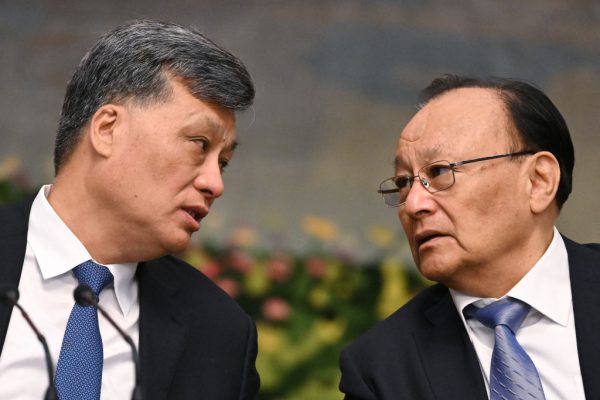
Li Xi, a Politburo Standing Committee member and head of the Central Commission for Discipline Inspection, also drew attention after missing several high-level meetings. His absence fueled speculation tha teven figures responsible for enforcing discipline were not immune from suspicion.
Those rumors subsided somewhat when Li appeared at the Central Economic Work Conference in December. Yet his return did little to dispel online allegations linking him to Ma’s case through family business ties in Guangdong and Hong Kong — claims that remain unsubstantiated.
Commentator Wu Jianmin noted that while Li’s appearance quieted immediate speculation, it did not resolve deeper questions.Producer Li Jun framed the issue more starkly: real power in the CCP, he argued, lies not in speeches or public visibility, but in control over personnel. Once that control erodes, authority over the military and bureaucracy soon follows.
With allies in both the civilian and military systems reportedly falling in succession, Ma Xingrui’s fate has come to be seen as a critical test of whether Xi Jinping still commands the party’s most essential levers of power.