News analysis
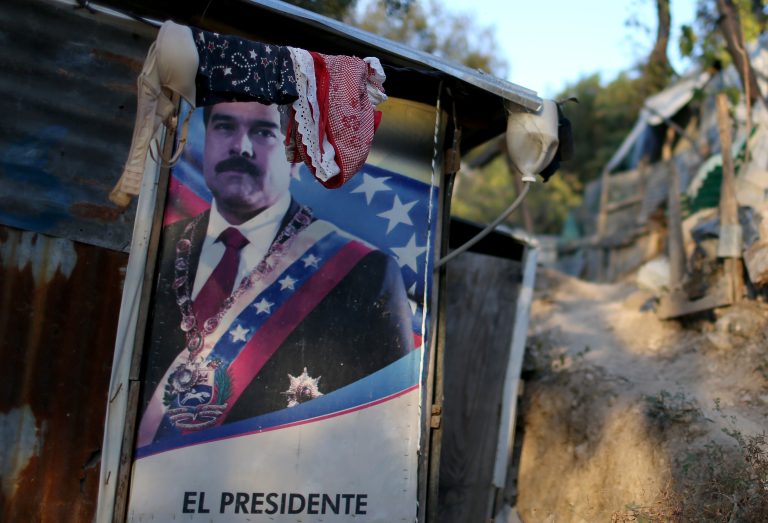
The United States’ dramatic seizure of Venezuelan leader Nicolás Maduro has sent shockwaves far beyond Caracas, exposing vulnerabilities in China’s overseas influence, gieven the deep ties between Beijing and the South American socialist country.
In the early hours of Jan. 3, U.S. forces conducted a nighttime raid on Caracas, Venezuela’s capital, that resulted in the capture of Maduro and his wife, Cilia Flores, in an operation lasting roughly two hours and 20 minutes. Forty-eight hours later, both appeared in federal court in New York, where they pleaded not guilty to charges including narco-terrorism conspiracy, cocaine importation, and weapons offenses.
Speaking at a midday press conference on Jan. 3, U.S. President Donald Trump said Washington would temporarily oversee Venezuela’s transition, and named Secretary of State Marco Rubio to help head the effort.
“We are going to run the country until such time as we can do a safe, proper, and judicious transition,” Trump said. He added that major U.S. oil companies would move in to repair Venezuela’s “badly broken” oil infrastructure and warned that the United States was prepared to conduct “a second and much larger attack if we need to do so.”
Success
You are now signed up for our newsletter
Success
Check your email to complete sign up
Trump also indicated that China and other countries would continue to have access to Venezuelan oil. “We’re going to get the oil flowing the way it should be,” he said.
Political recalibration
Venezuelan Vice President Delcy Rodríguez, sworn in as acting president following Maduro’s capture, initially struck a defiant tone, derspite Trump’s claims that she would cooperate with Washington. In a televised address on Jan. 3, she called Maduro the country’s “only president” and said U.S. actions constituted “an atrocity that violates international law.”
Within 24 hours, however, Rodríguez softened her stance. In a statement released Jan. 4, she said Venezuela considered it “a priority to move toward a balanced and respectful relationship between the U.S. and Venezuela,” extending “an invitation to the U.S. government to work together on an agenda for cooperation.”
The Wall Street Journal reported on Jan. 5 that the CIA had assessed Rodríguez, along with Interior Minister Diosdado Cabello and Defense Minister Vladimir Padrino, as the figures best positioned to govern Venezuela in Maduro’s absence.
U.S. Secretary of State Marco Rubio underscored Washington’s strategic intent in an interview with NBC on Jan. 4. “You can’t turn Venezuela into the operating hub for Iran, for Russia, for Hezbollah, for China,” Rubio said, arguing that adversaries should not control energy assets in the Western Hemisphere.
Beijing caught off guard
Hours before the raid, Maduro had met with Qiu Xiaoqi, China’s special representative for Latin American and Caribbean affairs, at the Miraflores Presidential Palace. According to Venezuelan state media, Maduro reaffirmed strategic ties with Beijing and pledged to help build a “multipolar world of development and peace.”
Asked about the meeting in an interview with Fox News, Trump downplayed the issue. “I have a very good relationship with Xi, and there’s not going to be a problem,” he said. “They’re going to get oil.”
China’s official response was swift but largely rhetorical. On Jan. 3, a Chinese Foreign Ministry spokesperson said Beijing was “deeply shocked” and “strongly condemns” what it called the United States’ “blatant use of force.” The following day, Foreign Minister Wang Yi warned against “unilateral bullying” during talks with Pakistan. On Jan. 5, President Xi Jinping made a veiled reference to the incident during a meeting with Irish Prime Minister Micheál Martin, criticizing “unilateral acts of hegemony.”
Why Venezuela Matters to China
China and Venezuela have had close ties going back to the early 2000s, when Venezuela elected its left-wing socialist leadership under the late Hugo Chavez. In 2023, Beijing and Caracas upgraded their relationship to an “all-weather strategic partnership.”
China is Venezuela’s second-largest trading partner and one of its biggest oil customers. According to analytics firm Kpler, China accounted for more than half of Venezuela’s crude exports — about 768,000 barrels per day — in 2025, representing roughly 4 percent of China’s total oil imports.
Beijing has also been a major lender, extending more than $60 billion in oil-backed loans between 2007 and 2015, with roughly $10 billion still outstanding, according to AidData. Venezuela has additionally been China’s largest arms client in the Americas, purchasing nearly $500 million in weapons over the past decade, according to CSIS and SIPRI data.
According to SinoInsider, a China-focused risk consultancy, Beijing’s early reaction suggests it was genuinely surprised by Washington’s move. The decision to proceed with a high-level diplomatic meeting only hours before Maduro’s capture points either to an intelligence failure or to flawed risk assessment within China’s foreign-policy apparatus.
SinoInsider argues that while Beijing is likely to escalate propaganda accusing Washington of “hegemonism” and “imperialism,” its practical options are limited. The speed and success of the U.S. operation highlighted a vast gap in global power-projection capabilities, reinforcing the reality that China cannot offer meaningful political or military protection to distant partners.
The greater concern for Beijing, SinoInsider notes, is not oil access — which Trump has said will continue — but whether a Rodríguez-led or successor government pivots decisively toward Washington. Such a shift could lead to the dismantling of Chinese telecommunications networks, satellite facilities, and intelligence infrastructure in Venezuela, undermining years of Chinese investment and influence across Latin America.
The episode may also prompt internal reassessment within the People’s Liberation Army. Venezuela had recently deployed Chinese-made JY-27A radar systems, which failed to detect or deter the U.S. raid. SinoInsider suggests Beijing may study the operation closely, both to evaluate its own military technologies and to reassess the feasibility of similar “decapitation” strategies elsewhere.
Broader implications
In a Jan. 8 newletter entry, SinoInsider anlaysts wrote that the capture of Maduro represents a net loss for Beijing’s strategic position in the Western Hemisphere. Should Washington succeed in fostering a pro-U.S. government and systematically rolling back Chinese influence under what Trump has called a “Trump Corollary” to the Monroe Doctrine, decades of Chinese effort in Latin America could be undone.
The original Monroe Doctrine stressed that no foreign powers could be allowed to establish hegemonic influence over countries in the Western Hemisphere save the United States, so as to ensureAmerica’s national security on the global stage.
However, the outcome of Maduro’s arrest remains uncertain. The setback for Beijing might not necessarily be a clear win for the Trump administration. Beijing could recover ground if U.S. follow-through falters, domestic U.S. politics intervene, or regime change in Caracas fails. Until then, the incident stands as a stark reminder of the limits of China’s global reach — and of the enduring leverage Washington retains close to home.
Leo Timm contributed to this report.