By Yang Tianzi
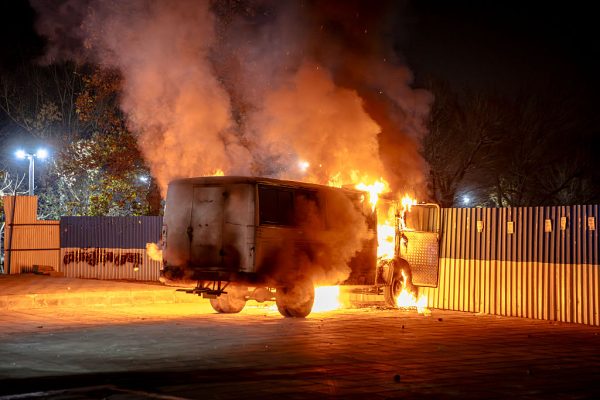
Iran is experiencing an unprecedented nationwide protest movement. The demonstrations, now in their 13th day, are testing the stability of the Islamic Republic regime. According to the latest statistics from the U.S.-based Human Rights Activists News Agency (HRANA), the protests have resulted in at least 65 deaths and 2,311 arrests, with protest activities spreading across 512 locations in 180 cities in all 31 provinces.
According to media reports on Jan. 10, nighttime protests in Tehran and cities large and small nationwide continue, despite large-scale internet shutdown measures imposed by authorities to sever communication among demonstrators and block related information from reaching the outside world. However, these repressive measures do not appear to have fully contained the spread of protests. On the contrary, the response of Iran’s security forces is clearly escalating, including the use of live ammunition, tear gas, and shotguns, along with judicial threats against participants, in an attempt to intimidate the public and sap the momentum of the movement.
The international impact of the crisis is gradually emerging. Several governments have issued official travel warnings for Iran, and some international flights have been disrupted or forced to return, reflecting growing global concern over the situation.
On the social media platform X, a verified account frequently sharing military information, NSTRIKE, reported that a U.S. Air Force C-17 strategic transport aircraft was flying from Germany to the Middle East. This immediately sparked speculation that the United States may be preparing for potential military action, sending ammunition and other equipment to bases in the region.
Exiled Iranian crown prince calls for larger protests
Success
You are now signed up for our newsletter
Success
Check your email to complete sign up
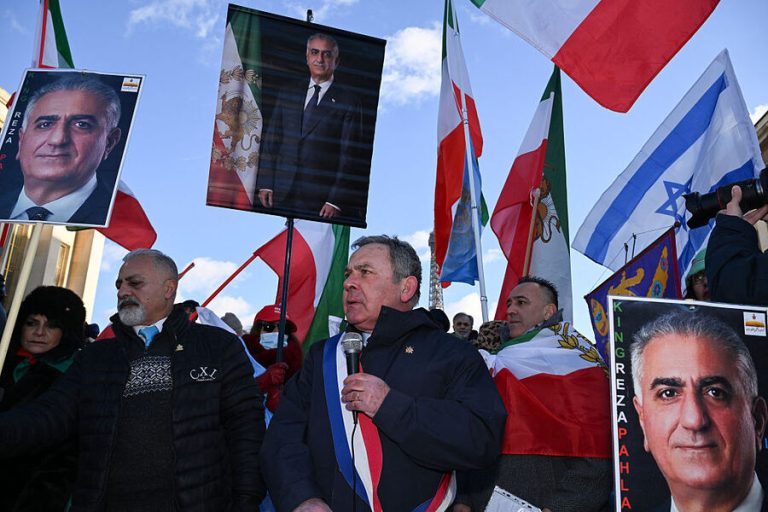
Amid the crisis, one figure has again stepped into the spotlight — 65-year-old Reza Pahlavi, the son of Iran’s last shah and the exiled crown prince. On Jan. 8, he called via social media for even larger protests, saying recent mobilization was “unprecedented,” adding he had received information that “the regime is deeply afraid and once again trying to cut off the internet.” The former crown prince, who lost his claim to the throne during the 1979 Islamic Revolution, is seeking to turn current unrest into an opportunity to re-enter Iran’s political arena.
Reza Pahlavi’s life trajectory is itself a dramatic story of exile. Born in October 1960 in Tehran, he was raised as heir to the Peacock Throne, enjoying royal privilege, private tutors, and training intended to safeguard the dynasty. At 17, he was sent to Texas for fighter pilot training, but before he could complete it and return to serve, the 1979 Islamic Revolution toppled his father. From abroad he watched his father, Mohammad Reza Pahlavi, unsuccessfully seek asylum, eventually dying of cancer in Egypt. With the sudden collapse of the regime, the young crown prince and his family instantly lost their nationality and survived with the help of royal supporters and sympathizers in exile.
Over subsequent decades, tragedy struck repeatedly. His sister and brother both committed suicide, leaving him the symbolic head of the dynasty, even as many considered that dynasty consigned to history. Today he lives a relatively low-key life near Washington, D.C., often visiting local cafés with his wife Yasmine, seldom accompanied by bodyguards. Supporters describe him as approachable, but whether this down-to-earth image can be translated into real political influence remains an open question.

Evolution of political stance
Reza Pahlavi’s political stance has clearly evolved in recent years. In 2022, when asked by a passerby whether he saw himself as leader of Iran’s protest movement, he and his wife answered in unison: “Change must come from within.” The cautious tone reflected an awareness of his own limitations. Yet as Iran’s situation developed, his language hardened. After an Israeli airstrike in 2025 killed several senior Iranian commanders, he said at a Paris press conference that if the Islamic Republic were to fall, he was prepared to help lead a transitional government.
This marked a major shift in strategy. He insists his current confidence comes from lessons learned in exile and from what he calls his father’s “unfinished mission.” Speaking in Paris, he stressed: “This is not about restoration, but about ensuring a democratic future for all Iranians.” He said he hopes to help Iran move toward free elections, rule of law, and women’s rights, and that whether to restore the monarchy or create a republic should be decided by a nationwide referendum.
Yet his political legacy is controversial. For some, the Pahlavi era evokes rapid modernization and close ties with the West; for others, it recalls censorship and the feared secret police SAVAK, notorious for suppressing dissent and human rights abuses. In 1980 he held a symbolic coronation ceremony in Cairo and proclaimed himself shah—an act critics say undercuts his current message of democratic reform.
Over the years, he has made multiple attempts to form opposition alliances, including the 2013 creation of the “National Council for Free Elections in Iran,” but most faltered due to internal disagreements or inability to expand influence inside Iran. Unlike some exiled opposition groups, he has consistently rejected violence and kept his distance from armed groups such as the Mujahedin-e Khalq, repeatedly advocating peaceful transition—earning moral stature but limiting his influence among more radical factions.
Critics argue that after more than 40 years in exile, he has still failed to build a solid organization or independent media platform, making it difficult to convert personal visibility into real political power. During the nationwide protests triggered by the 2022 death of Mahsa Amini in police custody, he briefly gained global media attention and tried to unite Iran’s fragmented opposition, but was ultimately unable to maintain momentum.
Dilemma of international relations
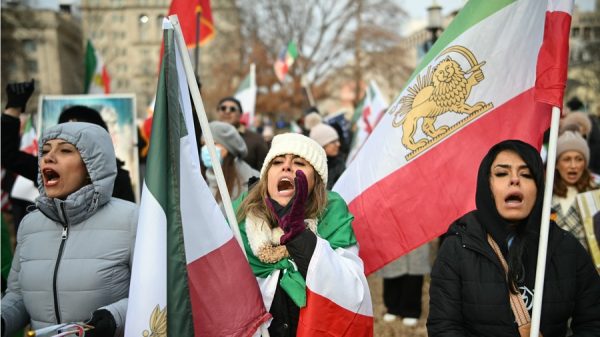
His 2023 visit to Israel further complicated matters. He attended Holocaust memorial events and met Prime Minister Netanyahu. Some Iranians saw this as pragmatic diplomacy in confronting a common adversary—the Islamic Republic—believing all possible support should be sought. Others argued it would alienate Arab and Muslim allies and damage his image inside Iran.
In a BBC interview with Laura Kuenssberg, when asked if he supported Israeli strikes that might endanger civilians, his answer sparked fierce debate. He emphasized ordinary Iranians were not the target and said that “any action that weakens the regime” would be welcomed by many Iranians. While such remarks may resonate among exiles, reactions inside Iran are more complex, where nationalism and suspicion of foreign intervention remain strong.
Today, Reza Pahlavi says he is not a king-in-waiting but hopes to serve as a symbol of national reconciliation. Supporters see him as the only widely recognized opposition figure who has long advocated peaceful reform; critics counter that he relies excessively on foreign backing and question whether Iranians, after decades of upheaval, are willing to trust any exiled leader.
With Iran’s political space tightly closed and credible polling scarce, his true support is hard to measure. Some Iranians still respect his family name and view the Pahlavi era as comparatively open; others fear that even under a democratic banner, one unelected leader may simply replace another. During the 2017 anti-government protests, chants again appeared—“Reza Shah, may your soul rest in peace”—addressed to his grandfather, showing monarchist sentiment lingers in some groups.
Deeper roots of Iran’s current crisis
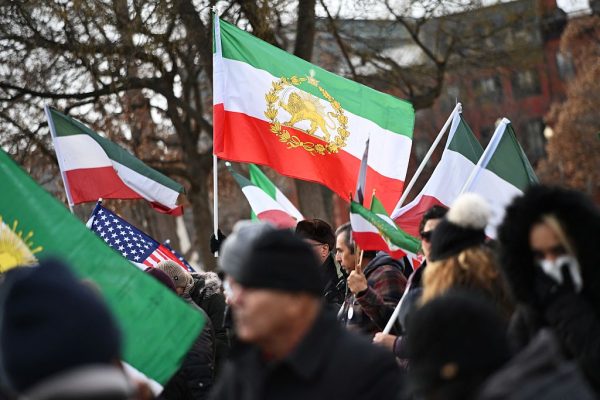
The present wave of protests is not an isolated event, but an eruption of long-accumulated political, economic, and social tensions. In more than 40 years since the founding of the Islamic Republic, some progress has been made, but severe governance challenges persist: hardship from sanctions, cultural conflicts between youth and conservative religious rule, restrictions on women’s rights, spreading corruption, and narrow channels for political participation—all driving public discontent.
Internet shutdowns reflect the regime’s emphasis on information control, but in a globalized digital era, complete blockage has become increasingly difficult. Protesters use various technologies to circumvent censorship, sharing images and information worldwide to gain attention and support—turning information warfare into an integral part of modern political struggle.
Iran now stands at a historic crossroads. Whether today’s protests lead to genuine political change depends on many factors: whether protesters can sustain mobilization, whether security forces fracture, how the international community responds, whether economic pressure intensifies, and whether the opposition can form a unified alternative. Reza Pahlavi hopes to play a role, but faces daunting challenges—overcoming decades of exile, addressing the controversies of his father’s legacy, and navigating complex international politics.
His father’s remains are still buried in Cairo, and royalists hope they can one day be returned symbolically to Iran. Whether the exiled crown prince will live to see that day—or witness the birth of a free Iran—remains one of the many unanswered questions facing a nation still striving to heal its historical wounds.