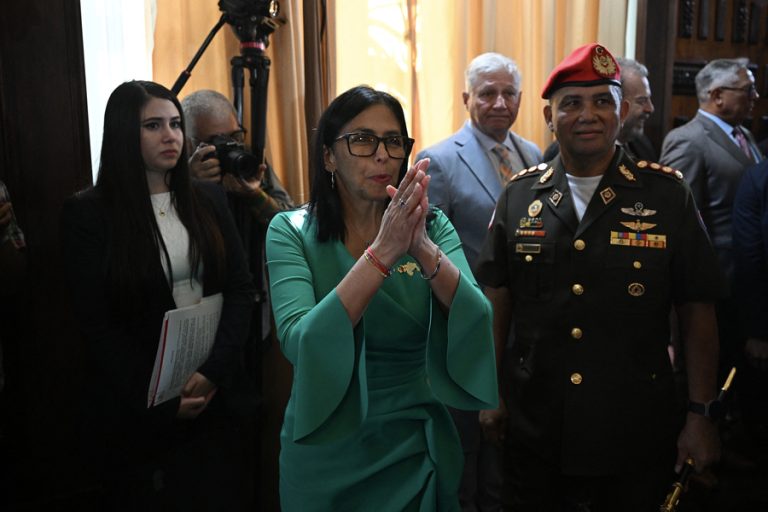
According to a Politico report, following the successful capture of former Venezuelan president Nicolás Maduro, the Trump administration has begun conveying a set of explicit, pro-U.S. policy demands to Venezuela’s current transitional leader, Delcy Rodríguez. U.S. officials have warned that failure to comply could result in consequences similar to those faced by Maduro.
Several U.S. officials familiar with internal discussions said Washington has outlined at least three core requirements. First, Rodríguez is expected to take decisive action against drug trafficking networks. Second, she must expel Iranian, Cuban, and other personnel or networks regarded by the United States as hostile. Third, Venezuela is required to halt oil sales to countries considered adversaries of the United States.
U.S. officials have also indicated that Washington ultimately expects Rodríguez to facilitate free elections and step aside from power. However, they emphasized that no formal timetable has been set and that elections will not be held in the immediate term.
The White House has consistently framed the operation as a law-enforcement action targeting a “narco-trafficker,” rather than an act of regime change or a military campaign. Officials view this characterization as a way to preserve policy flexibility for subsequent steps.

Rodríguez seen as pivotal figure as Washington signals confidence
Within U.S. strategic planning, the 56-year-old Rodríguez, a longtime ally of Maduro, is regarded as a pivotal figure. Despite her strong socialist background, officials inside the U.S. government believe she will act in accordance with U.S. demands under sustained pressure.
Success
You are now signed up for our newsletter
Success
Check your email to complete sign up
Speaking aboard Air Force One on Sunday, President Donald Trump said, “So far, Venezuela has been behaving fairly well. But we have that power there. If they don’t behave, we’ll strike again.”
One individual close to the decision-making process described the White House’s view that Rodríguez is “on a very short leash.” Rodríguez, who publicly condemned Maduro’s arrest just days earlier, signaled on Sunday night that she was willing to work with the United States “on a cooperative agenda,” a shift that was widely interpreted as a notable change in tone.
Diplomacy, sanctions, and assets used as leverage
U.S. Secretary of State Marco Rubio suggested in an interview with ABC News that Washington’s objective is to ensure Venezuela no longer serves as a hub in the Western Hemisphere for Iran, Hezbollah, or other hostile actors, nor as a transit point for drug trafficking. Politico noted that the demands conveyed privately to Rodríguez were more detailed and forceful than public statements suggest.
Beyond military deterrence, U.S. officials retain a range of economic and diplomatic tools, including sanctions relief and control of overseas assets. According to individuals familiar with the matter, portions of Rodríguez’s assets are believed to be located in Doha, Qatar, and possibly in Turkey.
Elliott Abrams, who served as U.S. special envoy for Venezuela during Trump’s first term, said that merely raising the issue of overseas assets would be sufficient to exert significant psychological pressure.
At the same time, multiple officials cautioned that there is currently no concrete plan to lift sanctions on Venezuela, nor preparations for large-scale humanitarian assistance. They acknowledged that no comprehensive post-operation framework had been established, partly due to reductions within the State Department and a diminished emergency response capacity.
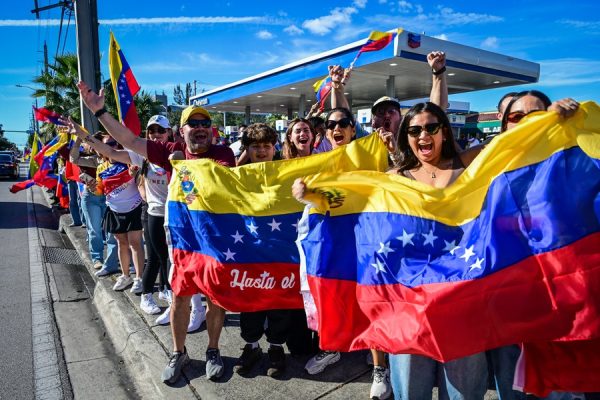
Interim presidency sworn in amid international controversy
The BBC reported that Rodríguez has been sworn in as Venezuela’s interim president by the National Assembly. During the opening moments of the ceremony, some lawmakers called on the United States to release Maduro and his wife, Cilia Flores, who were transferred to New York to face trial.
On the same day, Maduro appeared in a New York court, insisting that he remains Venezuela’s legitimate president and denying multiple charges, including narcoterrorism. U.S. Ambassador to the United Nations Mike Waltz responded by describing the operation as a “surgical law-enforcement action” targeting a “fugitive from justice.”
While Trump has stated that the United States will “run” Venezuela until a “safe and orderly transition” is completed, Senate Democratic Leader Chuck Schumer, after receiving classified briefings, criticized the plan as vague and based on wishful assumptions. He nevertheless described Maduro as a dictator undeserving of sympathy.
House Speaker Mike Johnson rejected claims of regime change, stressing that Washington is demanding “behavioral change” rather than political overthrow. He also suggested that restrictions on oil exports would rapidly push Venezuela toward a new governing structure.
Domestically, figures loyal to Maduro continue to wield real power, leaving Venezuela’s political landscape fragmented and unstable. Analysts say Rodríguez must navigate a precarious balance between projecting anger at home and cooperation abroad, leaving her political future highly uncertain.