
By Li Muzi
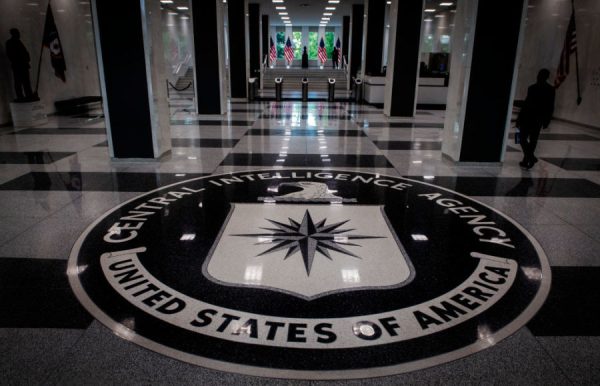
On Jan.15, the U.S. Central Intelligence Agency (CIA) released a Mandarin-language video on social media that has ignited widespread discussion among Chinese-speaking audiences. In the video, the CIA openly declares: “The CIA wants to know the truth about China. We are looking for people who know the truth and can tell it.”
Some netizens reacted bluntly: “This is open recruitment for CCP officials to defect.” Within hours, the video began spreading rapidly. As of this writing, it has been viewed more than 3.6 million times.
That same day, the CIA posted a message on its official X account explaining that the video provides a complete, step-by-step guide for securely contacting the CIA. The agency emphasized that the video outlines critical considerations to be taken before and during any attempt at contact, again underscoring its central message: “The CIA wants to know the truth about China.”
According to the video, the CIA walks viewers—entirely in Mandarin—through a structured process for anonymous communication. The guide consists of nine concrete steps, designed to help individuals establish contact and submit information under conditions of strict anonymity and security. The message is repeated throughout: security comes first, anonymity comes first.
Success
You are now signed up for our newsletter
Success
Check your email to complete sign up
Among the key instructions: use a new device; access public networks to reduce traceability; create anonymous digital identities and email accounts; and submit information through the CIA’s official website or its dark web portal. The video also issues explicit warnings: do not leave digital traces, do not make repeated contact attempts, and do not use AI tools to write or translate messages.
Additional advice is offered for higher-risk situations: if conditions allow, travel abroad before making contact, or have trusted relatives or friends act as intermediaries.
Each step is accompanied by detailed explanations and cautionary notes. In closing, the CIA advises viewers: “After you contact us, the CIA will review the information you submit. During this period, continue living your normal daily life.”
The video concludes without fanfare—but the response was immediate.
Reactions and interpretation
A commentator using the name “Dr. Chadwick,” who describes himself as a long-time observer of geopolitical strategy and intelligence ecosystems, praised the video’s production quality and clarity. He noted that it reflects the CIA’s exceptionally high standards for operational security. In his view, the campaign carries several deeper implications.
First, he argued, the signal strength is unusually high. Publishing a full operational guide in Mandarin on an open platform like X goes far beyond traditional, low-profile intelligence outreach. It effectively sends a message to Beijing that CIA channels remain open and active, while also signaling institutional resolve to domestic and international audiences.
Second, he observed that the intended audience is layered. On the surface, the video targets insiders with access to sensitive information—those within the political system, the military-industrial complex, technology sectors, or finance. At the same time, it serves a broader educational function, teaching dissatisfied groups inside China how to protect themselves and speak out across borders. While the CIA has conducted multilingual outreach before, the level of technical detail in this case is unprecedented.
Third, he pointed to the risk–reward calculation. Publicly disclosing such tactics, techniques, and procedures (TTPs) will almost certainly prompt Chinese authorities to block channels, expand digital surveillance, and deploy more sophisticated counterintelligence measures. The CIA, he argued, appears to have concluded that the short-term intelligence gains outweigh the long-term costs.
He concluded with a striking observation: “The sentence ‘The CIA wants to know the truth about China’ is itself the greatest declaration of truth.” He expressed hope that more people who “know the truth and can tell it” will be able to reach safety.

Online response
The video, posted at 3:06 a.m. on Jan.15, had already amassed nearly 3.65 million views by 3:20 p.m. the same day—just twelve hours later. It also received 18,000 likes, more than 5,000 reposts, 7,450 saves, and over 2,300 comments.
Online reactions were blunt and polarized. Among the comments:
- “This is openly recruiting CCP officials to defect.”
- “Serving the CIA is a blessing of three lifetimes.”
- “Welcome Chinese people to become guides for America.”
- “You have to admit—the CIA’s approach is innovative and unprecedented.”
- “Anyone inside the Great Firewall who wants to save their life and assets should act quickly. This CCP ship is sinking—get off now.”
Others framed the video as a turning point in U.S.–China relations:
- “The U.S. government has now openly bypassed the CCP and established direct contact with the Chinese people.”
- “There’s no shame in being a guide—for a better future.”
- “The cards are on the table.”
- “The Chinese people are not the CCP. Let’s work together to dismantle the CCP’s dictatorship.”
Some commenters even offered unsolicited operational advice, suggesting the use of inexpensive second-hand foreign phones purchased in Shenzhen, public Wi-Fi networks in Hong Kong, and physical destruction of devices after use—illustrating both the intensity of interest and the depth of mistrust toward domestic surveillance.
This is not the first instance of the CIA conducting Mandarin-language outreach. In 2025, the agency released a series of similar short videos aimed at encouraging individuals inside the Chinese system to provide information to U.S. authorities.
One netizen, Yao Zhang (张尧), recalled that earlier efforts were described as a trial run: “They said last time it was just testing the waters—if there was no response, they wouldn’t continue.” He added, “Now they’ve released the full set of contact procedures. Does that mean the response was strong? Are there really ‘guides’ inside the Communist Party?”