By Cai Siyun, Vision Times
In recent years, local governments under the Chinese Communist Party (CCP) have been facing severe fiscal strain. As revenues shrink, authorities have increasingly turned to ordinary citizens as a source of funding. The latest target: internet influencers, livestreamers, and other high-income earners.
China’s economy is mired in stagnation. The real estate sector, long a pillar of local government finance, is in collapse, leaving municipalities burdened with heavy debts and mounting fiscal obligations. In response, officials have resorted to a variety of revenue-raising measures, among them intensified tax enforcement.
Recently, China’s tax authorities launched a new round of what they describe as “precision tax inspections.” Officially framed as an effort to “strengthen supervision through big data,” the campaign is widely viewed by critics as yet another instance of what Chinese netizens call “harvesting chives” — a metaphor for repeatedly extracting wealth from the same groups. Those targeted are often ordered to repay millions, and in some cases tens of millions, of yuan in back taxes and fines.
According to reports from The Beijing News, Xinhua Net, and other state-affiliated outlets, tax authorities are using large-scale data systems to systematically scrutinize online livestreamers, celebrities, and high-income individuals with overseas earnings. In a short period of time, officials claim to have recovered tax revenues totaling tens of billions of yuan.
Success
You are now signed up for our newsletter
Success
Check your email to complete sign up
China’s State Taxation Administration recently publicized two “typical cases”: Chongqing-based livestreamer Peng Xuanzhi and Gansu-based livestreamer Yang Suiwa. According to official statements, both individuals concealed income and filed false tax declarations, underpaying personal income tax, value-added tax, and other levies.

Authorities crack down
Peng Xuanzhi is a prominent livestreamer in the southestern Chinese metropolis of Chongqing, with more than 30 million followers. Using what authorities call “tax big data analysis,” investigators found that her video traffic and audience engagement from 2021 to 2023 were sharply inconsistent with the income she reported. In November 2025, Peng was ordered to repay taxes, late fees, and penalties totaling 4.15 million yuan (US$0.6 million).
Yang Suiwa, a livestreamer from Tianshui, Gansu, has nearly 300,000 followers. Officials stated that after receiving a tip-off, an investigation revealed that his livestream sessions from 2022 to 2024 were highly popular, yet he reported total income of only 230,000 yuan (about US$33,000). In July 2025, Yang was ordered to repay taxes, late fees, and fines totaling 1.81 million yuan.
Another high-profile case involved the influencer “Zhou Zhou Zhen Ke’ai,” who has roughly 50 million followers. A Guangdong-based cultural media company under her name was ordered to pay 16.59 million yuan (US$2.38 million) in back taxes and 8.29 million yuan ($1.19 million) in fines, totalling nearly 25 million yuan.
According to figures released by the State Taxation Administration, in the first eleven months of 2025 alone, authorities investigated 1,818 so-called “dual-high” individuals — a term used to describe people with both high incomes and high net worth. These cases were concentrated among celebrities, internet influencers, and wealthy business figures, with a total of 15.23 billion yuan, or US$2.19 billion, in additional taxes collected.
China’s economic slowdown has intensified deflationary pressures, while local governments remain responsible for expansive public spending. As value-added tax revenues decline, critics argue that the state’s remaining fast-growing revenue sources are personal income taxes and fines derived from enforcement actions.
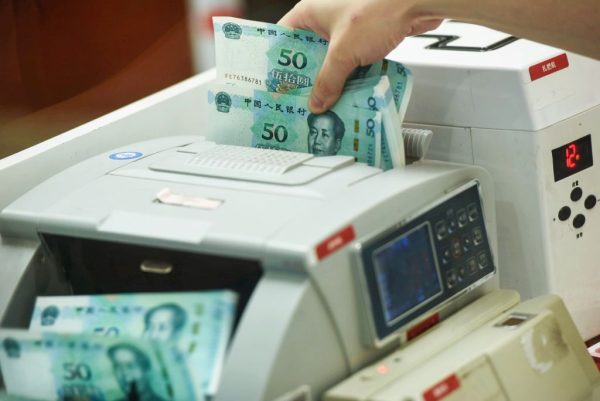
Personal income tax revenue hits a historic high
Official data shows that in the first eleven months of 2025, national tax revenue reached $16.48 trillion yuan (US$2.36 trillion), an increase of just 1.8 percent year-on-year. By contrast, personal income tax revenue surged 11.5 percent, reaching 1.47 trillion yuan (US$210 billion), a historic high.
A similar campaign unfolded in 2024, when China’s State Taxation Administration investigated a wave of online livestreamers, entertainers, and equity-transfer tax evasion cases. Among 169 livestreamers examined that year, authorities reported recovering 899 million yuan (US$129 million) in “unpaid” taxes.
However, Li Hengqing, an economist at the Washington Institute for Information and Strategy, noted that livestream commerce in China has long existed in a regulatory gray zone.
“For years, there has been no clear tax framework governing livestreaming businesses, that is, no definitive guidance on how their commercial activities should be taxed,” Li said. “This is a structural deficiency in China’s system.”
Li added that the recent intensification of tax enforcement reflects a more fundamental problem: the state is running short of money and is searching for every possible means of revenue extraction.
In recent years, Chinese social media has been rife with accounts of local governments using various pretexts to seize funds simply to keep themselves afloat. These include practices known as “retroactive audits spanning thirty years,” in which private companies are pressured to pay alleged back taxes, as well as so-called “deep-water fishing” — a term used to describe police traveling across jurisdictions to detain entrepreneurs and compel payments.
Toward the end of last year, online reports emerged that several provinces, including Anhui, planned to claw back previously issued subsidies for second children. Soon after, even Shanghai, long considered China’s most fiscally robust city, began reclaiming maternity benefits issued in recent years.

Authorities demand repayment
Many Shanghai mothers reported online that they received text messages or written notices from medical insurance authorities demanding repayment of what were described as “overpaid” maternity benefits. The amounts ranged from several thousand to tens of thousands of yuan. Some women had given birth recently; others had done so years earlier.
One woman who gave birth in 2022 was ordered to return the equivalent of nearly US$8,000. Shocked, she angrily told authorities, “Why don’t you just come and take all my income?” Others reported being asked to repay US$6,700.
Independent commentators criticized the move, noting that most new mothers would have long spent the money on essentials such as baby formula and diapers. For many Chinese families facing a avriety of high living and edcucation costs, the decision to have children requires careful financial calculation. Seeing others receive tangible monthly subsidies had given them the confidence to proceed. Now, with the children already born, parents are being told to return the money, prompting bitter remarks that these subsidies were nothing more than empty promises.
Earlier, netizens in multiple cities of Anhui Province — including Lu’an, Bengbu, Chuzhou, and Huainan — reported that local governments abruptly halted a 2,000-yuan second-child subsidy and demanded repayment of benefits already issued. In practice, officials deducted the money from a 3,600-yuan childcare subsidy. The local authorities justified the move by claiming that second-child subsidies and childcare subsidies “conflict” and cannot be received simultaneously.
One Lu’an resident wrote that her second-child subsidy was suspended just as it was about to be issued. Local health officials informed her by phone that the policy applied province-wide: subsidies already paid would be reclaimed, while those not yet distributed would be canceled outright. She accused the authorities of breaking their word.
Online reactions were swift and cynical. Many netizens concluded that the underlying issue was simple: the government is short of cash.
“Are the holes in civil servants’ salaries really this big now?” one asked.
“Looks like they truly have no money left, if they’re even taking this back,” another wrote.
“Policies change overnight. They must be desperate for funds.”