By Li Muzi
As China’s economic downturn deepens and local government finances grow increasingly strained, a practice known as “distant-water fishing” has drawn rising concern. The term refers to cases in which local authorities cross provincial lines to detain private entrepreneurs and seize assets from businesses operating outside their jurisdiction.
In a public letter addressed to China’s Supreme People’s Court, Supreme People’s Procuratorate, and the Ministry of Public Security, a Beijing woman whose husband was sentenced to 12 years in prison directly posed a stark question: Who, she asked, is manufacturing social antagonism?
A wife’s appeal
The open letter, dated Jan. 12, 2026, and archived by China Digital Times, was signed by a woman using the name Dai Man. She identified herself as the wife of Wu Shaowei, a defendant in what she described as the “Shanghai Baoshan cross-provincial arrest case.”
Wu, according to the letter, legally operated a Beijing-based company, Hengwan Construction Engineering, which provided training courses to help candidates prepare for China’s national Registered Safety Engineer examination. The company offered actual instruction, signed formal training agreements, and enrolled students who passed the exam after attending the courses. Dai questioned how such activity could be classified as fraud.
Success
You are now signed up for our newsletter
Success
Check your email to complete sign up
That question, she wrote, was never answered.
‘Distant-water fishing’ enforcement
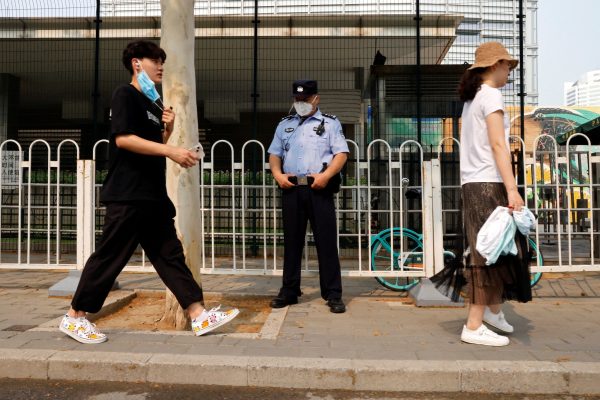
According to the letter, on June 29, 2023, police from Shanghai’s Baoshan District traveled to Beijing and carried out what Dai described as a “sweep-style” operation. Wu was later sentenced in a first-instance ruling to 12 years in prison.
Legal observers, she noted, have described the case as a textbook example of “distant-water fishing.” The alleged crime, its consequences, and the company’s operations were all located in Beijing. No complaints had been filed prior to the arrest. Dai asked on what basis Shanghai authorities asserted jurisdiction.
Who authorized such manufactured jurisdiction? she asked. Was this law-based enforcement, or enforcement reshaped to fit a predetermined case?
Questioning the ‘three effects’
Dai’s letter was structured around four central arguments. She wrote that profit-driven cross-regional enforcement destroys entrepreneurs’ confidence in the rule of law; that the official emphasis on achieving unified “political, social, and legal effects” cannot rest on the framing of innocent people; that the presumption of innocence has been hollowed out in practice; and that she was prepared to accept personal consequences if exposing wrongdoing was the price of accountability.
She challenged official claims about “social effects,” asking whether imprisoning a law-abiding business owner truly benefited society. Behind one convicted entrepreneur, she wrote, stood employees, students, and family members. Turning such people into adversaries of the system, she warned, only planted the seeds of future instability.
If the state was concerned about citizens traveling to Beijing to petition central authorities, Dai argued, the solution lay in addressing wrongful cases at their source. Failing to punish agencies that manufacture injustice, she wrote, amounted to the gravest injustice of all.
Presumption of innocence in name only
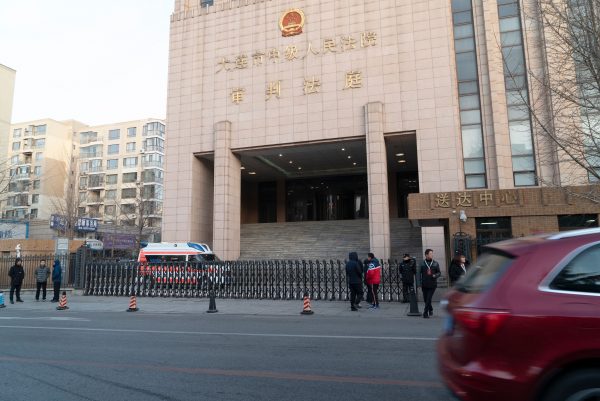
All charges in the case, Dai asserted, were built on procedures that violated basic legal standards. Principles enshrined in China’s Criminal Procedure Law, including the presumption of innocence, had been reduced to what she called a logic of coercion: if a defendant could not prove complete innocence, guilt was assumed.
She questioned how local authorities could justify such practices. If even core procedural documents, such as notices of victims’ rights, could be fabricated, she asked, what standing did criminal law still hold in the eyes of those enforcing it?
“I am an ordinary citizen, a wife, and a mother,” Dai wrote. “I am no longer afraid. I will pursue every lawful means to expose abuses of power, dereliction of duty, and procedural violations in this case.”
A wider pattern
In recent years, as land-sale revenues have collapsed and tax income has fallen, many local governments have turned to aggressive enforcement against private businesses as a revenue source. Officially described as “irregular profit-driven enforcement across jurisdictions,” “distant-water fishing” refers to the detention of entrepreneurs, freezing or transfer of assets, and criminalization of commercial disputes by authorities from outside a company’s home region.
In August 2024, Chinese media reported that an official from Shandong’s Chengwu County market supervision bureau had threatened a company in Hebei, saying it was far easier to “destroy a business” than to support one, and openly referenced revenue targets tied to enforcement. The remarks triggered widespread public backlash.
A Shandong resident later told Radio Free Asia that with traditional revenue streams exhausted, local governments had little choice but to target private enterprises to cover payrolls and basic expenditures. Export profits had faded, the property sector was nearing collapse, and state-owned firms were shielded. Private businesses, he said, were the only remaining source.
Growing scrutiny
According to the Financial Times, at least 82 executives from publicly listed Chinese companies were detained in 2024, with roughly half of the cases involving cross-regional enforcement. The Huaxia Times reported that nearly 10,000 companies in Guangzhou alone had been affected since 2023, the vast majority privately owned, with many cases showing clear signs of “distant-water fishing.”
Dai’s letter has since circulated widely online, resonating with entrepreneurs, legal professionals, and families who see in her case a broader warning. Her question, posed directly to China’s highest judicial authorities, remains unanswered: Who, in the end, is creating society’s enemies?