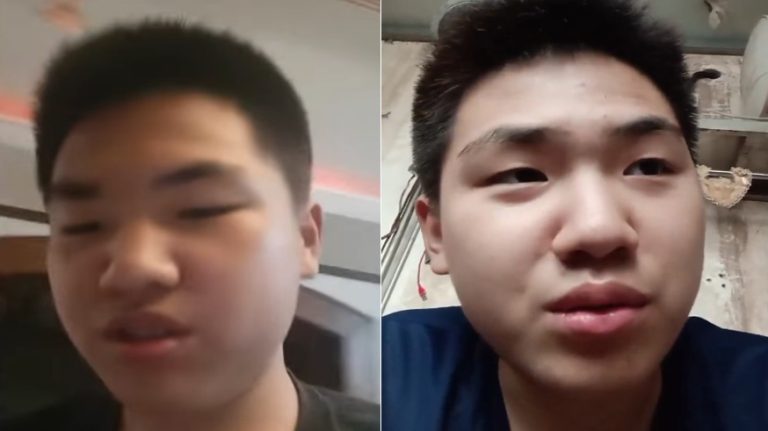
A 15-year-old from Hebei province who publicly called China’s leader Xi Jinping a dictator and demanded his removal has reappeared in a video after more than a year of detention, describing confinement that moved him between a psychiatric ward and a Party-run “corrective” school.
Zhang Qiyuan vanished last June after appearing in a live-stream broadcast and declaring, by name, his opposition to Xi Jinping and CCP rule. His case drew attention among overseas Chinese dissidents when, before disappearing, he released a preemptive video statement saying he had no intention of committing suicide — a precaution routinely taken by activists who fear being killed in custody and having their deaths falsified.
Teenager arrested after naming Xi Jinping on camera and walking into a police station
Zhang’s transgression, by the CCP’s standards, was severe: he identified himself by full name, looked into a camera, and said that Xi Jinping is a dictator who must go. He then walked into a police station in Baoding city, Hebei, as he had announced in advance he would do. He was arrested shortly after.
On June 16, Jie Lijian, a pro-democracy activist based in the United States who works with Chinese dissidents, posted to the social media platform X that Zhang had been arrested and gone missing after openly opposing the CCP dictatorship and calling for Xi’s removal. Jie added that Zhang had issued a new video from inside detention appealing for help.
Committed to a psychiatric ward, then transferred to an extrajudicial detention school
After his arrest, Zhang was committed to the Sixth People’s Hospital of Baoding city, a state-run psychiatric facility. Committing political dissidents to psychiatric institutions without trial has a long history in China; activists, petitioners, and critics of local officials have been confined in such facilities for years at a time, with no criminal charges required. Zhang spent several months there before being transferred.
Success
You are now signed up for our newsletter
Success
Check your email to complete sign up
He was then moved to Chunyu School in Baoding, a facility that presents itself publicly as a behavioral rehabilitation center. In practice, such institutions function as extrajudicial detention centers for people deemed socially inconvenient by Party authorities, with no formal legal process required to commit someone. Zhang says he has been held there for several more months.
Inside the school, a police auxiliary officer has been threatening him with a spiked wooden baton. Zhang named the officer’s badge number in his video: FJ0141. He asked Jie Lijian to publicize it.
Zhang preemptively rejects any future televised confession as coerced
Zhang’s video statement was released with evident awareness that the regime sometimes coerces detained activists into scripted “confessions” broadcast on state television, a tactic used against lawyers, journalists, and foreign nationals. He addressed this directly.
Zhang warned viewers that any televised confession they saw from him would be false, extracted through threats rather than freely given. He also reaffirmed his original position, saying the live-stream declaration that Xi is a dictator was his own idea, made of his own free will.
The CCP has used televised confessions to discredit detained critics, staging performances in which the detainee renounces earlier statements and thanks the Party for its leniency. By recording his rebuttal in advance, Zhang attempted to strip the tactic of its effectiveness before it could be deployed against him.
Overseas dissident networks demand international pressure for his release
Jie Lijian stated plainly in his post that if Zhang dies in custody, it will be the CCP government that killed him.
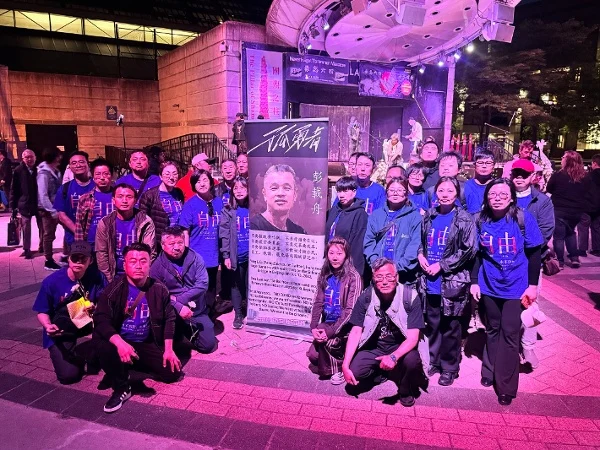
In July 2025, a Taiwanese anti-CCP commentator known online as “Ba Jiong” published Zhang’s original distress video on overseas social media, writing: “This anti-CCP little boy has already disappeared. He reached out to me for help on July 10. If he is disappeared, please remember him — Zhang Qiyuan.”
Responses to Zhang’s reappearance, shared among overseas Chinese communities, ranged from relief to fury. “May brave Zhang Qiyuan return safely,” one commenter wrote. “Justice may be late, but it will not be absent.” Another: “He is small in age but large in courage. The CCP’s evil must not be underestimated — his safety comes first.” A third: “Salute to this young hero.”
Zhang has now been held, across two institutions, for over a year.