By Chen Jing
Lives devoured by politics
In modern Chinese history, the “Xinyang Incident” in Henan Province stands as a bloody chapter that cannot be ignored. This was not a famine brought on by drought or flood. It was a famine manufactured by policy—a deliberate political killing.
In less than a year, more than one million farmers in Xinyang, once a fertile granary of China’s central plains, were starved to death.
This atrocity, together with the secondary humanitarian disasters witnessed sixty years later during China’s COVID-19 lockdowns, points to a single, chilling truth: when power operates without restraint, and when political will overrides science and basic human compassion, the lives of ordinary people become expendable—sacrifices offered to the state.
Absurd logic: less grain, higher quotas
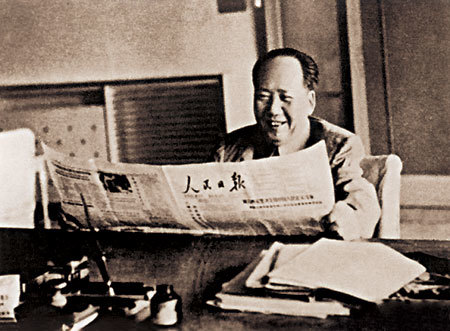
The origins of the Xinyang Incident lie in the radical policies of the Great Leap Forward, Mao Zedong’s campaign to forcibly accelerate China’s transformation into a socialist industrial power.
Success
You are now signed up for our newsletter
Success
Check your email to complete sign up
By 1959, grain production in Xinyang had in fact fallen sharply. Yet under intense political pressure and a nationwide culture of falsification known as the “exaggeration wind,” local officials inflated production figures at every level. These false reports traveled upward through the bureaucracy and were treated as fact.
The consequences were deadly. Procurement quotas—mandatory grain collections imposed by the state—were increased based on imaginary harvests. Officials above demanded grain that did not exist; officials below stripped farmers of everything they had. Entire villages were left with nothing to eat.
When peasants could no longer meet these impossible demands, the Chinese Communist Party leadership did not reconsider its policies. Instead, it revived the language of class struggle.
Mao Zedong personally characterized the crisis as a problem of “concealing production and privately distributing grain.” In other words, farmers were accused of hoarding food. The simple, instinctive act of eating what one had grown to survive was redefined as a political crime.

A machine of violence: robbery and killing in the name of ‘anti-concealment’
To enforce quotas that could never be fulfilled, Lu Xianwen, then First Secretary of the Xinyang Prefectural Party Committee, transformed the state apparatus into an instrument of terror. He ordered militia units to conduct door-to-door searches for grain under the slogan of “anti-concealment.”
In reality, this was systematic looting.
With no legal constraints or independent oversight, power revealed its most brutal form.
Torture to extract grain: When searches turned up nothing, violence followed. In Segang Commune of Guangshan County, Han Defu, the deputy Party secretary, personally beat more than 300 innocent villagers.
Meetings of death: Liang Dezhu, First Secretary of the Guangshan County Party Committee, convened mass rallies of more than ten thousand people to pressure peasants into handing over grain. Over 6,000 representatives at one such meeting were already starving and barely conscious. Yet Liang continued to issue threats and even struck attendees.
One peasant collapsed and died of starvation during the meeting. His body was hastily removed, and the assembly continued. Afterward, more than a dozen participants died on the road home.
Extermination-level consequences: In Guangshan County alone, 56,000 people starved to death—56,000 lives, not abstract statistics.
The cruelest irony: starvation amid full granaries
What makes the Xinyang tragedy truly unbearable is this: none of these deaths were necessary.
Later investigations revealed that while peasants resorted to eating tree bark, clay, and even human flesh, state-run granaries across Xinyang were full. Grain was stacked high behind locked doors.
Because of “orders from above” and rigid procurement targets, that grain was never released. Officials held the keys, yet dared not—or chose not to—open the warehouses. Even as corpses lay outside the gates, the grain remained sealed inside.
This grotesque reality—allowing food to rot rather than letting people live—perfectly captures the arrogance and cold cruelty of unchecked power. In that system, protecting one’s position and meeting political targets mattered far more than the lives of a million human beings.
History repeats itself: from famine to pandemic lockdowns
Sixty years later, the form of catastrophe changed, but its logic remained disturbingly familiar.
When COVID-19 first emerged in Wuhan, senior authorities delayed acknowledging the outbreak—whether to preserve political stability, protect appearances ahead of the Lunar New Year, or avoid responsibility. This delay allowed the virus to spread across China and eventually the world.
Once again, political considerations overrode scientific judgment—just as fabricated production figures had overridden reality during the Great Leap Forward.
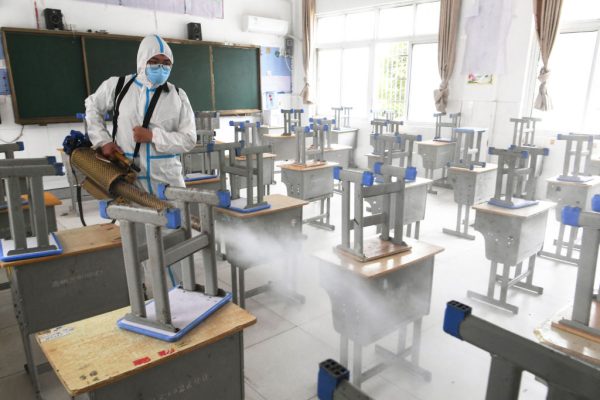
Later, the “dynamic zero-COVID” policy, enforced to demonstrate the superiority of the political system, produced new humanitarian disasters.
Shanghai lockdown: In 2022, during more than two months of lockdown, residents of China’s most modern city died of hunger and untreated illness as access to food and medical care collapsed.
Nationwide secondary disasters: Across the country, homes were sealed and logistics cut off in the name of epidemic control. As in Xinyang decades earlier—when villages were blockaded to prevent famine victims from fleeing—people were stripped of the ability to save themselves.
Only when power is caged can tragedy end
The grain in Xinyang’s warehouses could not save Xinyang’s people because the power to open those warehouses did not belong to the people. During the pandemic, abundant supplies failed to prevent starvation because the authority to allocate resources was monopolized by political campaigns.
History has repeatedly shown that within the CCP system, unchecked, unaccountable power is the root cause of humanitarian catastrophe. As long as power remains outside institutional restraint, tragedies like the famine of 1960 or the lockdowns of 2022 will always be able to return.
The Communist Party will never willingly place its power in a cage—unless the day comes when the Party itself collapses. History has proven that placing hope in the CCP brings not security, but disaster.