By Fu Longshan
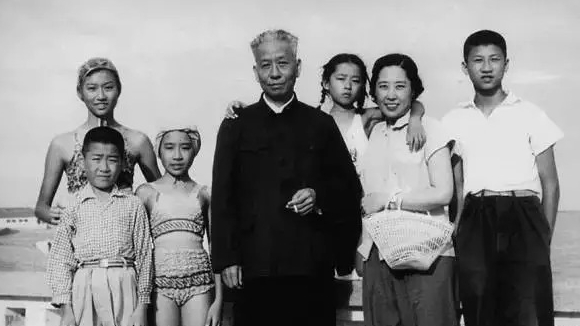
What did Liu Shaoqi experience in the final days before his death? Fragmentary but chilling details leaked by members of his “guard” unit allow us to reconstruct how a sitting president was systematically annihilated within the political system he himself had helped construct—not through immediate execution, but through prolonged degradation that made survival unbearable. This was not an aberration, but a stark portrait of the ferocity of intra-party struggle inside the Chinese Communist Party.

A ‘legitimate threat’ to Mao Zedong
Since the Yan’an Rectification Movement of the 1940s—a CCP campaign to enforce ideological conformity—Liu Shaoqi had been personally designated by Mao Zedong as his successor. The very term “Mao Zedong Thought,” later elevated to quasi-sacred status, was first coined and promoted by Liu himself.
But after the 1962 “Seven Thousand Cadres Conference,” convened to address the catastrophic aftermath of the Great Leap Forward, Liu bluntly concluded that the resulting famine was “30 percent natural disaster, 70 percent man-made.” This was, in effect, a public slap in Mao’s face.
According to accounts circulating from internal party meetings, Mao listened from backstage, his face reportedly turning ashen with rage. At the time, Liu commanded enormous prestige within the Party, creating what insiders described as a standoff between a “Liu camp” and a “Mao camp.” Mao came to view Liu as “China’s Khrushchev”—a man who would repudiate him after death. Convinced that Liu must be eliminated, Mao resolved not merely to purge him politically, but to destroy him physically.
In the early phase of the Cultural Revolution (1966–1976), Liu attempted to shield himself by invoking the Constitution and his authority as state president, even holding up a copy of the Constitution during struggle sessions. To Mao, this was a profound provocation. Liu was no longer just a rival, but a challenge to Mao’s revolutionary legitimacy. With a formal state title, an entrenched party network, and legal authority, Liu had to be eradicated completely—“root and branch.”
Secret deportation: from Beijing to Kaifeng
Success
You are now signed up for our newsletter
Success
Check your email to complete sign up
In October 1969, amid escalating Sino-Soviet border tensions, Mao issued “Order No. 1,” mandating the evacuation of senior leaders from Beijing. On the night of Oct. 17, Liu Shaoqi was stripped of his last shred of dignity.
Completely naked, wrapped only in a filthy bedsheet, he was loaded onto an Ilyushin Il-14 aircraft and secretly flown from Beijing to Kaifeng, Henan Province. Guards were told they were escorting an “important war criminal” under the codename “Liu Weihuang.” No family members were allowed to accompany him; even his real name was forbidden to be spoken.
By this point, Liu had been beaten beyond recognition—paralyzed, delirious, barely conscious.
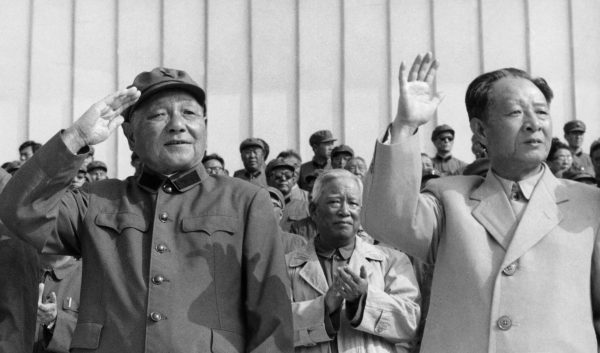
The contrast with Deng Xiaoping is telling. During Deng’s own political exile in Jiangxi Province (1969–1973), he was able to reestablish contact with Beijing through letters and carefully displayed submission.
Why Deng Xiaoping survived
Designated the CCP’s “second-ranking capitalist roader,” Deng was sent to work in a tractor factory in Xinjian County, Jiangxi. But Deng understood Mao’s psychology: deeply suspicious, yet eager for loyalty, repentance, and praise.
Deng wrote repeatedly to Mao, pledging “never to reverse verdicts” and extolling the “great victory of the Cultural Revolution.” Mao’s greatest fear in his later years was posthumous repudiation by a Khrushchev-like successor. Deng’s effusive praise reassured him. Deng even reported mundane family details, cultivating the image of total submission and political harmlessness.
Mao reportedly told his security chief Wang Dongxing, head of the Central Office Guard Bureau: “Deng Xiaoping is not like Liu Shaoqi. He doesn’t have that ambition.” This talent for abasement allowed Deng to be purged and rehabilitated repeatedly—but never destroyed.
A ‘Wrapped Living Corpse:’ testimony from the guards
Those responsible for escorting and “guarding” Liu Shaoqi were drawn primarily from the Central Office Guard Bureau, directly under Wang Dongxing’s command, along with accompanying medical staff.
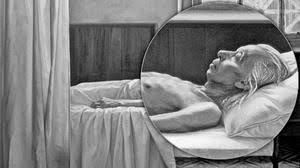
One guard, using the pseudonym “medical officer,” later described Liu’s condition during the flight. By Oct. 17, Liu could neither walk nor sit upright. Guards wrapped his naked body—save for a pair of undershorts—in a rancid bedsheet “like a corpse.”
During takeoff, changes in cabin pressure triggered severe respiratory distress. Yet the standing order was explicit: “No advanced medical treatment.” Medical staff watched his face turn purple, permitted only to use the most rudimentary oxygen equipment. The mission was not to save him, but to deliver him alive to Kaifeng.
The Kaifeng ‘special prison’
Upon arrival, Liu was confined inside a former bank building within the compound of the Kaifeng Revolutionary Committee—high walls, deep courtyards, windows boarded shut save for a narrow slit of light.
Over the final 27 days of his life (Oct. 17–Nov. 12, 1969), Liu was subjected to systematic physical and psychological destruction.
Suffering from severe pneumonia and diabetes, Liu was denied effective treatment. The directive from Beijing was unambiguous: “Maintain life, await further struggle.” Oxygen tanks provided during his breathing crises were sometimes empty.
Having lost the ability to swallow, guards force-fed him through a nasal tube. Accounts describe the procedure as brutally crude, frequently causing bleeding from his mouth and nose and worsening lung infections.
Another official involved in outer security recalled that Liu was often bound to his bed to prevent “movement.” Long-term paralysis led to massive bedsores on his back and buttocks. Witnesses described wounds so deep that bone was visible, even infested with maggots. The guard leader dismissed this coldly: “This is just the capitalist roader putting on an act.”
Even when unconscious, Liu was subjected to “ideological education:” loudspeakers at his bedside continuously broadcast recordings of denunciation meetings attacking him.
Guards meticulously recorded every word he muttered. These notes later became “criminal evidence.” In what appears to be an excerpt from an internal report, Liu, drifting in and out of consciousness, murmured, “I want to go home… the Constitution…” These were recorded as signs of “madness” or “resistance” and reported upward.
To prevent “suicide to evade trial,” his limbs were sometimes tied to the bed frame. When diabetic complications caused excruciating pain, guards cited “budget constraints” to reduce or halt pain medication, watching as he writhed and screamed until utterly exhausted.
Denied adequate water, forbidden conversation, Liu could only lick the cracked skin of his own lips to relieve thirst.
In the early hours of Nov. 12, 1969, in darkness, stench, and agony, the former head of state stopped breathing.
Death under an alias
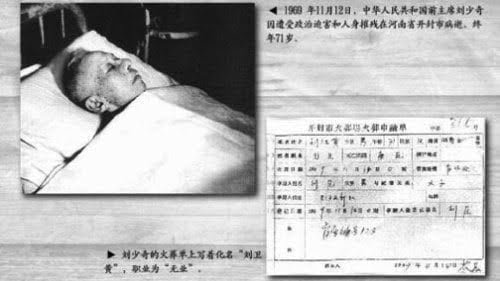
At the Kaifeng crematorium, the registry listed the deceased as “Liu Weihuang,” occupation: “unemployed.”
When crematorium workers asked about the tall, white-haired corpse, guards snapped: “Don’t ask what you shouldn’t. This was a patient with a highly infectious disease.” Liu died without a single decent garment. Before cremation, guards hastily dressed him in an old military uniform—his final, grotesque “courtesy.”
His ashes were stuffed into a cheap urn and left at the crematorium, undisclosed to the public for a full decade.
Though Wang Dongxing himself never spoke openly of these events, every detail—from enforced nakedness to cremation under an alias—points directly to orders from Beijing’s highest authority. After the Cultural Revolution, members of the guard unit largely fell silent. They were both executors and witnesses.
If Liu Shaoqi died by Mao Zedong’s political will, then this guard unit was the cold hand that carried out the sentence.
A system that consumes its own
The final 27 days of Liu Shaoqi in Kaifeng represent the most extreme expression of CCP rule: ruthless, bloodless, and absolute. Liu helped build the Party’s machinery of repression, only to be devoured by the very blades he had helped sharpen.
Seen in this light, the CCP’s internal methods of elimination surpass even those of criminal syndicates. To call it the most powerful mafia organization on Chinese soil is not an exaggeration—it is a historical verdict.