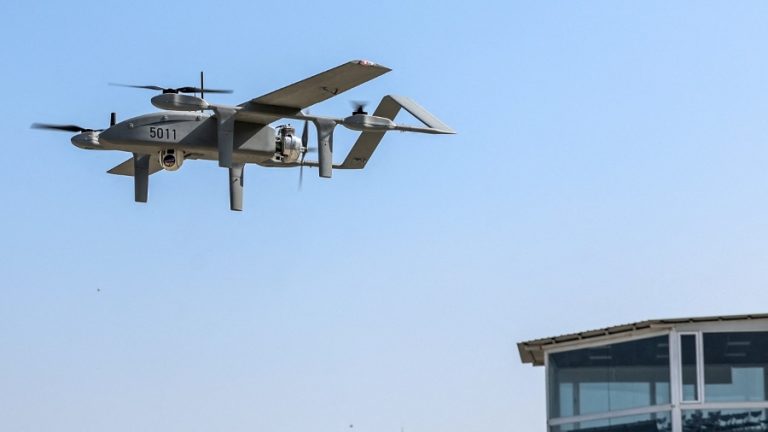
Taiwan’s Executive Yuan originally proposed a US$39.6 billion (NT$1.25 trillion) special defense budget, but in May the Legislative Yuan reduced it to US$24.7 billion (NT$780 billion). The approved package did not include funding for the commercial procurement or commissioned production of unmanned systems, CNA reported.
To continue developing Taiwan’s uncrewed capabilities, the Executive Yuan on Thursday, June 18 introduced the Draft Special Act on the Procurement of National Defense Self-Reliance Uncrewed Systems, the Taipei Times reported. The proposal allocates $6.65 billion (NT$210 billion) over the 2026–2031 period to procure three categories of equipment:
- Coastal surveillance and reconnaissance drones
- Coastal attack drones
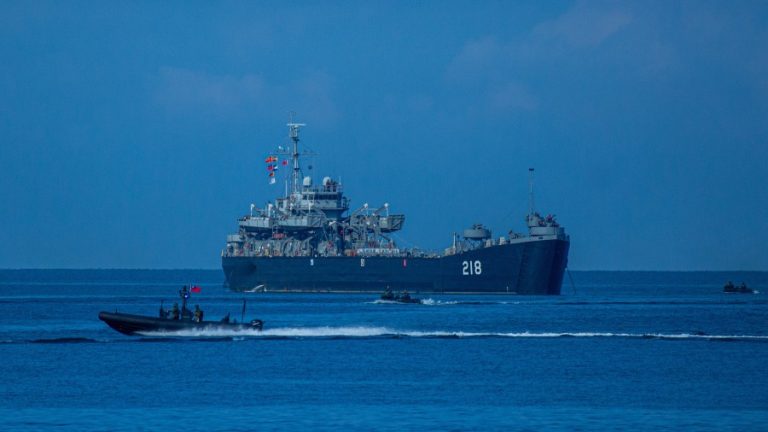
- Small suicide unmanned surface vessels (USVs)
Executive Yuan proposes US$6.65 billion special act for uncrewed systems
The Legislative Yuan significantly cut the Executive Yuan’s proposed US$39.6 billion (NT$1.25 trillion) special defense budget in May, according to the media. During its third reading, lawmakers approved only the US$24.7 billion (NT$780 billion) Special Act on Procurement for Safeguarding National Security and Strengthening Asymmetric Warfare Capabilities.
The legislation sets a spending cap of US$9.5 billion (NT$300 billion) for the first batch of foreign military procurement Letters of Offer and Acceptance (LOAs) and US$15.2 billion (NT$480 billion) for the second batch.
However, several planned defense programs were excluded from the approved budget, including:
- Commercially procured and commissioned drones
- Unmanned surface vessels (USVs)
- The Taiwan Tactical Network (TTN)
- Team Awareness Kit (TAK) battlefield situational awareness systems
- The Strong Bow (Qianggong) missile system
Success
You are now signed up for our newsletter
Success
Check your email to complete sign up
President Lai Ching-te, Premier Cho Jung-tai, Vice Premier Cheng Li-chun, and Minister of National Defense, Wellington Koo have repeatedly emphasized the importance of continuing to develop Taiwan’s uncrewed systems industry. They have stated that funding for these capabilities will be supplemented through additional appropriations, annual defense budgets, and future special budgets to meet Taiwan’s operational defense requirements.
The Executive Yuan approved the draft Special Act on the Procurement of National Defense Self-Reliance Uncrewed Systems during its Cabinet meeting on the morning of June 18.
Under Article 83, Paragraph 1 of Taiwan’s Budget Act, the draft authorizes a special budget with an upper limit of US$ 6.65 billion (NT$210 billion). The program is scheduled to run from Aug. 1, 2026, through Dec. 31, 2031, with funding allocated annually to procure domestically developed uncrewed defense systems.
According to the draft, the procurement program includes:
- Coastal surveillance and reconnaissance drones
- Coastal attack drones
- Small suicide unmanned surface vessels (USVs)
The stated objective is to strengthen the Armed Forces’ overall combat capabilities and safeguard national security.
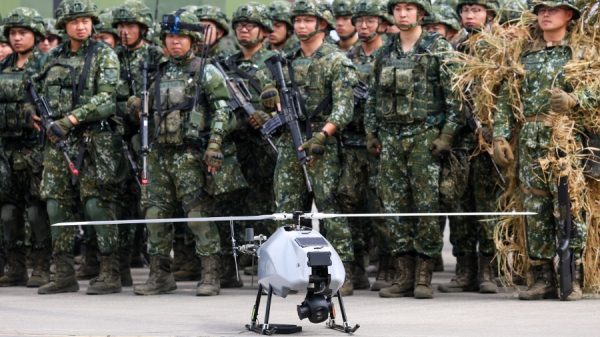
Uncrewed systems have become a key element of asymmetric warfare
At a post-Cabinet press conference, Executive Yuan spokesperson Lee Hui-chih quoted Premier Cho Jung-tai as saying that the original US$39.6 billion (NT$1.25 trillion) special defense procurement bill was intended to achieve three major goals:
- Building the “Shield of Taiwan” defense framework
- Introducing a high-tech kill chain
- Advancing Taiwan’s indigenous defense industry
Cho said these three pillars are indispensable components of Taiwan’s national security.
However, he expressed regret that the Legislative Yuan approved only US$24.7 billion (NT$780 billion) and excluded programs involving commercial procurement and commissioned production, arguing that these cuts undermine the completeness of Taiwan’s defense capabilities.
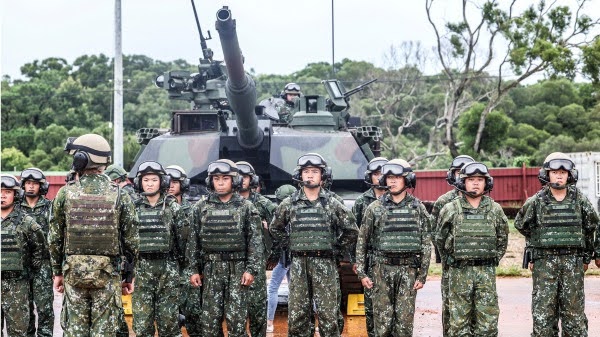
Premier Cho Jung-tai said that uncrewed systems have become a critical capability in modern asymmetric warfare. While the Ministry of National Defense continues to strengthen military readiness and force development, it is also closely tracking emerging technologies in uncrewed systems. For this reason, the ministry has proposed the special bill.
Cho emphasized: “Taiwan urgently needs to integrate with the global non-red supply chain, strengthen its capacity to domestically produce key components, and achieve the goals of local sourcing, indigenous manufacturing, and self-sufficient maintenance. During the transition from peacetime to wartime, expanding production through Taiwan’s domestic industrial supply chain will help ensure defense self-reliance while sustaining the Armed Forces’ combat capability and defense resilience.”
Cho added that the uncrewed systems industry encompasses a wide range of sectors, including:
- Vehicle manufacturing
- Battery systems
- Electro-optical sensors
- Artificial intelligence
- Communications equipment
- Software development
- Maintenance and repair services
He said the initiative would stimulate the entire uncrewed systems industrial supply chain, promote domestic economic growth, establish the sector as a new strategic industry, and create a “win-win outcome for both national defense and civilian development.”
The draft bill will now be submitted to the Legislative Yuan for deliberation. Cho also instructed the Ministry of National Defense to communicate with both the governing and opposition parties in the legislature in hopes of securing its swift passage.
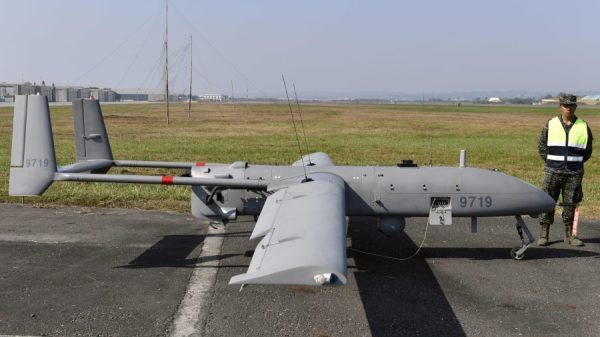
Responding to a rapidly changing international environment and the CCP’s military threat
According to SET News, Taiwan’s Ministry of National Defense said the proposal is intended to take advantage of concentrated resources and stable long-term funding by adopting long-term procurement contracts and an iterative upgrade strategy to strengthen the military’s operational uncrewed systems capabilities. The ministry also aims to establish a non-red supply chain to preserve Taiwan’s asymmetric deterrence capabilities.
The ministry further stated that the Republic of China Armed Forces are expected to be the largest potential customer for domestically produced uncrewed systems. Given the substantial future demand for national defense, it said Taiwan must integrate the efforts of the government, the legislature, and private industry to establish a comprehensive domestic ecosystem for research and development while expanding industrial capacity. Doing so would enable rapid development and mass production, helping Taiwan become part of the international democratic supply chain.
The Ministry of National Defense stressed that, in light of the rapidly evolving international security environment and the severe military threat posed by the Chinese Communist Party (CCP), it has prudently prepared the proposed special budget within the government’s fiscal capacity. The ministry said the funding is intended to safeguard national defense, strengthen Taiwan’s military capabilities, and demonstrate the country’s determination to defend itself.