By Liu Guangtao
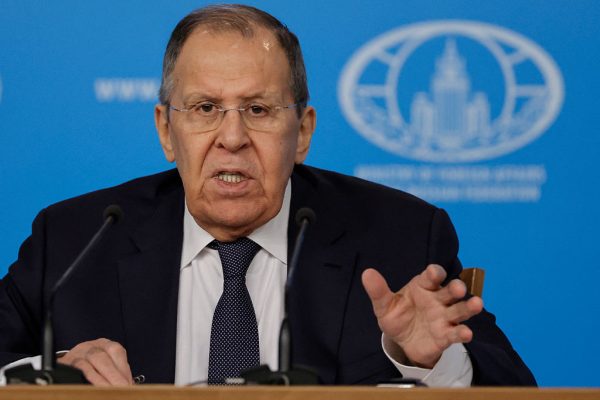
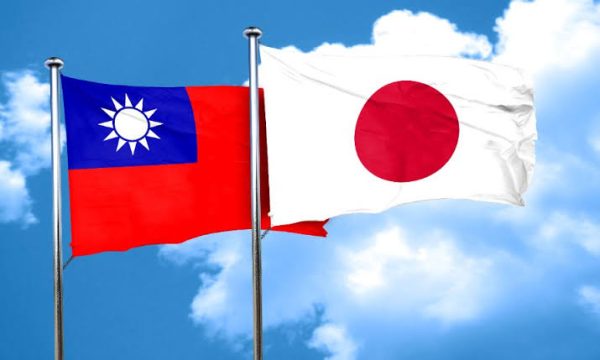
Russian Foreign Minister Sergey Lavrov’s blunt remark to Russia’s state news agency TASS — that “if Taiwan faces trouble, Russia will support China on issues of national unity and territorial integrity” — appeared, on the surface, to be a response to Japan. In substance, it added another layer to a statement once made by former Japanese Prime Minister Shinzo Abe: “If Taiwan faces trouble, Japan faces trouble, and so does the U.S.–Japan alliance.”
On one side stands the claim that “if Taiwan is in trouble, Japan is in trouble.” On the other, the assertion that “if Taiwan is in trouble, Russia will firmly support China.” China, Russia, and Japan are on the board; the United States remains just offstage, holding the greatest military power. Taiwan, meanwhile, is repeatedly invoked by others, yet rarely treated as an actor capable of moving its own pieces.
The question is unavoidable. On this vast Eurasian chessboard, how can Taiwan see the situation clearly without placing itself on the gambling table?
What is Russia really saying — and to whom?
Lavrov’s words deserve to be taken apart.
Success
You are now signed up for our newsletter
Success
Check your email to complete sign up
The first layer is procedural. The China–Russia Treaty of Good-Neighborliness and Friendly Cooperation already commits both sides to supporting each other on issues of “national unity and territorial integrity.” By explicitly placing Taiwan within this framework, Moscow is offering Beijing a symbolic reaffirmation. For Russia, now under sustained Western pressure over Ukraine, this alignment carries its own value. At minimum, it signals that Moscow is willing to stand alongside China on the Taiwan issue.
The second layer is aimed squarely at Japan. Lavrov pointed to Tokyo’s accelerated militarization and defense spending that has moved beyond postwar limits, effectively tying “a Taiwan contingency” to Japan’s broader security trajectory. The implication is direct. If Japan positions itself too prominently on Taiwan, Russia retains tools in the north — from military exercises to deployments near the Kuril Islands — to remind Tokyo that pressure can run both ways.
The third layer is directed at the United States and the wider Western world. By echoing Beijing’s position on Taiwan while remaining locked in confrontation with NATO in Europe, Russia is suggesting that Ukraine and the Taiwan Strait should not be viewed as separate theaters. For Washington, the message is that applying pressure simultaneously across Eurasia carries the risk of coordinated responses from Moscow and Beijing.
For Taiwan, however, the real issue is not how forceful such statements sound. It is a simpler and colder reality: major powers make commitments for their own reasons. This applies to Russia’s expressions of support, America’s security assurances, Japan’s rhetoric of shared crisis, and Beijing’s repeated declarations on opposing Taiwan independence.
Who plays the game, and who becomes the piece?
History offers few comforting precedents.
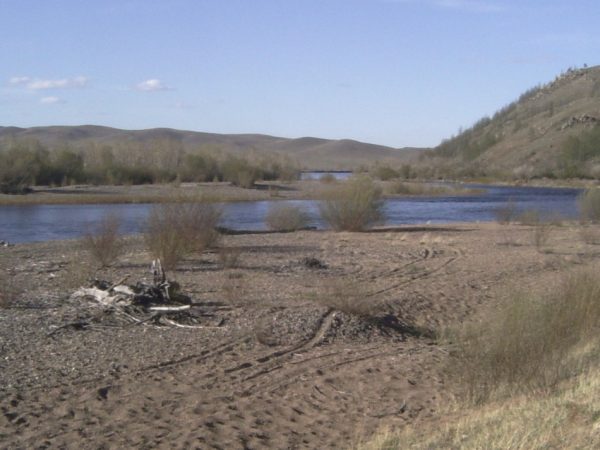
Outer Mongolia provides a clear example. After 1911, it enjoyed a high degree of autonomy. In 1945, under Soviet control, a referendum delivered near-unanimous support for independence. Under pressure from both the United States and the Soviet Union, the Republic of China recognized the Mongolian People’s Republic. For Mongolia, this marked the beginning of national independence. For many Chinese, it became a reminder of how territory can be reshaped at great-power negotiating tables.
The Korean Peninsula followed a familiar path. What began as a temporary U.S.–Soviet military division hardened into two states and two systems. The Korean War ended roughly where it began, near the 38th parallel, but left millions dead and a division that persists decades later. Vietnam’s experience differed in outcome but not in pattern. Backed by competing great powers, it fought a prolonged proxy war, achieved national unification, and then endured years of regional conflict and reconstruction that consumed an entire generation.
These cases share common features. Strategic geography. Limited autonomous power. A tendency to rely heavily on one major patron while ignoring the sensitivities of others. Decisions over war and peace, ceasefires and borders were ultimately made elsewhere.
Taiwan’s own modern history fits uncomfortably into this pattern. From Qing-era defeat and forced cession to Japan, to postwar retrocession, to becoming the frontline of a civil war stalemate, and later a Cold War outpost for the United States — only to be subject to “policy adjustments” when Washington recalibrated relations with Beijing — Taiwan has often found itself informed of decisions rather than consulted. History’s first hard lesson is blunt. In the eyes of great powers, “trouble in Taiwan” has rarely been treated as Taiwan’s own affair. It has been a mobilization slogan, a bargaining chip, a strategic lever.

Taiwan’s position on the board: a four-way tug-of-war
Set slogans aside, and the structural realities come into view.
Geographically, Taiwan sits at a maritime crossroads. For China to reach the Pacific, it must confront the first island chain, of which Taiwan is a central link. Japan depends overwhelmingly on maritime energy imports, with the East China Sea, South China Sea, and Taiwan Strait forming vital lifelines. The United States maintains a chain of power projection stretching from Alaska and Hawaii through Guam and Okinawa. Taiwan lies where these strategic lines intersect. To major powers, it is an observation point, a pivot, and a gate.
In terms of power structure, Taiwan exists within overlapping layers of ambiguity. Beijing treats Taiwan as a core issue of national unification. Washington oscillates between strategic ambiguity and increasing clarity, testing boundaries through legislation, arms sales, visits, and exercises. Tokyo has incorporated a Taiwan contingency into its own security planning. Moscow uses Taiwan as a multifunctional symbol — linking it to Ukraine, signaling alignment with Beijing, and applying pressure on Japan. In this environment, every move Taiwan makes is read as a signal.
Security calculations diverge sharply. China seeks to prevent the emergence of a substantively independent Taiwan permanently embedded in the U.S.–Japan alliance system. The United States wants Taiwan resilient enough to constrain Beijing, but not so volatile as to pull Washington into a direct confrontation with a nuclear power. Japan invokes Taiwan contingencies to justify military expansion, yet hesitates to stake national survival on them. Russia prefers an East Asia that remains tense but manageable, constraining the United States and Japan without opening a new front. The one actor that cannot afford prolonged ambiguity is Taiwan itself.
Here, Taiwan must shed the illusion of protective talismans. One of its greatest risks lies in treating great-power statements as fixed insurance policies — reading U.S. legislation, arms sales, and visits as guarantees of intervention; interpreting Japanese rhetoric as certainty of deployment; or assuming Russia’s alignment with China will reliably restrain others.

What, then, can Taiwan do?
History shows that whether a great power intervenes depends on cost and calculation, not declarations of principle. This does not mean Taiwan should avoid seeking external support. It means such support must be treated as a variable, not a constant. To place survival entirely in others’ hands is to entrust life and death to someone else’s accounting.
Taiwan must strengthen its capacity for self-defense without deliberately crossing red lines. A political entity unwilling to sustain basic defense is unlikely to inspire sacrifice from others. At the same time, domestic political mobilization can tempt leaders toward symbolic but highly provocative actions. Without sober assessment of escalation dynamics, such moves risk pushing Taiwan into situations it cannot control.
Between these extremes lies a narrow but real path. Taiwan can build credible asymmetric defenses so that any potential aggressor understands that success would come at a prohibitive cost. At the same time, it must treat politically sensitive gestures with extreme caution, avoiding steps that compress decision-making into a corner where force becomes the only option.
Managing internal division is equally vital. The experiences of Outer Mongolia, Korea, and Vietnam all suggest that the more fractured a society becomes, the easier it is for external powers to exploit it. Taiwan’s most valuable asset is not any single ideology, but its capacity for rational debate within a pluralistic society — one where political competition is intense but does not render opponents disposable.
If discussions of war and peace devolve into accusations of betrayal; if policy debate turns into contests over who can deliver the most provocative rhetoric; then external powers will find no shortage of fissures to manipulate.
From ‘others’ trouble’ to Taiwan’s own responsibility
For smaller political entities, fully aligning with one side while treating the other as an absolute enemy is often the most expensive choice. Taiwan’s realistic option is not universal goodwill, but calibrated balance. It can maintain stable relations with the United States and Japan without racing ahead of their own hesitations. It can expand practical cooperation with other mid-sized and regional partners to spread risk. It can maintain a clear understanding of Beijing’s red lines while preserving its democratic way of life.
Ambiguity is not the absence of principle. It is the preservation of room to maneuver.
In the age of social media, “trouble in Taiwan” easily becomes an emotional label. One side mobilizes under banners of democratic defense. The other invokes national unification. Moderate voices are squeezed out, and professional analysis is dismissed as weakness or provocation.
What matters, however, are questions far less abstract. If war erupts, who dies? Who stays? Who rebuilds? Which infrastructure disappears in the first wave? How long can financial systems, energy supplies, food distribution, and healthcare endure? If such questions are perpetually drowned out by slogans, Taiwan risks losing the ability to calculate at precisely the moment calculation matters most.
The two rallying cries — “If Taiwan is in trouble, Japan is in trouble,” and “If Taiwan is in trouble, Russia will support China” — share a common flaw. Both define Taiwan primarily as the trigger for someone else’s crisis.
A more useful way to frame the problem reverses that logic. If Taiwan faces trouble, it is first and foremost Taiwan’s own responsibility. Is it prepared? Can it delay others’ crises by avoiding steps that bring its own closer? Can it function as a shock absorber rather than a detonator amid great-power probing and pressure?
History has left Taiwan limited room. One choice, however, remains its own. The more clearly it reads the board, the less willingly it becomes a piece.
(The views expressed here are solely those of the author and do not necessarily reflect those of Vision Times.)