By Li Muzi
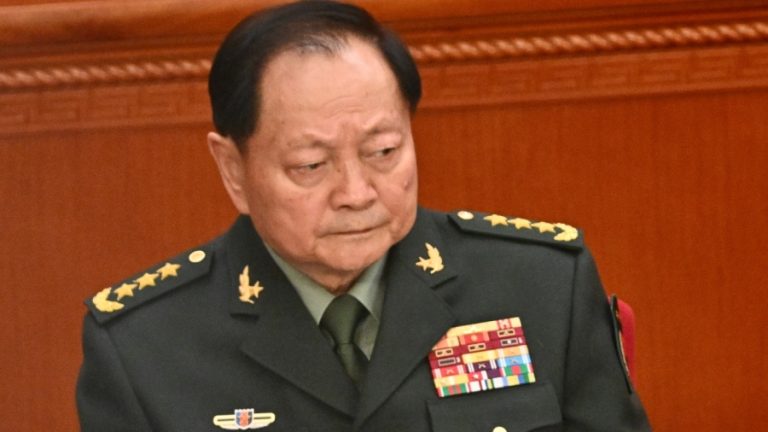
On Jan. 24, Chinese authorities announced disciplinary investigations into Zhang Youxia, vice chairman of the Central Military Commission (CMC), and Liu Zhenli, chief of the CMC’s Joint Staff Department, on suspicion of “serious violations of discipline and law.” The announcement triggered widespread discussion online and quickly became one of the most closely watched political developments in China.
According to a notice released the same day on the website of China’s Ministry of National Defense, the decision to open formal probes into Zhang and Liu was made after deliberation by the Chinese Communist Party (CCP) leadership. Zhang is also a member of the CCP Politburo, while Liu serves as a member of the Central Military Commission.
Within the CCP system, the phrase “serious violations of discipline and law” is widely understood as a euphemism for corruption-related offenses. Since taking power in 2012, Chinese leader Xi Jinping has launched a sweeping anti-corruption campaign, with the military emerging as one of its primary targets. Beginning in 2023, the campaign expanded further into the upper ranks of the armed forces.
With the downfall of Zhang, 75, and Liu, 61, observers note that much of China’s senior military leadership has now been drawn into disciplinary investigations.
Success
You are now signed up for our newsletter
Success
Check your email to complete sign up
Inside China, public discussion of the case appears tightly controlled. On many domestic news platforms, comment sections related to the announcement showed little to no user engagement. On short-video platform Douyin, comment sections under related clips were dominated by uniform expressions of support or approval, with few dissenting voices visible.
By contrast, reactions on the overseas social media platform X unfolded very differently, with users openly speculating about the political implications of the investigations.
One overseas commentator using the handle “Dr. Liu Zheng” wrote that he had been the first to preview the day’s developments on X, adding that “a bigger event” was still to come. He claimed to have received a “silence notice” and urged followers to wait, suggesting that “things are not that simple.”
Another user, posting under the name “Liaowuaiguai,” said the case would test how Xi Jinping manages internal tensions among elite families, warning that China could face either severe internal instability or a redirection of pressure outward, with Taiwan becoming a focal point.
Others compared the investigation to historic political purges. A user identified as “Qingdao Xiaohala” described the case as “nuclear-level news,” likening it to Mao Zedong’s removal of Lin Biao, and expressing disbelief that a figure seen as China’s second-most-powerful leader could be targeted.

Intensified internal struggles predicted
Several comments focused on broader political consequences. One user, “Jessica,” claimed that without Zhang acting as a counterbalance, other senior figures could face renewed political pressure, predicting intensified internal struggles. Another, using the name “Ben Jame,” argued that targeting Zhang amounted to an open rupture within the system, warning that such a move ahead of the Lunar New Year could destabilize Beijing’s political atmosphere.
Some users framed the episode as evidence of deeper structural issues within the Chinese system. “Chagoo” wrote that, in the CCP’s view, the military exists to serve power rather than the nation or the public, arguing that senior officers ultimately become expendable figures with little agency over whom they truly serve.
Still others rejected the anti-corruption narrative altogether. A user calling himself “Zhou Fengxiong” described corruption as endemic within the CCP, asserting that internal purges were merely factional struggles rather than genuine reform.
Comments from other users echoed similar sentiments, with posts suggesting that the investigations marked only the beginning of a wider political shake-up, and that ordinary people in China increasingly feel insecure about the future.
Political commentator “New High Ground” wrote on X that if Zhang Youxia, Liu Zhenli, and Zhong Shaojun were all to fall, it would signal that power struggles at the top of the CCP had entered an exceptionally dangerous phase. According to the commentator, the campaign would no longer be limited to removing “peripheral” military figures but would instead strike directly at core elite families and their networks.
The commentator further argued that Zhang’s investigation should not be interpreted as another victory in China’s anti-corruption drive. Rather, it would represent a breaking point in the CCP’s internal consensus, pointing not toward greater stability, but toward a transition from tightly controlled order to a far more unpredictable and high-risk political trajectory.