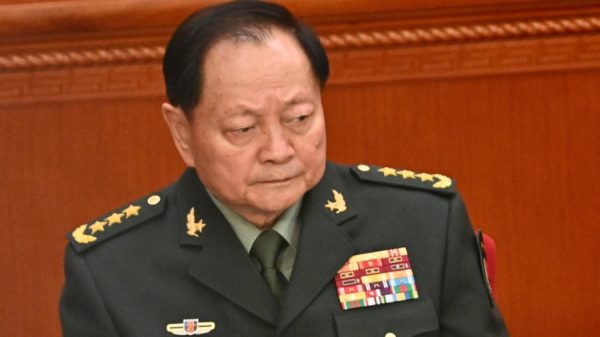
In January 2026, unverified reports that Zhang Youxia and Liu Zhenli had been taken into custody began circulating widely, quickly drawing attention in Washington. On Jan. 23, Dennis Wilder, a former senior U.S. official, warned on X that if Beijing failed to arrange a public appearance by Zhang soon, the episode could amount to China’s equivalent of Germany’s “Night of the Long Knives”—the infamous 1934 Nazi purge.
Given Wilder’s background, the remark landed with unusual weight.

The unusual authority behind Dennis Wilder’s warning
Referring to Dennis Wilder merely as a “professor” risks seriously understating his stature. According to his own biography, Wilder is a former senior U.S. government official, a former editor of the President’s Daily Brief, and a noted sinologist.
His résumé goes further. Wilder served as a special assistant to a U.S. president and as a former deputy assistant director of the Central Intelligence Agency. He has taught courses on intelligence, national security, and geopolitics.
During the George W. Bush administration, Wilder was senior director for East Asian affairs at the National Security Council. Under President Barack Obama, he spent six years as editor of the President’s Daily Brief, the classified intelligence summary prepared daily for the U.S. president. Earlier, he served as the CIA’s deputy assistant director for East Asia and the Pacific, overseeing intelligence analysis for the region.
Success
You are now signed up for our newsletter
Success
Check your email to complete sign up
When someone with this background publicly compares developments in Beijing to the “Night of the Long Knives,” it underscores the scale of the political dilemma now confronting Xi Jinping’s leadership: how to respond to persistent rumors that Zhang Youxia and Liu Zhenli—two of the most senior figures in the People’s Liberation Army (PLA)—have been arrested.
Under global scrutiny, any response from the Chinese Communist Party (CCP)—or even prolonged silence—invites interpretation.
And one recent signal from within the PLA has struck many observers as deeply unsettling.
A bizarre video from the Southern Theater Command Air Force
On Jan. 21, the Air Force of the PLA Southern Theater Command abruptly released a short video. In it, a voice with a strikingly authoritarian tone declares: “From now on, no one is allowed to raise their voice at me.” China’s major state media outlets quickly amplified the clip.
What raised eyebrows was what the video did not say. The Southern Theater Command Air Force did not specify whom the message was directed at.
Against the backdrop of rampant rumors about Zhang Youxia and Liu Zhenli, the coordinated promotion of this video by CCP propaganda outlets prompted intense speculation. Was it meant for internal consumption or external signaling? Was it a calculated warning, a veiled assertion of authority, or merely a coincidence?
The ambiguity only deepened the sense of unease.
Independent political commentator Cai Shenkun reported that the arrests of Zhang Youxia and 16 other senior generals were “absolutely accurate,” naming among them General Liu Zhenli, General Xiao Tianliang, and Lieutenant General Zhong Shaojun.
If these reports are true, the Southern Theater Command video becomes a bitter irony. The entire Central Military Commission (CMC)—the CCP’s top military decision-making body—would have effectively purged those with real operational military experience. There would be no one left capable of “speaking loudly” in a professional sense.
Whether Zhang Youxia has indeed been detained may soon become clearer through routine end-of-month Politburo meetings or collective study sessions, where absences and appearances are closely watched. Beijing’s handling of international reactions will also offer clues to the trajectory of its internal power struggle.
One conclusion, however, is unavoidable.
If Zhang Youxia has been arrested, the shock to the PLA would rival that of the 1971 “September 13 Incident,” when Marshal Lin Biao—once Mao Zedong’s designated successor—died in a mysterious plane crash after an alleged coup attempt. And the implications could be even more severe.
If Zhang Youxia and Liu Zhenli have both fallen, combined with the ongoing purge of what authorities call the “residual influence” of former CMC political work chief Miao Hua, the scope of the crackdown would extend across the entire military. Key posts throughout the PLA would be swept clean in a massive reshuffle.
Xi Jinping would, in effect, become a commander without commanders.
To grasp what such a scenario would look like, one need only recall the aftermath of the Lin Biao affair.
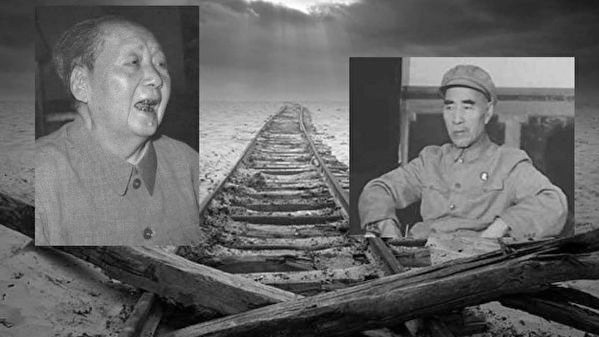
The military purge after the Lin Biao ‘9.13 incident’
Following the Sept. 13, 1971 incident, the CCP established special investigative groups to amass so-called “evidence” against the “Lin Biao clique.” The campaign relied heavily on coercive interrogations, forced confessions, and relentless political pressure.
The net was cast extraordinarily wide. It ensnared top military leaders such as Huang Yongsheng, Wu Faxian, Li Zuopeng, and Qiu Huizuo—members of the Military Commission Office Group—along with their spouses and children. It extended to ordinary staff in Lin Biao’s office and to personnel across military regions, service branches, and provincial commands, whether they were aware of any alleged plot or not. Countless officers were criticized, purged, or placed under isolation and investigation.
On Sept. 23, 1971, Premier Zhou Enlai summoned Huang Yongsheng, Wu Faxian, Li Zuopeng, and Qiu Huizuo to the Great Hall of the People. “You will temporarily leave your posts and seriously reflect on your problems,” Zhou told them. “It won’t take long.” He added: “Listen carefully—your wives and children are revolutionaries. If anything happens to them while you’re away, come find me, Zhou.” He patted his chest as he spoke.
Within days, however, the wives, children, relatives, secretaries, drivers, and guards of these men were all arrested.
Under the investigative teams’ practice of “back-to-back” denunciations—forcing suspects to incriminate one another repeatedly—many individuals fabricated testimony under extreme political pressure. False confessions and perjured statements proliferated, producing a vast number of wrongful cases.
In his memoir, Qiu Huizuo recounts how Wu Faxian, under duress, provided false testimony claiming that Ye Qun, Lin Biao’s wife, had proposed establishing a separate central leadership in Guangzhou to continue “anti-party” activities. Investigators demanded that Qiu supply corroborating evidence of a coup plot and an assassination plan against Mao Zedong. When he refused, they urged him to fabricate material.
“The Central Committee is considering leniency for Wu Faxian and making arrangements for his livelihood,” they told him. “If you explain the issues clearly, you’ll receive better treatment. For your own sake and that of your entire family, the more clearly you speak, the more it will benefit you. You’re a smart man—you should understand this perfectly.”
As one Chinese scholar later described it, the mountain of “back-to-back” denunciations and confessions came not only from suspects themselves, but from their children, relatives, and even casual acquaintances. Anyone tangentially connected was swept in. The investigations probed every detail of the Lin Biao group’s activities—real or imagined—scrutinizing not only present conduct but entire personal histories, not only actions but thoughts.

A familiar pattern, reemerging
If reports of the arrests of Zhang Youxia and Liu Zhenli are true—following earlier purges of figures such as Miao Hua and He Weidong—the morale of the entire PLA will inevitably be shaken. The same scenes witnessed after the Lin Biao affair would replay across the armed forces.
A sweeping campaign of discipline, rectification, and political cleansing—one that would determine the fate of countless soldiers and their families—would already be bearing down on them with terrifying force.