Editor’s Note: This article examines circulating rumors surrounding senior Chinese military officials and analyzes publicly observable signals and commentary. Claims cited from online sources and commentators cannot be independently verified and are presented as reported or assessed by those sources.
By Jian Yi
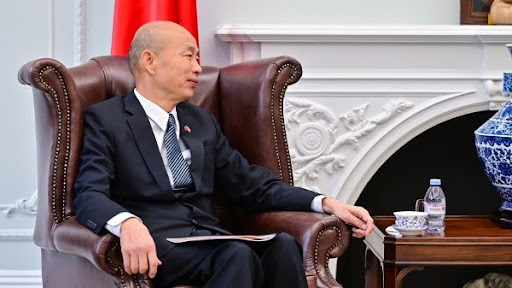
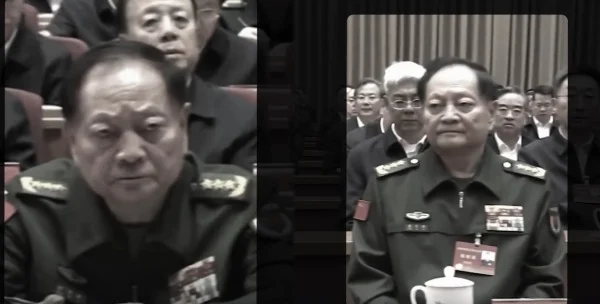
On January 20, a provincial- and ministerial-level study session linked to the Fourth Plenum concluded in Beijing. Attention quickly shifted from what was discussed to who was not present. Zhang Youxia and Liu Zhenli were both absent, a detail that did not go unnoticed and soon began circulating across Chinese-language social media.
Within hours, speculation spread. Some posts claimed that both men were under investigation. Others alleged that Zhang’s office at the Central Military Commission had been sealed. A separate strand of rumor suggested that Zhong Shaojun, once regarded as Xi Jinping’s closest military aide, had quietly reappeared.
None of these claims could be independently verified. Still, the speed with which they emerged, and the confidence with which they were asserted, raised questions among observers who follow China’s elite politics closely.
Success
You are now signed up for our newsletter
Success
Check your email to complete sign up
Rumors following senior absences
One widely shared post claimed to offer inside information. It stated bluntly that Zhang Youxia had already been detained and that his Central Military Commission office had been sealed. The message insisted this was not speculation, but a deliberate release from within the system.
Its tone stood out. The post dismissed outside analysts as clueless and suggested that anyone with even modest access to the military, “as little as a section chief at the brigade level,” would already know that Zhang’s fate was sealed.
That detail prompted immediate skepticism. Zhang Youxia is not a marginal figure. He has spent decades building influence within the military, and his networks are widely regarded as one of the factors Xi Jinping has had to manage most carefully. In past political struggles, information involving figures of this stature has rarely filtered downward quickly, let alone in such unqualified terms.
Absence alone, of course, proves little. Senior officials in China can disappear from public view for many reasons, and attendance at meetings has never guaranteed political safety. Officials present one day have fallen the next, while others have missed meetings only to reappear later without explanation.
What stood out this time was less the rumor itself than the reaction it provoked. Had the claim been that Zhang Youxia had taken action against Xi Jinping, the response would likely have been celebratory rather than contested. Instead, the story generated argument and doubt, a contrast that has shaped much of the discussion.
One basic question has continued to surface: which came first, Zhang’s absence or the rumor of his detention? In this case, the absence was noticed first, followed by increasingly elaborate claims. For some observers, that sequence alone has been reason enough to withhold judgment.
Signals surrounding the Miao Hua case
Another element of the rumor has drawn even more questions: claims that Zhong Shaojun had returned.
Here, the publicly visible signals point elsewhere. Zhong appeared at a similar provincial- and ministerial-level study session two years ago, but was absent this time. He has also failed to appear at several recent high-level meetings, including the Fifth Plenum of the Central Commission for Discipline Inspection and the expanded meeting of the Central Military Commission’s Discipline Inspection Commission.
His departure followed a gradual trajectory. In April 2024, Zhong was removed as director of the Central Military Commission General Office and reassigned as political commissar of the National Defense University. Roughly a year and a half later, he was relieved of that post as well. His successor, Lieutenant General Xia Zhihe, attended the most recent study session.
Zhong’s continued absence from public view has made talk of a comeback difficult to reconcile with what has been visible so far.
Attention has instead shifted to a different signal that emerged months earlier and attracted less immediate attention at the time. In July 2025, an article began circulating online under the headline “Heavyweight: Purging the Poison of Miao Hua, Political Cadres Must Undergo a Bone-Scraping Self-Revolution.” The piece made no mention of Xi Jinping, focusing instead on an unusually blunt critique of Miao Hua.
Written under the pseudonym “Huashan Qiongjian,” the article accused Miao of cultivating personal networks, harboring political ambitions, and turning parts of the military into factional enclaves. It repeatedly referred to problems that had accumulated “in recent years,” criticizing formalism, corruption, and the shielding of wrongdoing.
The wording drew attention precisely because of what it left unsaid. Official propaganda in recent years has frequently portrayed Xi Jinping as having “saved the military.” The article’s argument, by contrast, suggested that the military’s political environment had deteriorated to a point requiring rescue.
Public records show that the “Huashan Qiongjian” account is linked to the China Military Culture Forum, an organization ultimately overseen by the former General Political Department. In December 2025, the same account published another article recalling Zhang Youxia’s role in large-scale live-fire exercises at the Zhurihe training base. The author identified himself as Zhang Jixiang, a former deputy commander of the base with longstanding ties to Zhang.
The timing and tone of these writings did not go unnoticed. Whether they reflect coordinated signaling or more fragmented maneuvering remains unclear. What is evident is that criticism of Miao Hua has continued to surface even as rumors surrounding Zhang Youxia rise and fade, adding another layer of uncertainty to a moment that many observers believe is still unfolding.