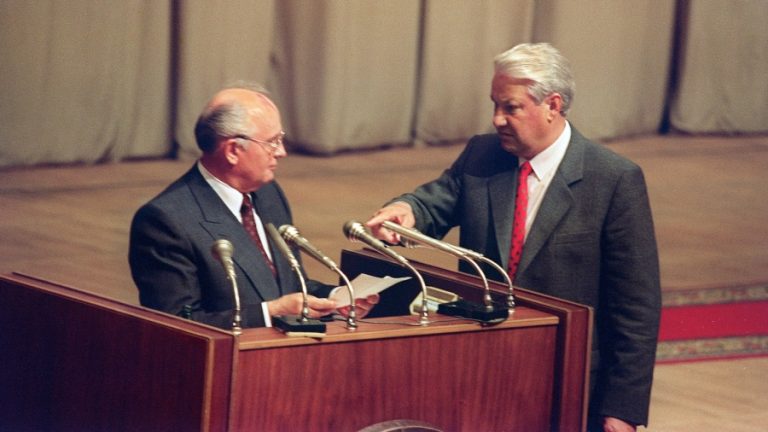
Beijing today is gripped by a compounded fear: “Soviet-style institutional sclerosis” layered atop the specter of a “Romanian-style sudden collapse.” According to leaked records from an internal “doomsday assessment” meeting, the Chinese Communist Party (CCP) now shares striking similarities with both historical precedents.
The CCP’s obsession with the Soviet collapse
Zhongnanhai once circulated an internal documentary titled “Preparing for Danger in Times of Safety: Historical Lessons from the Death of the Soviet Communist Party.” The film consists almost entirely of footage depicting the disintegration of the Soviet Union and was mandated viewing for Party members.
This was no ordinary historical documentary. It was jointly produced by the Central Commission for Discipline Inspection (CCDI) and the CCP’s Central Organization Department—two of the Party’s most powerful internal control organs. Beginning in the early 2000s, and especially after Xi Jinping took power, the film became required coursework at Party schools.
The documentary places the blame for the Soviet collapse squarely on “Gorbachev’s betrayal” and “de-ideologization,” not on systemic failure inherent to communism itself. At the time, cadres at and above the county and bureau level were required to watch it and submit written reflections to demonstrate political loyalty.
Privately, however, reactions were starkly different. One official reportedly remarked after viewing: “This isn’t ‘preparing for danger.’ It’s watching someone else’s house burn down and realizing your own house is soaked in gasoline.” A now-deceased princeling—descended from a senior revolutionary leader—once said in private: “We weren’t watching the Soviet Union’s autopsy. We were watching our own.”
Success
You are now signed up for our newsletter
Success
Check your email to complete sign up
Systemic corruption and the ‘gasoline barrel’ state
The documentary was meant as a warning. What many officials saw instead was the reality that Soviet elites seamlessly transformed into oligarchs after the collapse. CCP elite families—the so-called “red second generation” and official offspring—have long completed asset transfers through money laundering and offshore accounts.
China today is characterized not by the “localized corruption” of the late Soviet period, but by “cell-level corruption.” Land finance and runaway debt have plunged local governments into chronic deficits. Spending on “stability maintenance”—internal security, surveillance, and repression—has already surpassed national defense expenditures.
These are the explosives stacked together. The “barrels of gasoline” are already in place, waiting only for a spark. It is hardly surprising that officials concluded, in their private reflections, that “our own house is full of fuel.”
China today and the Soviet Union on the eve of collapse
Present-day Beijing bears an eerie resemblance to Moscow in the late 1980s and early 1990s. In the final years of the Soviet Union, economic growth had nearly stalled, while military spending—estimated at 15–20 percent of GDP—hollowed out state finances.
According to internal rumors circulated through overseas Chinese-language media, China’s multi-level government debt has reached astronomical levels, and “stability maintenance” spending has long surpassed military expenditures.
Where the late Soviet Union suffered from material shortages, China now faces a bursting real estate bubble, soaring youth unemployment, and a mass exodus of foreign capital. This “internal-combustion-style” economic collapse mirrors the Soviet state’s inability to sustain its bloated system.
Elite purges and ‘no one believes in Marx anymore’
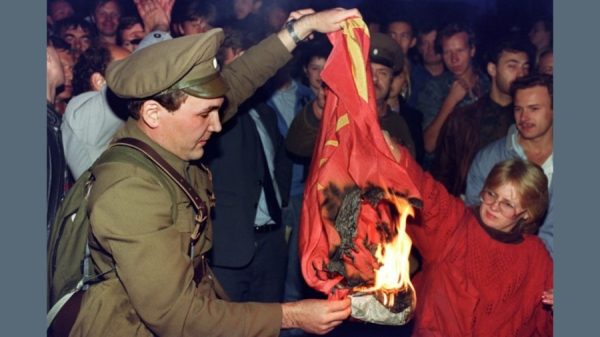
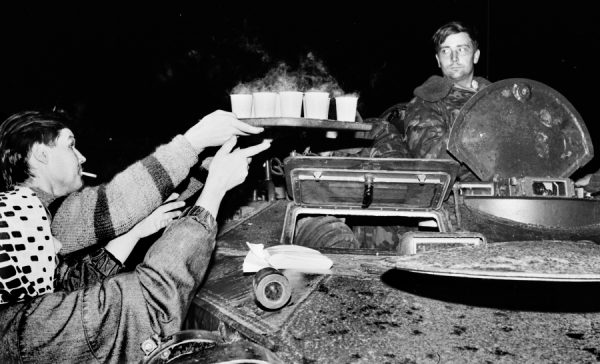
Ahead of the August 1991 coup attempt, factional infighting within the Soviet Communist Party had already gone public. Conservative hardliners—the State Emergency Committee—ordered the KGB’s elite Alpha Group to storm the parliament building (the White House) and arrest Boris Yeltsin.
The commanders refused. They understood that the operation would lead to mass civilian casualties and lacked any popular mandate.
Tank units dispatched to surround the parliament, including forces from the Tula Airborne Division, instead engaged civilians in conversation as thousands formed human shields. General Aleksandr Lebed eventually ordered troops to protect Yeltsin. Defense Minister Dmitry Yazov, unwilling to unleash a civil war against his own people, ordered a withdrawal at the last moment.
According to insider accounts attributed to “red second generation” circles, Xi Jinping’s sweeping purges of the People’s Liberation Army—particularly the Rocket Force—and the political-legal apparatus reflect his deep insecurity over the question of “absolute loyalty.”
Xi has repeatedly invoked the Soviet collapse in internal speeches, lamenting that at the critical moment “not a single man stood up.” The irony is that today’s CCP is plagued by far more “two-faced people”—public loyalty masking private dissent—than existed in Gorbachev’s era.
By the late Soviet period, the gulf between official propaganda and daily life had destroyed public faith in communism. From the “White Paper protests” to popular resistance against urban management (chengguan) and rural enforcement (nongguan), grassroots control in China is visibly loosening.
At the local level, officials increasingly adopt “lying flat” behavior—passive noncompliance and administrative paralysis. This collective bureaucratic dysfunction is a classic precursor to regime collapse and closely resembles the Soviet state’s terminal failure.
Internationally, the Soviet Union faced comprehensive Western containment, exemplified by the Strategic Defense Initiative (“Star Wars”). Today, as U.S.–China relations deteriorate, the CCP confronts technological blockades and geopolitical isolation. The current wave of global de-communization echoes the historical tide that swept away communist regimes in the late Cold War.
Ceaușescu: from mass adulation to execution in minutes
Beijing’s Deepest Psychological Trauma
The CCP leadership’s most haunting nightmare is not Moscow—but Bucharest.
Although the 1989 Tiananmen Movement in Beijing was brutally suppressed, the democratic courage it unleashed directly influenced resistance across Eastern Europe, triggering a global anti-communist wave. In November 1989, ordinary Germans dismantled the Berlin Wall with their own hands, symbolizing the collapse of the communist iron curtain.
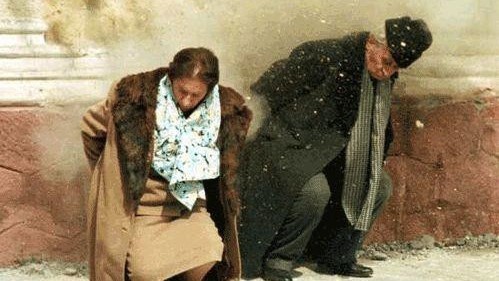
Romanian dictator Nicolae Ceaușescu went from basking in orchestrated mass adulation to execution within days. According to multiple accounts, CCP leaders have repeatedly screened footage of his downfall internally, treating it as a core lesson in political terror.
The ‘Milea Moment’ and the army’s turning point
Ceaușescu’s fall hinged on a decisive moment: the sudden “suicide” of Defense Minister Vasile Milea after he refused to order troops to fire on protesters in Timișoara.
On Dec. 22, 1989, Ceaușescu publicly denounced Milea as a traitor and announced his death. Rank-and-file soldiers widely believed Milea had been executed. The result was explosive fury within the military. Troops immediately stopped enforcing repression orders and even exchanged fire with the secret police (Securitate).
This is the scenario Beijing fears most: the army turning its guns around.
Later that month, Ceaușescu attempted to stage a mass rally in Bucharest to project support. When he began speaking, someone in the crowd shouted “Down with the dictator!” The audience instantly turned. Zhongnanhai reportedly organized repeated Politburo screenings of this footage, analyzing the moment Ceaușescu’s face shifted from confidence to shock and terror.
On Christmas Day, Ceaușescu and his wife were sentenced to death by a military tribunal for massacring civilians and destroying the national economy. They were executed by firing squad beside a barracks wall. This “undignified rapid death” drove home a brutal lesson for CCP elites: once the system collapses, past privilege becomes a death sentence.
Absolute loyalty over professionalism
The CCP has conducted extensive internal studies of the Milea incident, treating it as a central lesson in “managing the military.” The conclusion was clear: absolute loyalty outweighs professional competence.
This explains why Xi Jinping has relentlessly emphasized “the Party’s absolute leadership over the military.” In recent years, the CCP has thoroughly reorganized the Central Military Commission (CMC), abolishing the old military region system in favor of a theater command structure, and concentrating all troop deployment authority in the hands of the CMC chairman alone.
The objective is singular: to ensure that no commander can ever possess the autonomy to refuse an order to fire.
Internal meeting records also reveal acute suspicion toward officers who publicly pledge loyalty while privately waiting to see how events unfold. The recent wholesale purge of the Rocket Force leadership is widely rumored to involve not only corruption, but deeper concerns over alignment on Taiwan or U.S.-China conflict scenarios—echoes of a Milea-style “betrayal.”
Xi’s purge of the Equipment Development Department—long considered the power base of Zhang Youxia—amounts to systematically clipping Zhang’s wings. The rapid turnover of defense ministers mirrors Ceaușescu’s late-stage paranoia, when he cycled through confidants and even installed family members in key positions.
Zhang Youxia’s arrest now symbolizes the fall of the last PLA general combining princeling pedigree with real combat prestige. Regardless of official narratives, the psychological blow to mid-level officers is devastating: it reinforces the belief that no matter how high one climbs within the CCP system, purge is the inevitable end.
A brittle system waiting to shatter
Looking ahead, the CCP’s trajectory toward extreme political control will only further erode the military’s flexibility and combat effectiveness. This “rigid yet fragile” condition means that if economic collapse drains stability maintenance funding, long-suppressed resentment among grassroots troops could instantly trigger a chain reaction reminiscent of the Milea incident.
On that day, Chinese citizens may well pour into the streets—singing, embracing, celebrating—much like Venezuelans once did when the foundations of their own authoritarian order began to crack.