
Fortune recently reported that although U.S. President Donald Trump has clearly withdrawn his statements about potentially imposing tariffs on NATO allies over the Greenland issue, market discussions triggered by the topic continue, causing short-term fluctuations in financial markets.
The U.S. dollar has continued to weaken, and major Nordic investors have begun reassessing their exposure to U.S. assets. Several Danish pension funds have already led the way in selling U.S. Treasury bonds. Analysts believe this move is related to long-term concerns over global debt levels and also reflects a growing discussion in some European media about the “weaponization of capital” in a geopolitical context.
Currently, European investors hold roughly $8 trillion in U.S. stocks and bonds, of which U.S. Treasuries alone account for $3.6 trillion. According to Capital Economics, European holdings of U.S. debt make up about one-third of total foreign holdings, roughly 10 percent of the overall U.S. Treasury market.

Huge holdings become a ‘shackle;’ Europe cannot act lightly
Because of the sheer size of their holdings, Europe is effectively unable to conduct large-scale sales of U.S. Treasuries. Capital Economics analysts note that a sudden shift of this magnitude would severely disrupt global financial markets.
Jonas Goltermann, Deputy Chief Market Economist at Capital Economics, stated that moving to other assets is not only costly but could trigger a chain reaction: “This is not only financially expensive but could provoke reciprocal retaliation. U.S. investors also hold large amounts of European debt.” He added that European banks remain heavily reliant on dollar liquidity, with the ultimate backstop still being the Federal Reserve. “From the perspective of ‘dominance in escalation,’ control remains clearly in American hands.”
Success
You are now signed up for our newsletter
Success
Check your email to complete sign up
Michael Brown, Senior Research Strategist at Pepperstone, also noted that much of Europe’s U.S. asset holdings are used for collateral and liquidity management rather than active investment choices, making them difficult to politicize.
Selling US debt would backfire on Europe
Brown warned that if Europe were to sell U.S. Treasuries, bond prices would “plunge,” creating spillover effects and raising Europe’s own financing costs. Meanwhile, the euro would sharply appreciate, seriously hurting Eurozone exports and economic growth.
He suggested that a more realistic approach, if Europe wants to exert pressure, might be to “remain on the sidelines in U.S. Treasury auctions,” a so-called “buyer strike,” but even this would be extremely difficult to execute politically and technically.
European media: financial markets are already feeling the shock
Spain’s El País reported that U.S. Treasury Secretary Scott Bessent, responding to related rumors at the Davos Forum, said that the idea of “Europe selling U.S. debt to pressure the U.S.” “has no logical basis.” However, the market is highly sensitive to the topic, and recent fluctuations in U.S. Treasuries reflect external uncertainties to some extent.
The report noted that after Trump announced the possibility of imposing up to a 25 percent tariff on European countries sending troops to Greenland, tension appeared in the U.S. Treasury market. Although the White House later said a “framework agreement” had been reached on Greenland, the impact continues.
Europe’s U.S. Treasury holdings are staggering:
- United Kingdom: $800 billion
- Belgium: $399 billion
- Luxembourg: $328 billion
- Switzerland: $243 billion
- Norway: $218 billion
If Europe were to stop buying U.S. Treasuries, it could trigger a global financial shock. U.S. Treasuries are the cornerstone of the global financial system, and the dollar remains the main currency for global trade and commodities.
Investors begin reassessing the ‘US asset myth’
Recently, the U.S. 10-year Treasury yield approached 4.3 percent, and the 30-year yield neared 5 percent, the highest since last year. Roberto Scholtes, strategist at Spain’s Singular Bank, warned: “At a 5 percent interest rate, U.S. tech stock valuations are difficult to sustain.”
Pimco, the world’s largest bond manager, has indicated it will gradually reduce allocations to U.S. assets due to policy uncertainty under Trump. Denmark’s AkademikerPension pension fund announced it will sell its roughly $100 million in U.S. Treasuries by the end of the month. CIO Anders Schelde bluntly stated: “The U.S. fiscal situation is unsustainable in the long term.”
However, most analysts still believe large-scale withdrawal is unrealistic. Felix Feather, economist at Aberdeen Asset Management, noted that while Europe holds about 40 percent of foreign U.S. debt, “using it as a political weapon is both difficult and self-defeating.”
Derek Halpenny, Head of Global Market Research at MUFG Bank, also stated that governments can hardly force private investors to sell U.S. debt, and many holdings are actually held on behalf of others.
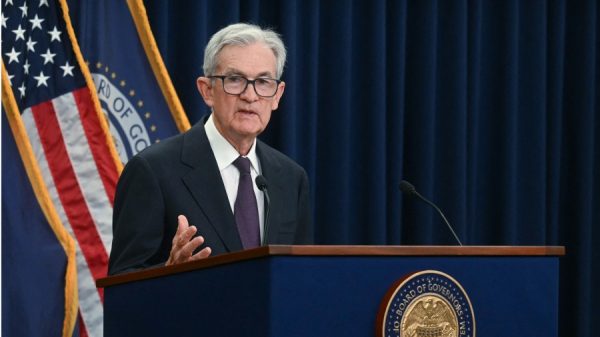
Dollar status remains, but trust is being eroded
Although the U.S. still has the deepest and most attractive capital markets in the world, with leading tech industries and financial systems, analysts note that in a climate of intense policy discussions, some international investors are becoming more cautious, with market assessments of future trends growing more prudent.
As Chris Turner, analyst at ING, put it: “As long as U.S. assets remain attractive in returns, European capital will not exit on a large scale. But if policy risks continue to accumulate, this balance will eventually be broken.”
At present, this process is still a “gradual shift” rather than a dramatic decoupling. But the market has already signaled warnings through pricing.