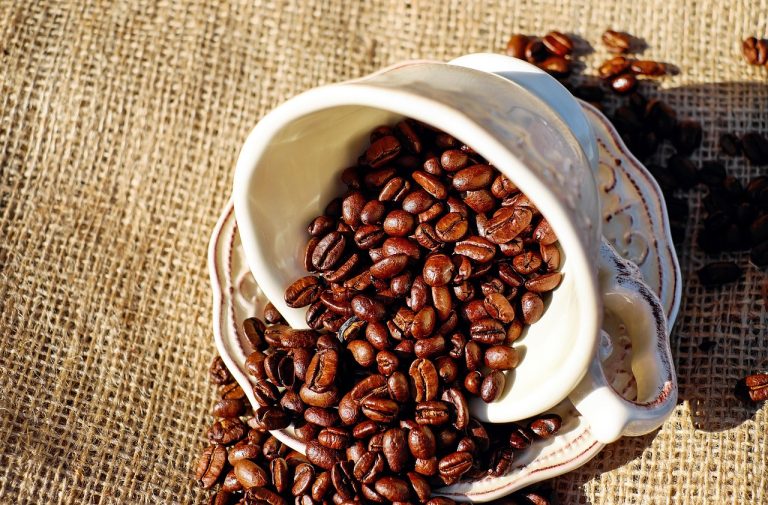
Every morning begins in the same way: a cup of coffee, steam lifting gently, the surface dark and still. Before the day asserts itself with urgency and expectation, a reprieve and orientation are offered in a mug.
Yet coffee has never been neutral.
The war on coffee
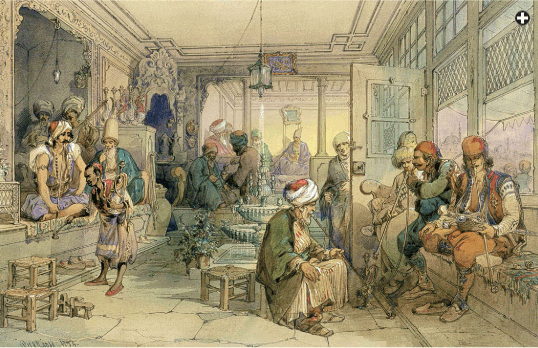
Coffee’s story began 1,800 years ago in its native highlands of Ethiopia, but its intellectual significance emerged during the Islamic Golden Age (roughly 800-1300AD). By the 9th century, qahwa (Arab coffee) was already circulating through Yemen and across the Arab world, finding a home in gathering places that were neither mosque nor market, but something quietly radical.
Early coffeehouses were public venues for learning. Scholars, scientists, poets, and travelers gathered there to share their thoughts and brainstorm ideas. Knowledge of astronomy, medicine, mathematics, and philosophy was being translated, preserved, and advanced in coffee houses throughout the Middle East.
In Baghdad, Cairo, and Damascus, coffee became a silent companion to inquiry during the Islamic Golden Age. It granted clarity and concentration through long nights of study to scholars such as Ibn Sina (Avicenna), whose work shaped both Islamic and European thought for centuries.
Success
You are now signed up for our newsletter
Success
Check your email to complete sign up
These qahwa houses functioned as the world’s first intellectual salons. Anyone could enter. Conversation crossed disciplines. Ideas moved freely, without permission. It was not leisure that unsettled authority; it was attention — shared and sustained.
Rulers worried. Conversations could not be controlled. The war on coffee was brewing. Bans shut down many coffeehouses; but coffee endured because it served something essential: the human need to gather and think together.
That sensibility has never disappeared. Today, Yemeni-owned qahwa houses quietly anchor neighborhoods across New York City and New Jersey. They are neither re-creations, nor cafés in the modern sense, but continuations.
Coffee here is not rushed or reframed. It returns to its original purpose: a reason to gather, to sit, and to think. Cups are poured with patience, without spectacle. What begins in these small rooms does not cry ambition, yet it carries one: to restore qahwa as it was meant to be, even as it steadily slipped outward, city by city, into the world.
Europe inherited the same model. By the 17th century, coffeehouses appeared in London and Paris, echoing their Arab predecessors. They were called penny universities: places where writers, merchants, and political thinkers met on equal ground. Newspapers, insurance markets, even revolutions traced their beginnings to tables stained with coffee rings. Once again, coffee proved disruptive.
Expansion followed. Coffee was removed from its cultural roots and replanted across colonized land. Forests were cleared. Labor was coerced. Entire economies were engineered to serve distant appetites. What had once fueled reflection now fueled extraction.
That imbalance persists.
According to the International Coffee Organization, more than 125 million people worldwide depend on coffee for their livelihoods, most of them are small-scale farmers. Yet the majority don’t earn a living income. Climate change now threatens the crop itself. The organization warns that up to 50 percent of today’s coffee-growing land could become unsuitable by 2050, reshaped by heat, drought, and disease.
The modern war on coffee is hushed, masked as convenience and choice. Café prices rise. Farmgate prices fall. The ritual remains, but its cost is obscured.
And still, coffee endures.
Across cultures, it is offered as readily as a handshake. Before words are uttered, it passes calmly from hand to hand, marking presence rather than urgency. A pause disguised as habit.
There is a freedom in that pause, where past and present briefly touch. The same freedom found in a composed dish, where memory and invention coexist. Celebrity chef Vikas Khanna has described cooking as a space where history and imagination create wonders. Coffee does this too, without spectacle, without insistence.
I return to my cup. The steam has nearly disappeared. What remains is warmth, faint and steady.
Outside, the world moves on.
Inside, for one last moment, time does not.