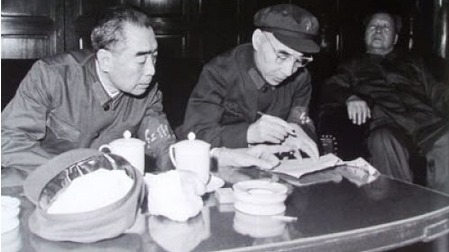
By Fu Longshan
Lin Biao’s death was not an accident, nor a failed escape
Lin Biao did not die because a defection went wrong. He was eliminated.
The Sept. 13, 1971, plane crash was not the chaotic end of a desperate flight, but the final act of a “targeted elimination” personally decided by Mao Zedong and executed with chilling precision by Zhou Enlai. In this process, Zhou revealed himself as the real “two-faced man:” a consummate bureaucratic professional who used procedures, commands, and institutional control to carry out political murder without ever pulling a trigger.
Within a matter of hours, Zhou completed the entire sequence—surveillance, psychological coercion, isolation, misdirection, and final liquidation. As Party insiders later summarized in private: he ensured that Lin could neither survive nor surrender.

Mao Zedong’s long-prepared move against his chosen successor
Mao Zedong’s decision to destroy Lin Biao was not improvised. It unfolded over nearly two years as a deliberate, step-by-step political strangulation—a slow-burning purge characteristic of Mao’s rule.
Success
You are now signed up for our newsletter
Success
Check your email to complete sign up
By the night of Sept. 13, Mao’s plan had reached its closing phase. That evening, Mao abruptly altered his travel schedule and returned early to Beijing. This single move disrupted Lin Liguo’s alleged plan to assassinate Mao during a southern inspection tour—a plot later summarized in the document known as the Outline of Project 571, attributed to Lin’s inner circle.
As Lin Biao panicked in Beidaihe, Mao remained conspicuously calm in Beijing. According to later analysis, Mao was waiting for one decisive moment: Lin Biao’s aircraft leaving the ground. Once airborne, Lin’s fate was sealed. The political label of “treason and flight” could never again be erased.
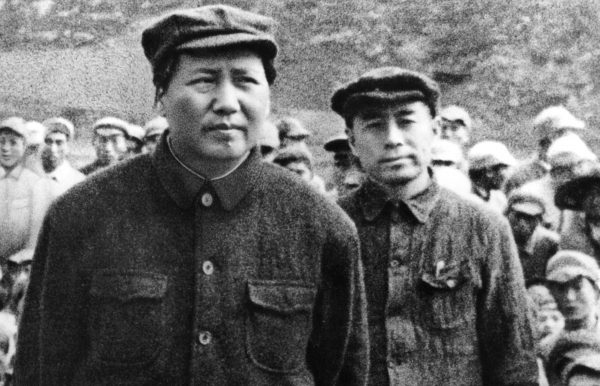
Mao and Zhou: a deadly convergence of will and method
In the elimination of Lin Biao, Mao Zedong and Zhou Enlai reached a level of coordination that can only be described as sinister. Mao made the strategic judgment; Zhou ensured the outcome.
Zhou Enlai’s role on the night of Sept. 13 demonstrated how Communist Party factional struggle could be seamlessly converted into state violence. He took what began as an internal family rupture—Lin Liguo’s sister Lin Liheng (Lin Doudou) reporting her parents—and rapidly escalated it into a case of “treasonous escape,” fully activating the Party-state machinery.
What follows is not conjecture but a reconstruction based on insider recollections of how Zhou methodically carried out this political killing in real time.
1. Psychological pressure through information control
At approximately 10:00 p.m., Zhou Enlai received a call from Lin Liheng in Beidaihe. His response was a textbook display of bureaucratic cruelty. He neither intervened nor protected. He did not order the Central Guard Bureau to secure Lin Biao, nor did he attempt any form of de-escalation.
Instead, Zhou immediately called Ye Qun, Lin Biao’s wife, and asked a single, devastating question: “Is there a Trident aircraft available?”
According to internal Party recollections, Zhou knew Lin Biao was present when the call was made. The inquiry was not logistical—it was psychological warfare. The message was unmistakable: the organization has already identified you. This calculated pressure shattered Lin’s remaining composure and pushed him toward a panicked, unplanned takeoff.
2. Turning China’s airspace into a closed killing field
Once Lin Biao’s plane left the ground, Zhou Enlai took full control. He went directly to the People’s Liberation Army Air Force command center and issued a series of orders that appeared contradictory but were lethal in combination.
A nationwide flight ban was imposed. Navigation lights across the country were shut down. Yet no interception order was ever issued for Lin’s aircraft.
Worse still, deliberate misdirection followed. According to accounts, the radar and navigation systems at Shanhaiguan Airport were left in a state of “partial paralysis” under Zhou’s authority. Lin’s plane was effectively rendered blind in the night sky.
As the aircraft circled and Lin Liguo attempted to contact ground control, Zhou ordered complete silence. No guidance. No response. This calculated bureaucratic indifference severed Lin Biao’s final chance of survival.
3. Final approval and the mechanics of ‘targeted elimination’
The official explanation for the crash at Öndörkhaan, Mongolia, bears little resemblance to what internal records suggest. Party meeting notes hint that once Zhou confirmed the aircraft was approaching the border, he sought Mao Zedong’s final consent.
The familiar phrase attributed to Mao—“If heaven wants it to rain, let it rain”—has been used to suggest passivity. In reality, Zhou Enlai worked in close coordination with Wang Dongxing, head of Mao’s personal security apparatus, to ensure that the plane could not land safely anywhere.
A basic timeline underscores Zhou’s central role:
- 22:00 — Repeated calls under the guise of concern; active monitoring; Lin Biao’s communications severed.
- 00:00 — Report to Mao expressing “anguish,” nudging him toward a final decision while using the flight ban to seal all exits.
- 02:00 — Zhou remains at the command center, personally overseeing operations until the outcome is irreversible.
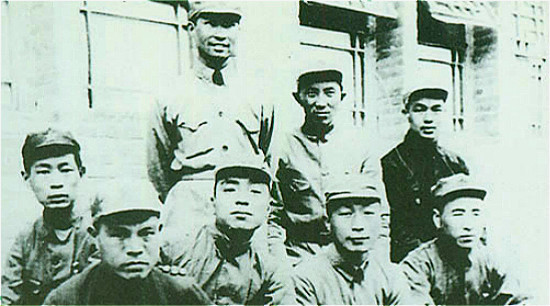
After the crash: narrative control over truth
When the aircraft crashed, Zhou Enlai’s priority was not truth but political framing. The teams dispatched immediately were not investigators seeking facts but agents tasked with fixing the narrative.
The crash site, physical evidence, and flight recorders—still held in Russia today—were all placed under strict control. From the outset, the goal was to ensure permanent ambiguity.
In public, Zhou Enlai was later said to have wept uncontrollably, presenting an image of grief and shock. This was political theater. His real distinction lay elsewhere: he never killed directly. He killed through meetings, procedures, phone calls, and commands—bureaucratic tools woven into an inescapable death net.
Those caught in it, even lifelong servants of the Chinese Communist Party, were denied both life and redemption. And even after death, the Party-state was not satisfied until it branded their remains with the final verdict: traitor.
The Sept. 13 Incident reveals the true nature of the red regime. Its cruelty, calculation, and duplicity are so extreme that they cannot be understood through ordinary human morality.