By Li Jingyao
A power struggle spills into the open
Following the abrupt downfall of Zhang Youxia, a Politburo member and vice chairman of the Central Military Commission (CMC), and Liu Zhenli, CMC member and chief of the PLA Joint Staff Department, the Chinese political sphere has been flooded with rumors pointing to a severe internal rupture.
Multiple sources now claim that Xi Jinping has failed to stabilize the situation after moving against the two senior commanders. Xi’s whereabouts have remained unknown for days, prompting speculation that he has gone into hiding. At the same time, Zhang Youxia has not been formally removed from Party, government, or military rosters—an extraordinary anomaly given the gravity of the charges announced against him.

Zhang held near Shanxi’s wartime command hub
On Jan. 24, China’s Ministry of National Defense announced that Zhang Youxia and Liu Zhenli were under investigation for “serious violations of discipline and law.” Yet both men’s names and portraits remain visible on official CCP Politburo and CMC lists, underscoring the unsettled nature of the case.
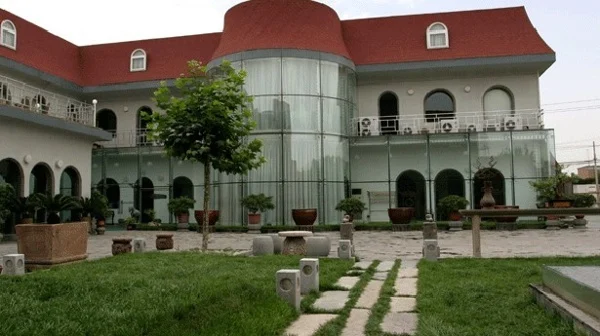
Sources close to senior PLA circles say the two generals are being held under heavy guard in a highly restricted military zone west of Beijing, likely in the Xishan (Western Hills) area. This region has long served as a strategic core of CCP military command, housing multiple layers of command-and-control and wartime emergency facilities.
According to U.S. intelligence disclosures, the CCP constructed a massive underground wartime command center near Shanxi, reportedly more than ten times the size of the Pentagon. Zhang and Liu are said to be confined there under extreme security.
Success
You are now signed up for our newsletter
Success
Check your email to complete sign up
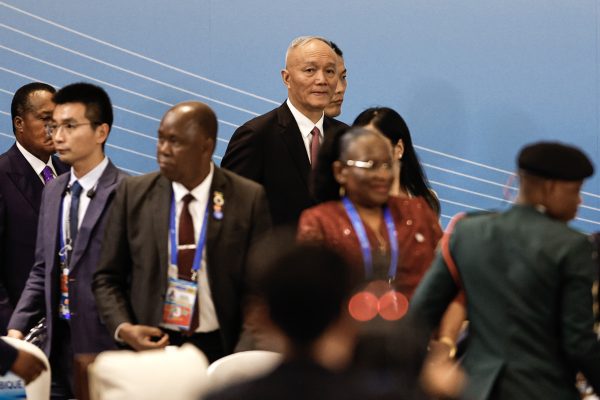
The scale of the operation reportedly far exceeds that of routine disciplinary investigations. Cai Qi, a Politburo Standing Committee member and Xi Jinping’s chief enforcer, is said to have ordered the deployment of armed troops and military dogs. Guard units were allegedly drawn from temporarily reassigned out-of-area forces and placed under the command of the Central Guard Bureau, signaling that security control over the region has been centralized directly under Cai Qi.
Xi Jinping ‘in hiding’ after failing to contain the crisis
Despite launching a lightning operation to detain Zhang and Liu—described by some observers as a preemptive political coup—evidence increasingly suggests that Xi Jinping has not secured full control.
Canada-based Chinese democracy activist Sheng Xue said on the program Fangfei Time that information she received indicates Xi has failed to stabilize the situation. Since the operation began on Jan. 18, Xi has not appeared publicly, and his location remains unknown.
Sheng pointed to unusual movements involving Xi’s family. Xi’s mother, Qi Xin, and his sister, Qi Qiaoqiao, are reportedly residing at a heavily guarded state guesthouse in Shenzhen, where extraordinary security measures—including bans on smoking in the surrounding area—have been imposed.
According to Sheng, Xi’s actions appear to be a reaction to what he perceived as a military challenge initiated by Zhang Youxia. Xi likely assumed he could neutralize the threat swiftly but lacked a comprehensive plan. As the situation escalated beyond his expectations, mediation efforts reportedly began behind the scenes, driven by fears that unchecked infighting could trigger the collapse of the CCP itself.

Senior PLA commanders refuse to line up behind Xi
Zhang Youxia, Sheng emphasized, is no political novice. As a member of the “red second generation”—the offspring of revolutionary-era CCP elites—and a career officer with deep battlefield and institutional experience, Zhang cultivated an extensive and resilient network within the PLA.
That network now appears to be holding. Since Jan. 18, no senior or influential military commander has publicly endorsed Xi Jinping’s move against Zhang, an absence widely interpreted as a sign that Zhang commands broader loyalty within the armed forces than Xi himself.
Citing a former officer of the PLA 31st Group Army, Real Perspectives host Zhen Fei reported that the military is exhibiting what insiders call “passive resistance.”
According to the retired officer, the PLA is sliding into chaos. Officers at regimental level and above are filing resignation or demobilization requests en masse, while group army commanders refuse to publicly declare allegiance to Xi. He warned that within ten days to two weeks, the military could face a major rupture.
Zhong Shaojun reemerges at the center
On Jan. 26, independent scholar Liu Junning wrote on X that more than 50 officials from central Party organs and the Central Commission for Discipline Inspection (CCDI) had been dispatched to assist the CMC Discipline Inspection Commission. He predicted that over 2,000 officers at division level and above could face punishment, forced transfer, retirement, or reassignment.
Liu also claimed that the CMC had internally declared de facto martial law across the PLA, ordering all units to remain in place and prohibiting troop movements.
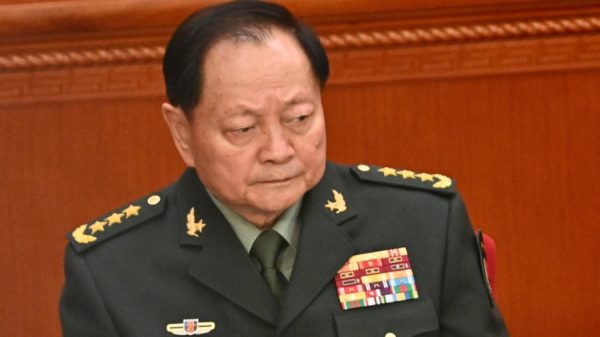
Anti-CCP blogger Jiang Wangzheng, however, reported that the number of seconded personnel was closer to 80, drawn from the CCP Central Committee General Office, confidential bureaus, and supervisory units within the State Council. According to Jiang, Zhang Shengmin and Zhong Shaojun are personally reviewing military cadres “one by one.”
These disclosures suggest that Zhong Shaojun, a longtime Xi confidant previously thought sidelined, has returned to the core of power with expanded authority.
Is the 83rd Group Army moving on Beijing?
Liu Junning’s assertion that central Party and CCDI organs are directly involved indicates that Xi Jinping, Cai Qi, and CCDI chief Li Xi are personally directing the operation. Analysts stress that this goes well beyond an anti-corruption campaign and points instead to an existential struggle for control of the military.
Sheng Xue reported that strict personnel controls have been imposed across all theater commands and military family compounds, with travel restricted except in emergencies.
Political commentator Li Muyang, host of News Focus, argued that Xi’s actions betray deep distrust of the current PLA leadership—clear evidence that the “gun barrel” is no longer securely in his hands. Far from stabilizing the situation, Li said, these measures confirm that the military is dangerously unstable.
On Jan. 25, democracy activist Tang Baiqiao wrote on X that the Zhang Youxia case remains unresolved, with both sides disputing the legality of his detention. Zhang’s family and some subordinates have openly protested and demanded corrective action, forcing authorities to pause further moves. “Xi’s absolute authority has been challenged for the first time,” Tang wrote, warning that the risk of armed confrontation is rising.
Former Chinese Foreign Ministry official Han Lianchao posted images showing joint patrols by military, police, armed police, and special units along Chang’an Avenue in Beijing.
Han noted that while heightened security could be explained as fear of public unrest, the absence of leaked internal details—despite the case allegedly being briefed at provincial military levels—was abnormal. State media have released no additional accusations beyond the initial announcement, deepening doubts about official narratives.
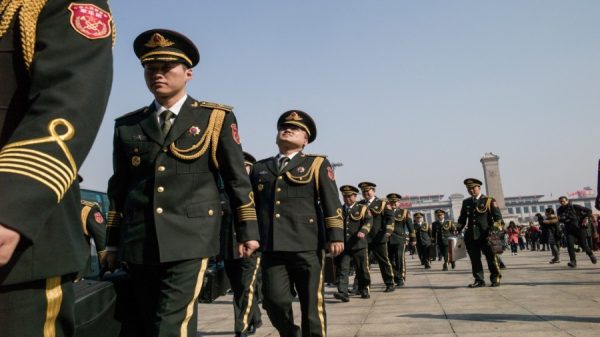
Online reports further claim that the Beijing Garrison’s Haidian headquarters has entered combat readiness, the elite 1st Guard Division is on 24-hour standby, and the PLA Central Theater Command’s 83rd Group Army has already “entered Beijing to protect the throne.”
Li Muyang noted that the phrase “entering Beijing to protect the throne” carries heavy historical and political meaning: the deployment of troops to suppress disorder and restore legitimate rule. Given the timing, he said, “what disorder is being suppressed, and whose legitimacy is being restored, is obvious.”

No turning back: a countdown begins
Taiwanese human rights activist Lee Ming-che, who spent five years imprisoned in China, told Liberty Times that Xi Jinping will destroy anyone capable of sharing power with him and will continue doing so until death. In the CCP system, Lee said, officials cannot survive without corruption; arrest is merely a matter of backing the wrong faction. “If they want to eliminate you, they will simply accuse you of corruption.”
Lee dismissed claims that Zhang was detained for leaking nuclear weapons plans to the United States, calling such allegations standard propaganda for domestic consumption. In his view, Zhang’s true offense was representing a threat to Xi’s monopoly on power.
Political commentator Zhou Xiaohui argued that once Xi chose to strike at Zhang Youxia—a deeply entrenched “red aristocrat” with formidable military roots—he effectively declared war on the PLA, the red elite, Party elders advocating a return to collective leadership, and former allies now labeled traitors.
“When the bow is drawn, there is no turning back,” Zhou wrote. Xi must now carry out a sweeping purge of all military and Party figures deemed insufficiently loyal—or risk losing not only power but his personal safety.
Sheng Xue further claimed that following the detention of Zhang and Liu, more than 5,000 people have already been arrested in the Beijing area.
Zhou likened Xi’s behavior to that of Kim Jong Un, who consolidated power through ruthless purges. But Xi’s position, he argued, is far weaker. Despite holding the titles of CCP general secretary, state president, and CMC chairman, Xi lacks moral authority and broad loyalty. His policies have eroded his standing within the Party, the military, and society, while calls for “Xi to step down” and even for the “disintegration of the CCP” are spreading.
Zhou concluded with a stark question: as Party and military elites realize they may be next on Xi’s list, will they submit—or strike back? As elite infighting descends toward open confrontation, he warned, national catastrophe becomes increasingly unavoidable, and the countdown to the collapse of the Chinese Communist Party has begun.