A capital under unusual orders
“Attention. System notice received. Abnormal activity detected in Zone X. Pack up. Prepare. Move out.”
“Personnel assigned. Code name: Youth Unit. Destination: East China Area 06. Mission: Operation Cicada Suppression.”
“Highway access denied. The roads are full of troops. No vehicles allowed on.”
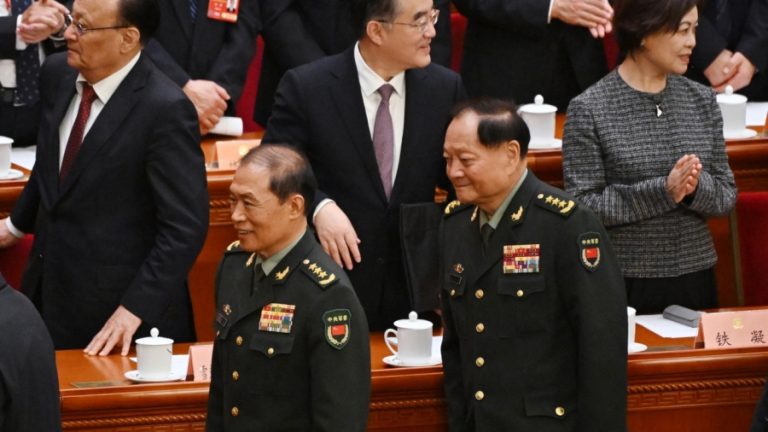
These terse, militarized messages—circulating rapidly across Chinese social media and overseas dissident networks—frame explosive claims that Zhang Youxia, vice chairman of the Central Military Commission, the CCP’s top military authority, and Liu Zhenli, chief of the PLA Joint Staff Department, responsible for operational command, have been detained.
If accurate, the developments would mark the most serious military and political rupture of Xi Jinping, China’s top leader and Communist Party general secretary, since consolidating power.
Success
You are now signed up for our newsletter
Success
Check your email to complete sign up
Multiple accounts describe Beijing entering a highly abnormal security state. Major expressways leading into the capital have reportedly been sealed. Civilian vehicle navigation systems were allegedly disabled by force, leaving drivers effectively blind.
One witness said that at 6:30 a.m. on Jan. 25, he departed Tangshan, Hebei Province, bound for Beijing via the Beijing–Harbin Expressway. Along the route, large electronic highway signs flashed an urgent order: “All vehicles must exit the highway immediately.” At the same time, he said, every navigation app in his car failed simultaneously. “It made my heart jump into my throat,” he recalled. He ultimately exited at the nearest ramp and continued via secondary national roads.
Video footage circulating online shows long lines of military vehicles along approaches to Beijing. A stranded driver, filmed at the roadside, muttered in disbelief: “Trying to get on the highway? Impossible.”
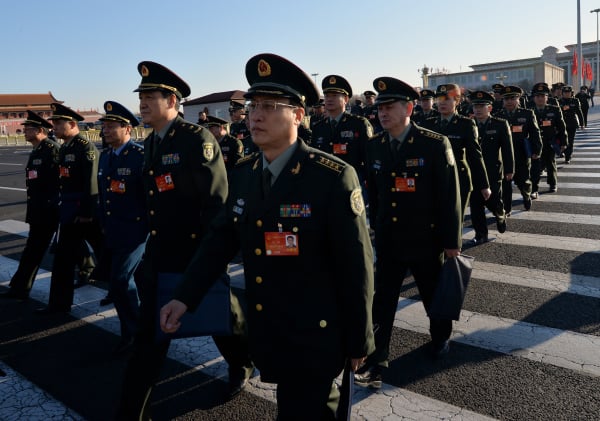
Military control and rumors of mass arrests
Other reports claim that parts of Beijing have effectively entered military rule. Several major military residential compounds—housing senior officers and defense institutions—are said to be sealed off. Subway capacity has reportedly been cut by half.
More alarming still are claims that the General Staff Department Security Bureau, an internal counterintelligence and protection unit, has collapsed, with the top 30 senior officers allegedly detained in a single sweep. Armed Police units and PLA soldiers are said to be deployed throughout the capital carrying live ammunition. Sources warn that Beijing now sits on the brink of open military confrontation.
Adding to the unease, netizens observed that China’s Central Commission for Discipline Inspection (CCDI), the Party’s top anti-corruption and internal enforcement body, briefly published a notice indicating Zhang Youxia’s arrest, only to delete it shortly thereafter. At the same time, reports previously carried by Party media outlets such as People’s Daily, the CCP’s flagship newspaper, were said to remain accessible—suggesting internal disarray rather than routine censorship.

Overseas dissidents describe a fracturing military elite
As news of Zhang Youxia’s alleged detention spread overseas, dissident commentators and X (formerly Twitter) accounts began assembling fragments—prison rosters, personnel reshuffles, and street-level troop movements—into a picture of acute instability at the top of the People’s Liberation Army (PLA), China’s armed forces under Party control.
The X account “Toronto Square Face” offered biting satire: Qincheng Prison, a high-security facility for detained senior officials, now holds enough fallen elites to “form a shadow cabinet.” He listed disgraced figures such as Bo Xilai, a former Politburo member purged in 2012; Chen Liangyu, a former Shanghai Party chief; Ling Jihua, a former top Party aide; Zhou Yongkang, a former security czar; and Fu Zhenghua, a former justice official. He then mockingly reassigned titles to Guo Boxiong, a former CMC vice chairman imprisoned for corruption; Zhang Youxia; and He Weidong, a current CMC vice chairman, underscoring the scale of elite destruction through successive purges.
Another widely circulated post claimed that a sweeping “military reshuffle” is underway. According to this list, multiple lieutenant generals are temporarily running the CMC Political Work Department, which controls ideology and personnel; the CMC Discipline Inspection Commission, the military’s internal watchdog; and the Army, Navy, Air Force, Rocket Force, and Armed Police. The conclusion was blunt: “All previous full generals are gone.”

Zhang Youxia recast as political poison
The X account “Xiangyang” adopted a narrative tone, describing Zhang Youxia’s seat at official events as “emptily glaring.” The account compared official language now used about Zhang with prior denunciations issued by Xi Jinping against purged generals, arguing that Zhang has been transformed into a new liudu—a Party term for lingering political contamination.
The same account cited a source claiming to have worked inside the Central Military Commission for a decade. Under Xi Jinping, the source said, generals who enter the CMC “mostly never return home,” reflecting a pervasive atmosphere of fear within the PLA’s upper ranks.
Political commentator Du Wen, a China affairs analyst based overseas, cited sources inside China claiming that the traditional General Staff command structure has been suspended. Command authority has allegedly been centralized entirely within the CMC, which now issues orders directly via encrypted telegrams. All PLA units nationwide are said to have entered Level One combat readiness, the military’s highest alert status. Troop movements are frozen. Officers and soldiers have reportedly been ordered to surrender their phones and undergo compulsory political study sessions.

Silence from Beijing, speculation everywhere
Zhou Junhong, a former Shenzhen-based rights lawyer, noted that Zhang Youxia’s fall has triggered fevered speculation within Beijing over who might be next. Names circulating include Deng Pufang, son of former leader Deng Xiaoping; Zeng Qinghong, a former vice president and Party power broker; Wang Qishan, a former anti-corruption chief; and Liu Yuan, a retired general with elite lineage. None of these claims can be independently verified.
What remains undeniable is the information vacuum. Chinese authorities have released no detailed charges, fueling speculation rather than calming it. What exactly is Zhang Youxia accused of? And what is Xi Jinping attempting to accomplish?
Official narratives circulating in pro-regime channels accuse Zhang of leaking nuclear weapons data to the United States and of accepting bribes to promote Li Shangfu, a former defense minister removed in 2023. To critics, these accusations resemble a familiar pattern: allegations seeded through overseas media and recycled back into China as purportedly “foreign” revelations.
Espionage charges as political cover
Tang Hao, host of the overseas Chinese program Crossroads of the World, dismantled the official storyline point by point.
First, corruption pervades the Chinese Communist Party, and the military is no exception. Zhang Youxia spent decades in the PLA; the accumulation of gray wealth would hardly distinguish him. But if the United States truly sought to buy nuclear secrets from a man in his seventies, Tang asked, what sum would suffice—and would money still matter to him at all?
Second, Zhang comes from a storied military lineage. He is the son of Zhang Zongxun, a founding general of the Communist armed forces. It is implausible, Tang argued, that he would casually commit “treason,” destroying not only himself but his father’s legacy and his entire family’s standing.
Third, branding Zhang with the explosive charge of “leaking nuclear secrets to the United States” provides Xi Jinping with a moral and political pretext—a ladder to climb down from—for eliminating his closest former ally.
Fourth, the accusation serves to mask the ferocity of internal CCP power struggles. Tang asserted that Zhang Youxia, aligned with elder Party factions, launched a “soft coup” against Xi Jinping in April 2024, stripping Xi of effective military control for more than a year. Yet Zhang and the elders, committed to preserving Party rule and elite privilege, refused to pursue political reform or dismantle the Communist system. Their paralysis ultimately allowed Xi to strike back with a decisive counter-coup.
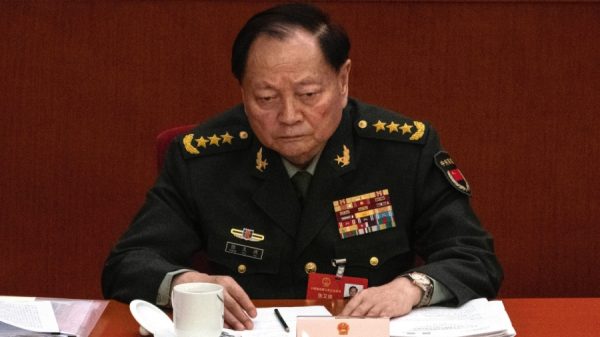
Conflicting accounts, one conclusion: disorder
Details surrounding Zhang Youxia’s alleged arrest vary sharply. On January 26, Cai Shenkun, a veteran political commentator, claimed Zhang was detained at the Central Party School, the CCP’s elite training institution, after months of planning. Sheng Xue, a Canada-based dissident writer, reported instead that Zhang was seized at the Jingxi Hotel, a Beijing venue for sensitive Party meetings, where a gunfight reportedly broke out, leaving more than 30 dead or wounded.
A former officer from the PLA’s 31st Group Army, a major field formation based in eastern China, offered yet another account, claiming that Ministry of Public Security forces under Wang Xiaohong, China’s police chief and Xi ally, intervened to suppress Zhang’s Snow Leopard Commando Unit, an elite internal security force. The source added that commanders of multiple group armies have refused to publicly endorse Xi Jinping, leaving the PLA in a state of “passive resistance.” He warned that within ten to fifteen days, the Chinese military could face a major rupture.

‘No army to trust, no ruler to trust’
Looking ahead, Tang Hao suggested that the most endangered figures may not be generals at all, but Xi Jinping’s own family members. Across China, military commanders and intelligence operatives may already be attempting to trace the whereabouts of Xi’s relatives, hoping to seize them as bargaining chips—not necessarily to rescue Zhang Youxia or Liu Zhenli, but to halt Xi’s downward purge of the armed forces and save hundreds or thousands of officers from destruction.
The motive, Tang argued, is survival.
What is unfolding, he concluded, is an internal struggle and purge without precedent in the history of the Chinese Communist Party:
“Xi has no army he can trust, and the army has no ruler it can trust. When ruler and army lose all trust in each other, disaster is inevitable.”