By Cai Siyun
A break in the pattern: online opinion turns against Xi
For years, when senior officials of the Chinese Communist Party (CCP, China’s ruling party) were brought down, the reaction on China’s internet was predictable: applause. Netizens mocked, denounced, and celebrated the fall of each new “tiger.”
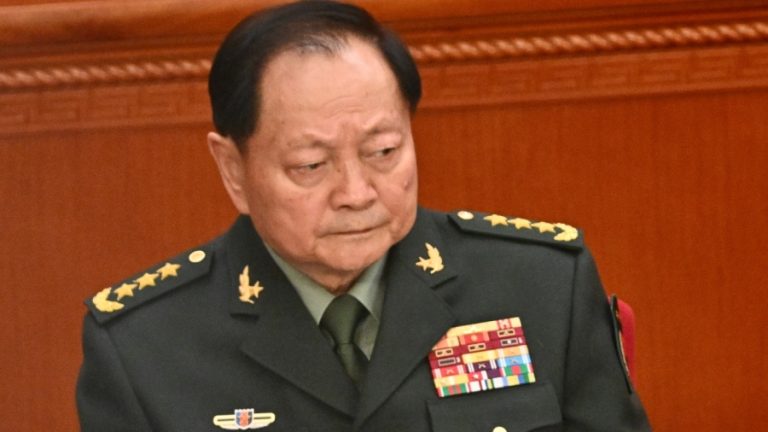
The case of Zhang Youxia—a Central Military Commission (CMC) vice chairman and one of the People’s Liberation Army’s most senior generals—has shattered that pattern.
After news of Zhang’s removal broke, Chinese social media platforms erupted not in condemnation of the accused, but in vocal defense of him and, more strikingly, in anger directed at Xi Jinping, China’s top leader and CCP general secretary. Some users went so far as to call openly for the overthrow of what they described as Xi’s authoritarian rule.
Such a reversal is extraordinary in a system defined by censorship and political fear. It suggests that the backlash extends far beyond sympathy for a single official. According to a former U.S. Department of Defense official, Zhang’s removal from the Central Military Commission—the CCP’s highest military decision-making body—also carries grave strategic consequences, sharply increasing Beijing’s risk of military misjudgment.

Success
You are now signed up for our newsletter
Success
Check your email to complete sign up
Shock announcement from China’s top military body
The shock came abruptly. China’s military establishment was rattled by the announcement that Zhang Youxia, vice chairman of the Central Military Commission, and Liu Zhenli, chief of staff of the CMC Joint Staff Department (the PLA’s operational command organ), were under investigation for “serious disciplinary and legal violations.”
On Jan. 24, Wu Qian, a spokesperson for China’s Ministry of National Defense (the PLA’s public-facing institution), formally confirmed the investigations. The announcement quickly drew international attention.
The Wall Street Journal reported—without confirmation from Beijing—that Zhang was accused of leaking core nuclear weapons data to the United States, accepting bribes, and forming a political clique within the People’s Liberation Army (PLA, China’s armed forces). Major international outlets, including the BBC, CNN, and Reuters, followed with extensive coverage, widely framing the case as the latest phase of Xi Jinping’s ongoing military purge.
When the purge reaches Xi’s inner circle
On Jan. 27, the Chinese-language outlet New Highland noted that since 2023, a succession of senior PLA figures—including Li Shangfu and Wei Fenghe, both former defense ministers—have fallen in rapid succession. Zhang Youxia’s case, however, marks a qualitative escalation.
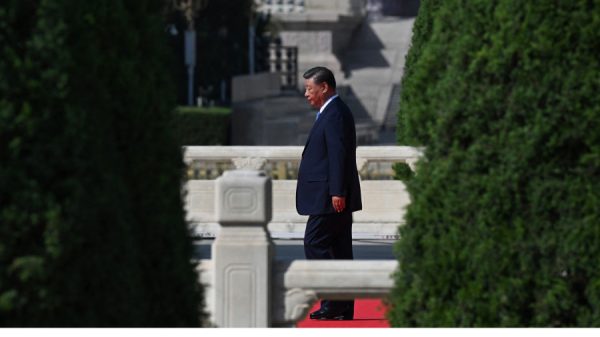
Zhang was not a marginal figure or a distant rival. He was a longtime associate of Xi Jinping and a family-connected military elite with roots in the revolutionary generation. His removal has been widely interpreted by the public not as routine discipline, but as an extreme act of power consolidation—one that spares no one.
As news spread, platforms such as Douyin (China’s version of TikTok) and Weibo (a major Chinese social media site) filled with posts praising Zhang’s military service and wartime credentials. Many users described the investigation as “political persecution.” Others accused Xi of ruling solely through fear and repression.
When official announcements went live, comment sections were quickly overwhelmed by messages supporting Zhang. Authorities moved swiftly to shut them down, an unusually blunt intervention that underscored the intensity of public anger. In a censorship environment where dissent is typically extinguished immediately, the episode stood out as a rare rupture.
New Highland attributes the backlash to deep public exhaustion with Xi Jinping’s anti-corruption campaign, a signature political project launched after he took power in 2012. Once promoted as a moral cleansing of the Party, the campaign is now widely viewed as a tool for eliminating rivals.
Xi’s repeated purges of the PLA are increasingly interpreted as efforts to remove anyone with independent authority or credibility, rather than to address corruption itself. Zhang Youxia’s downfall intensified a bitter conclusion spreading online: loyalty offers no protection.
That sentiment has spread rapidly, further hardening public cynicism and resentment.

Skepticism toward the espionage allegations
The most explosive allegation—that Zhang leaked nuclear secrets to the United States—has gained little traction among Chinese netizens. Across Chinese-language platforms, skepticism is nearly universal.
Many argue that the CCP deliberately used overseas media to float sensational claims, reframing an internal political purge as a national security case. In this view, the external narrative serves to obscure elite power struggles and divert attention from internal instability.
Critics note that this tactic has deep roots in CCP history, where internal crises have often been masked by invoking foreign threats and external enemies.
What makes Zhang Youxia’s case unprecedented is not simply dissent, but its direction. In past purges, online discourse reliably turned vicious, with officials’ downfalls greeted by mockery and denunciation. This time, the reaction flipped almost entirely.
Some users expressed regret that Zhang “did not strike first.” Others condemned Xi’s tactics as “discarding loyal servants once their usefulness ends.” Still others went further, urging Zhang’s former subordinates to “rise up to defend the realm” and overthrow despotism.
This surge of anger forced authorities to shut down comment sections almost immediately, signaling that public resentment had reached a critical threshold.
The article’s conclusion is uncompromising: Zhang Youxia’s case has crystallized mass disillusionment with Xi Jinping’s logic of rule. Loyalty is no longer a shield. Anti-corruption has come to be seen as the systematic elimination of meritorious officials. The dramatic reversal of public opinion, it argues, stems from a single cause—Xi Jinping has lost popular support.
As the piece warns: “Calm enforced by high pressure cannot conceal the surging undercurrents below. Once popular support fractures, it is almost impossible to restore. Stability maintenance becomes nothing more than drinking poison to quench thirst.”
A former US defense official reflects on Zhang Youxia
Zhang Youxia’s sudden purge has also drawn close scrutiny overseas. Drew Thompson, a former U.S. Department of Defense official responsible for China policy, published an article on Jan. 26 recalling Zhang’s visit to the United States and releasing photographs from that period.
Thompson’s conclusion is stark: without Zhang on the Central Military Commission, Beijing’s risk of catastrophic military miscalculation has sharply increased.
In his essay, “The Stunning Downfall of Zhang Youxia,” Thompson wrote that rumors of Zhang being investigated had circulated since 2023. He admitted he had hoped Zhang might escape Xi Jinping’s sweeping purge, out of personal respect.
Thompson recalled that in May 2012, Zhang—then commander of the Shenyang Military Region, a major PLA theater responsible for China’s northeast—accompanied Liang Guanglie, China’s defense minister at the time, on a weeklong visit to the United States.
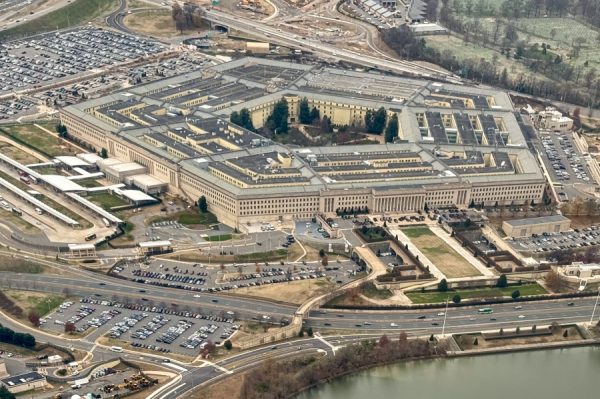
At the time, Thompson served as director for China, Taiwan, and Mongolia in the Office of the U.S. Secretary of Defense and accompanied the delegation throughout the trip. The Chinese delegation met U.S. officials at the Pentagon and visited several American military bases.
According to Thompson, advancement within the PLA overwhelmingly depends on political loyalty and personal networks, leaving many senior officers narrow in outlook. Zhang stood apart.
“He had experienced war, which made him humble,” Thompson wrote. “He was well educated, highly intelligent, and instinctively perceptive. He could immediately grasp the importance of what he was shown—and likely understood why we chose to show it to him.”
PLA staff officers, who typically hold Chinese generals in low regard, treated Zhang as an exception. Whether generals or staff, all showed him unusual respect. When Zhang entered a room, Thompson observed, subordinates instinctively straightened to attention.

Why Zhang’s absence raises the risk of war
Throughout the U.S. visit, Zhang displayed none of the fear or awkward detachment common among senior Chinese officials abroad. “He was willing to engage,” Thompson recalled, “which was rare.”
At Fort Benning (now Fort Moore), a major U.S. Army training base, where weapons systems were displayed and live-fire opportunities offered, many Chinese officers hesitated. Zhang eagerly accepted the chance to fire a machine gun. He examined every exhibit carefully and posed probing questions about U.S. military technology and doctrine, demonstrating intellectual depth far beyond his peers.
Thompson said he had hoped Zhang would remain vice chairman of the Central Military Commission because Zhang was uniquely capable of offering Xi Jinping objective assessments—about China’s military strengths and weaknesses, and about the human cost of war.
Zhang, Thompson argued, could realistically assess U.S. and Taiwanese military capabilities and explain the true risks and price of using force to seize Taiwan. Those without combat experience, by contrast, merely tell Xi what he wants to hear.
Without Zhang Youxia inside the Central Military Commission, Thompson concluded, the Chinese Communist Party now faces a sharply increased risk of strategic miscalculation—with potentially catastrophic consequences.