By Yang Tianzi
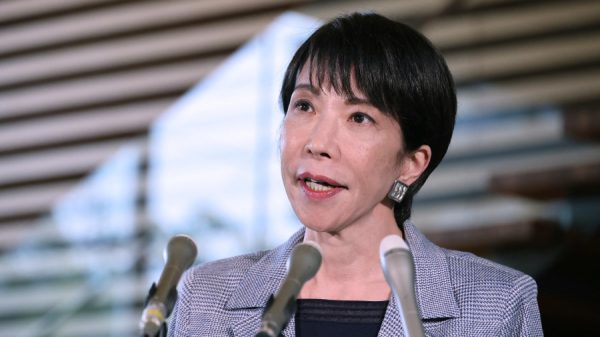
With just two weeks remaining before Japan’s House of Representatives election, Prime Minister Sanae Takaichi delivered another tough stance on the “Taiwan contingency” issue during a nationally televised party leader debate on the evening of Jan. 26. This follows her first characterization of a Taiwan crisis in November 2025, when she described it in the Diet as a potential “existential threat to Japan,” and is her latest statement showing no retreat despite strong Chinese countermeasures. Why did Takaichi choose such a sensitive moment to raise the Taiwan issue again? Behind this seemingly risky political decision lies a multi-layered strategic calculation.

Why did Sanae Takaichi bring up Taiwan again?
To understand Takaichi’s real intentions, one must first carefully interpret the subtle differences between her two statements. In November 2025, Takaichi directly used the legal term “existential threat,” implying that a conflict in the Taiwan Strait could trigger Japan’s highest threshold for exercising collective self-defense. While this wording was striking, it was abstract and could easily be interpreted as Japan preparing “to fight for Taiwan.”
In this ANN program debate, Takaichi’s wording underwent a strategic adjustment. She explicitly denied that Japan would take military action against China proactively, instead focusing on two concrete scenarios: first, cooperating with the U.S. to evacuate over 20,000 Japanese citizens and more than 10,000 U.S. citizens in Taiwan; second, in the course of such joint operations, if U.S. forces were attacked, Japan could not “stand by,” otherwise the “Japan-U.S. alliance would completely collapse.”
Associate Professor Chen Youhua of the China Studies Department at Japan’s International Christian University noted that this adjustment is actually a “limitation” rather than an “expansion,” confining the Self-Defense Forces’ role to humanitarian rescue and ally protection, entirely consistent with the framework established since the 2015 security legislation. The skill of this statement lies in satisfying domestic expectations for a strong stance while maintaining legal defensiveness and signaling to the U.S. that Japan is a “reliable ally.”
Success
You are now signed up for our newsletter
Success
Check your email to complete sign up
Election strategy and the reassembly of the conservative base
Takaichi’s choice to raise the Taiwan issue on the eve of the election is primarily motivated by domestic electoral politics. Dr. Horiuchi Toru of the Policy and Governance School at the Chinese University of Hong Kong analyzed that Japanese voters in this election are especially focused on foreign and security policy. Takaichi’s tough stance aims to show that Tokyo is fully prepared, thereby increasing voter trust.
This strategy rests on solid public opinion. During former Prime Minister Shigeru Ishiba’s administration, the LDP lost many traditional conservative voters due to inconsistent policy, with those votes flowing to emerging conservative parties like the Constitutional Democratic Party and the Democratic Party for the People. After taking office, Takaichi clearly emphasized three policy directions: proactive fiscal policy, conservative values, and constitutional revision, with her hardline stance on Taiwan representing a key aspect of this conservative agenda.
Polls clearly show the effect of this conservative vote rebound. Among voters who supported the Democratic Party for the People in last year’s upper house election, roughly 30 percent switched to the LDP in this House election; over 20 percent of Constitutional Democratic Party supporters also shifted to the LDP. This cross-party vote movement not only consolidates the LDP’s base but also provides a strong foundation for seat expansion.
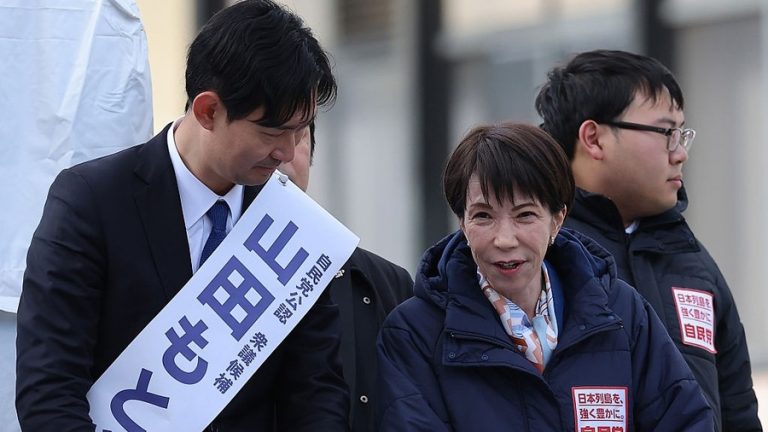
Takaichi’s personal appeal has become the LDP’s most important electoral asset. In the snowy streets of Sapporo, 900 supporters stopped to see her; at a joint rally at Himeji Station in Hyogo Prefecture, thousands attended. Symbolically, campaign materials featuring Takaichi’s photo are in short supply nationwide. This reflects that she has become more than a party leader—she is a political star capable of directly influencing voter behavior.
Cross-party consensus on a tough stance toward China
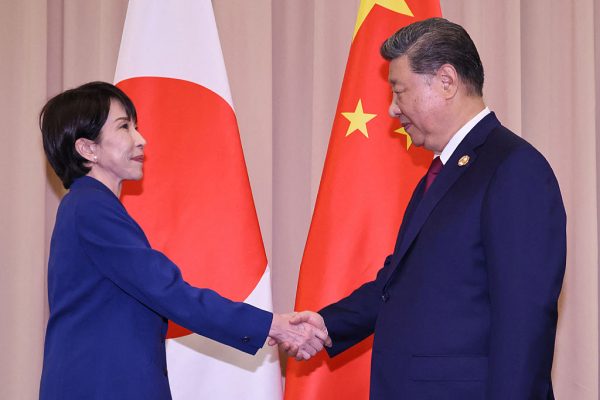
Takaichi’s ability to take a strong stance on Taiwan is supported by a growing cross-party consensus in Japan for a tougher posture toward China. Associate Professor Chen Youhua pointed out that Japan’s major parties have reached substantial agreement on China policy, advocating a stronger stance against the CCP. This consensus ensures that Takaichi’s statements on Taiwan do not face severe domestic political resistance and may even gain broad support.
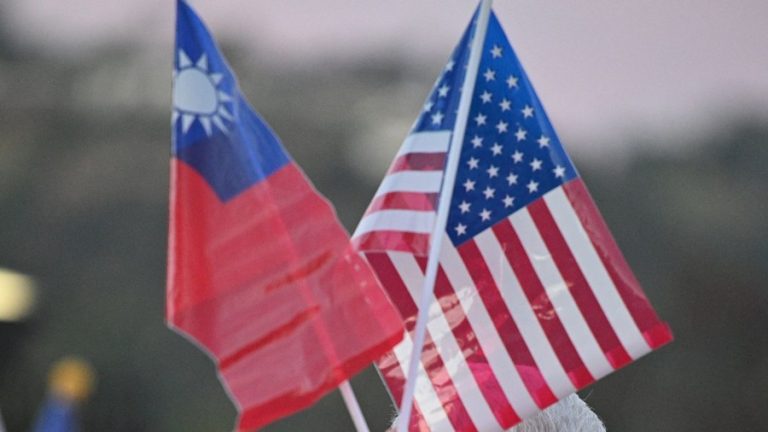
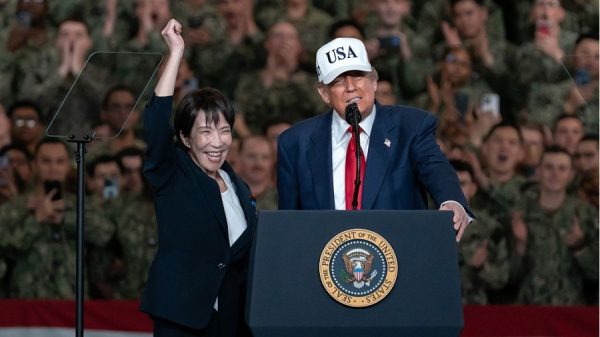
Another important consideration is signaling to the U.S. that Japan is a reliable ally. Professor Nagi of Tokyo International Christian University noted that Takaichi’s remarks convey a clear message to Washington: Japan is willing and prepared to defend its interests independently or alongside the U.S., a direct response to the “America First” policy and proof that Japan will not “free ride.”
By directly linking the Taiwan Strait issue with the potential “collapse of the Japan-U.S. alliance,” Takaichi uses highly effective political rhetoric. Elevating U.S. troop protection to the level of alliance preservation aligns precisely with Washington’s strategic needs. Dr. Horiuchi observed that this aligns with the latest U.S. defense strategy: “deterring China through strength.”
From strategic ambiguity to strategic clarity
At a deeper level, Takaichi’s Taiwan statements reflect a paradigm shift in Japan’s security policy—from long-standing “strategic ambiguity” toward “strategic clarity.” Previously, mainstream Japanese commentary on a “Taiwan contingency” largely remained at the policy white paper level. Takaichi brings the issue to the “operational level”: with over 20,000 Japanese and 10,000 U.S. citizens in Taiwan and possible U.S. military involvement in evacuation, what specifically should Japan do?
While this shift increases regional tension, it also demonstrates Japan’s clear understanding of its security environment. Amid growing U.S.-China strategic competition and rising Taiwan Strait tensions, this strategic clarity may become Japan’s new normal.

China’s retaliation produces unintended effects
In response to Takaichi’s tough stance, Beijing quickly implemented a “soft-and-hard” countermeasure combo. China’s Ministry of Foreign Affairs issued a travel warning discouraging Chinese citizens from visiting Japan during the Lunar New Year and drastically reduced China-Japan flight routes. Data show that as of January 2026, 47.2 percent of mainland China flights to Japan were canceled, with a 40 percent reduction expected in February–March.
However, this economic pressure had limited effect. Despite official warnings, Tripla hotel data indicate that Chinese tourist bookings for the 2026 Lunar New Year increased 57 percent compared to last year. Analysts note that Chinese visitor patterns have shifted toward independent travelers less reliant on official policy.
More importantly, China’s economic countermeasures did not weaken Takaichi’s regime and even had unintended effects. Dr. Horiuchi observed: “The more pressure from China, the higher Takaichi’s support.” This reflects a reactive sentiment in Japanese society toward Chinese pressure and validates the effectiveness of Takaichi’s tough strategy.
Professor Nagi’s analysis explains: “China may favor toughness but respects countries that demonstrate strength; nations that fail to do so face more coercion. For Japanese voters, showing weakness on Taiwan would be seen as soft.”
Against this backdrop, Takaichi’s Taiwan statements are not merely personal political choices but Japan’s strategic response to a new geopolitical reality. By breaking with previous “strategic ambiguity” and raising Taiwan issues from documents to operational planning, Takaichi marks a major shift in Japanese security policy.
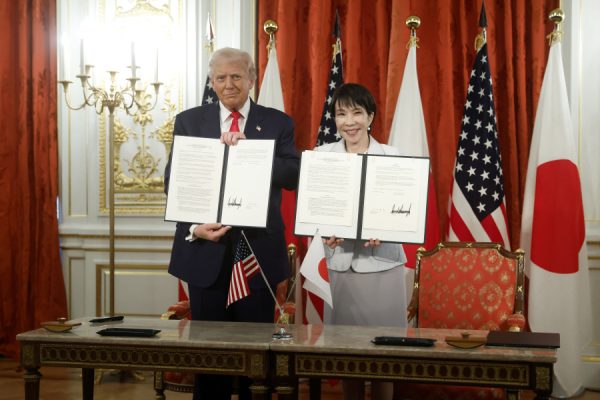
Electoral prospects moving toward an ‘absolute stable majority’ and long-term impact of the Takaichi effect
Takaichi’s hardline approach will ultimately reflect in the election outcome. Current polls indicate that the ruling coalition is likely not only to surpass a simple majority but may challenge an “absolute stable majority.”
If the coalition wins more than 261 of the 465 House seats, the LDP would control all standing committee chair positions and maintain a majority in each committee. This would give Takaichi’s government substantial legislative leadership, enabling smooth progress on core agendas such as constitutional revision and doubling the defense budget.
Current projections show the LDP’s proportional representation support exceeding 35 percent, potentially approaching a simple majority on its own, while opposition parties face collapse due to division and vague policies. This stark contrast indicates that Japanese voters, amid turbulent international circumstances, prefer a strong, stable, and decisive ruling party.
Sanae Takaichi’s reiteration of the Taiwan issue is far from impulsive; it is a precise operation integrating domestic politics, foreign policy, and military strategy. Domestically, she successfully uses the Taiwan issue to reassemble the conservative base, turning external pressure into internal support. Internationally, by linking Taiwan to the Japan-U.S. alliance, she signals to Washington that Japan is a reliable ally and elevates Japan’s defense commitment from paper to operational readiness.
Although this has escalated China-Japan tensions, in the current Japanese political climate, such confrontation has become a political asset for Takaichi. As the election approaches, if Takaichi achieves the expected overwhelming victory, Japan will enter a long-term, strong political phase, implying a clearer and firmer stance on the Taiwan Strait issue and further integration of the Japan-U.S. alliance.