In the vast and largely inaccessible swamps of Central Africa, local communities have long spoken of a massive creature whose name alone inspires fear. Known as Emela-Ntouka, a term often translated as “the elephant killer,” the creature has been described for decades by hunters, colonial-era officials, and explorers. Their accounts, recorded across different periods, bear striking similarities. Yet no physical evidence has ever been produced.
Is Emela-Ntouka merely a jungle myth, or could it represent a large animal that has never been formally documented by modern science?
The Elephant Killer
The name Emela-Ntouka comes from Lingala, a language widely spoken in Central Africa, and is commonly rendered as “that which can kill elephants.” In different regions, the same creature is said to be known by other names, including Aseka-moke, Njago-gunda, Ngamba-namae, Chipekwe, and Irizima, suggesting a shared tradition referring to a single feared animal.
According to local oral accounts, Emela-Ntouka is not prey. It is described as a presence so dangerous that even large animals deliberately avoid it.
Unlike any known animal
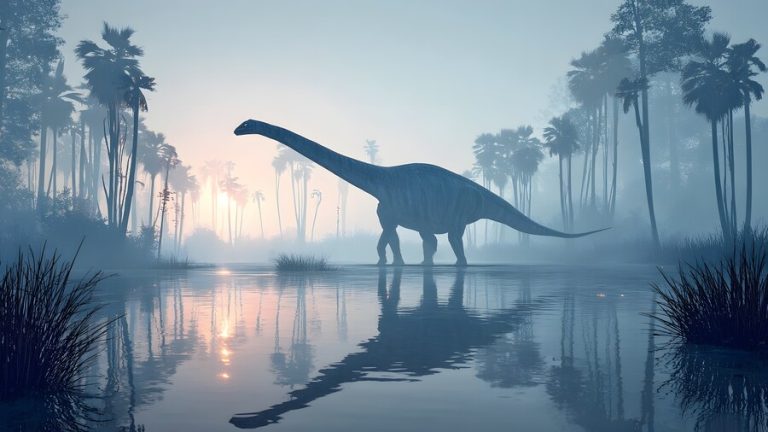
Descriptions of Emela-Ntouka portray a creature roughly the size of an African bush elephant, with a brownish-gray body, powerful limbs, and a long, thick tail. Some witnesses say its overall silhouette resembles that of a rhinoceros. The most frequently cited feature is a single long horn projecting from the front of its snout.
Success
You are now signed up for our newsletter
Success
Check your email to complete sign up
Other reports mention ridge-like protrusions along its neck. Witnesses have also described the animal emitting deep grunts, snoring sounds, or low rumbling noises that carry through fog-shrouded wetlands, heightening its intimidating presence.
The nature of the horn remains a subject of debate. Some have speculated that it could be a tusk or a bony structure, while others suggest it might resemble a rhinoceros horn made of keratin. With no preserved specimens, all such interpretations remain speculative.
Shallow waters and swamps of the Congo Basin
Most accounts place Emela-Ntouka in the swamps and shallow waters of the Congo Basin, particularly the Likouala wetlands in what is now the Democratic Republic of the Congo. Isolated reports also suggest possible sightings in Cameroon and as far south as Lake Bangweulu in Zambia.
The creature is commonly described as solitary and herbivorous, feeding on aquatic plants. However, it is also said to display extreme aggression toward large animals that enter its territory. Among some Pygmy communities, oral traditions hold that lions or hippos inspire less fear than Emela-Ntouka, which is regarded as something to be avoided at all costs.
Faint traces from the colonial era
In 1933, J. E. Hughes wrote in Eighteen Years on Lake Bangweulu that local people along the Luapula River had killed a massive animal whose appearance closely matched later descriptions of Emela-Ntouka, although the name had not yet come into use.
The term Emela-Ntouka itself first appeared in print in 1954, in the journal Mammalia. It was introduced by Lucien Blancou, a former wildlife administrator in the Likouala region. Blancou described the creature as “larger than a buffalo” and claimed that, when startled, it could kill elephants, buffalo, or hippopotamuses.
This alleged hostility toward large animals invites comparison with another Central African cryptid, Mokele-Mbembe, which local traditions describe as antagonistic toward hippos.
A living prehistoric animal?
In the 1980s, explorer Dr. Roy P. Mackal led expeditions into the Congo to investigate reports of unexplained creatures. In his later book Living Dinosaurs, Mackal proposed that Emela-Ntouka might be related to ceratopsian dinosaurs, such as Monoclonius or Centrosaurus.
The hypothesis quickly encountered problems. No ceratopsian fossils have ever been found in Africa, and Pygmy descriptions of Emela-Ntouka make no mention of the distinctive neck frill characteristic of horned dinosaurs. As a result, some researchers have suggested an alternative explanation: that Emela-Ntouka may not be a dinosaur at all, but rather an undocumented, semi-aquatic rhinoceros-like animal.
Cryptozoologist Loren Coleman has expressed support for this possibility, arguing that the creature could represent a large species that has so far escaped formal classification.
A mystery that remains unresolved
To this day, Emela-Ntouka has yielded no photographs, skeletal remains, or DNA samples. What exists instead are consistent accounts from different communities and different eras, describing a similar animal in similar environments.
For the scientific community, the absence of verifiable evidence prevents recognition. For those living at the edge of the swamps, however, Emela-Ntouka has never been a hypothesis. It is regarded as a presence that must be avoided.
In a world where vast regions remain poorly surveyed, Emela-Ntouka continues to occupy an uncertain space between legend and biology, lingering quietly in the mist-covered wetlands of the Congo.