By Fu Longshan
Medical care for top CCP leaders is handled entirely by the Central Guard Bureau and the Central Health Care Committee. In a certain sense, the life and death of these figures rests in the hands of the current leadership. When political needs require it, even if a senior figure has already entered a “vegetative state,” the authorities may use advanced medical equipment to maintain basic physiological indicators such as heartbeat and breathing, delaying the removal of life support until a politically “appropriate” moment.
For example, Jiang Zemin’s death was announced on November 30, 2022, at a time when the “White Paper protests” were spreading nationwide. Strong rumors circulated both inside and outside the Party that the authorities chose that day to announce Jiang’s death in order to divert public attention from the protests, while using the occasion to impose stricter traffic controls and stability measures.
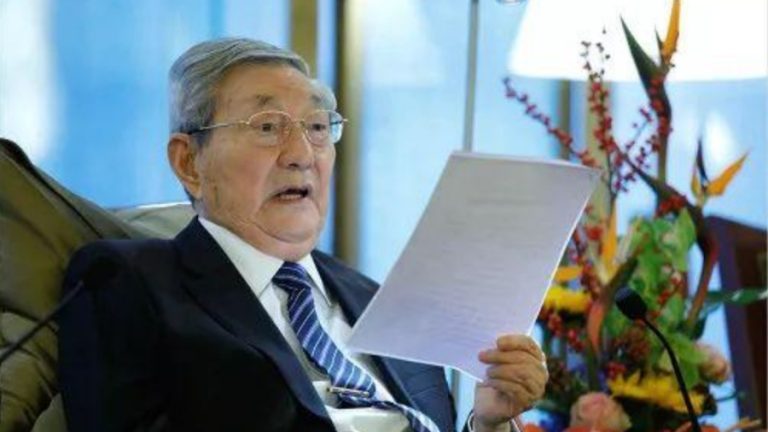
Recently, news about Hu Jintao and Zhu Rongji has circulated widely. Regardless of their actual current condition, the authorities’ established strategy is described as “alive buhttps://www.britannica.com/biography/Zhu-Rongji?utm_source=chatgpt.comt unseen, dead but announced later.” Before their physical functions completely fail, as long as they do not threaten the existing power structure, the authorities maintain the appearance that they are still alive. Once an accident occurs, the release of the death announcement becomes a carefully calculated stability-maintenance operation.
Control extends beyond the timing of death announcements. In the CCP’s opaque political system, an obituary is never a simple summary of a life. It functions as a political appraisal document within the Party. These few hundred words determine the deceased’s ranking in Party history and shape the future political fate of their family and remaining associates.
Success
You are now signed up for our newsletter
Success
Check your email to complete sign up
This kind of word-by-word bargaining exists because the CCP maintains an extremely rigid and hierarchical system of titles. Adding or removing a single word signals shifts in factional power. Even the placement of each funeral wreath inside Beijing’s Babaoshan Revolutionary Cemetery auditorium is the result of political struggle.

The coded language of obituaries
Honorifics in obituaries carry clear hierarchical signals.
“Great …” is reserved only for absolute core figures such as Mao Zedong, Deng Xiaoping, and Jiang Zemin, or for figures regarded by the CCP as having exceptionally high “merit.”
“Long-tested …” signals high political loyalty and having chosen the correct side in repeated internal struggles. It is considered a standard consolation-level description. However, if the word “loyal” is missing from a eulogy, it is treated as a political scandal, implying that the individual failed to maintain integrity late in life.
“Communist fighter” is standard wording. The real point of contention lies in the adjectives that precede it, such as “outstanding,” “loyal,” or “distinguished.” The use of “distinguished,” for example, indicates that the family’s political standing will be more secure.
When a eulogy emphasizes that an official worked “under the core leadership of Xi Jinping,” it functions as a demand for the family to publicly affirm loyalty. In 2023, Li Keqiang’s eulogy included the standard phrase “under the core leadership of Xi Jinping.” According to Party rumors, the family hoped to downplay such forced linkage but ultimately failed. The wording was widely regarded as Xi Jinping’s complete political absorption of the “Li Keqiang era.”
If an official dies while on the verge of investigation, or if family members are implicated in corruption, the obituary may be downgraded. The authorities may propose lowering a title from “outstanding” to “excellent,” or omit a key position from the official’s career history. This serves as a warning to the family, signaling that the Party is preparing to close the net.
At times, families push back by refusing to collect ashes or declining to hold a formal farewell ceremony in order to demand that the official evaluation be maintained. The evaluation matters because once it is lowered, the deceased’s political halo disappears, and the protective umbrella shielding their children in official or business circles collapses. In some cases, the eulogy emphasizes phrases such as “maintained integrity in later years” or “strictly disciplined family members.” In the CCP’s political language, this often functions as coded speech, implying that the family previously caused problems and that the current leadership is issuing a warning.

Classic cases of word-by-word bargaining
Qiao Shi and Wan Li were regarded as representatives of the CCP’s reformist camp. According to Party rumors, when Qiao Shi died in 2015, his obituary referred to him as a “statesman,” an extremely rare designation in CCP usage. This was widely seen as an above-standard political reward granted by Xi Jinping to unite reformist forces against the Jiang faction.
It is said that Qiao Shi’s family engaged in intense discussions with the General Office of the CCP Central Committee. The family sought a higher-level evaluation to highlight his contributions to legal system development. The final obituary included the standard phrasing about working “under the leadership of the Party Central Committee with a comrade as the core,” while also emphasizing that he was “one of the outstanding founders of China’s socialist legal system.” This outcome was viewed as a compromise that preserved the authority of the current leadership while giving the family some face.
Li Peng’s death was marked by deliberately high ceremonial treatment with a different underlying meaning. When Li Peng died in 2019, the obituary was released relatively quickly but proved highly controversial. It described the June Fourth crackdown as having “taken decisive measures to stop turmoil and quell counterrevolutionary riots,” and stated that Li Peng “played an important role.”
Within the CCP’s characteristic hard-edged political logic, this wording was less about praising Li Peng than about using the evaluation of the deceased to reaffirm that the official verdict on June Fourth would not change. The family was required to accept being explicitly linked to the controversial event in exchange for safeguarding its interests within sectors such as the power industry.
When Yang Shangkun died in 1998, tensions were high between Jiang Zemin and the Yang brothers, Yang Shangkun and Yang Baibing. Party rumors held that Jiang deliberately downplayed Yang Shangkun’s role in assisting Deng Xiaoping with the military deployment that suppressed student protesters in 1989. The Yang family’s remaining associates fought hard and ultimately preserved the nominal level of honors, but details of the funeral broadcast were altered. This became a textbook case of compromise in wording combined with humiliation in form.
Funeral wreaths as political signals
Observers have long remarked on the pettiness within the CCP system, and the placement of funeral wreaths offers supporting evidence. In the Babaoshan auditorium, wreath placement follows strict current political ranking rather than personal closeness. Even funerals become arenas of hidden struggle.
Since the Xi Jinping era, Xi’s wreath is always placed alone directly beneath the portrait of the deceased or in the closest position. Wreaths from other Politburo Standing Committee members are arranged strictly by rank.
If a retired heavyweight such as Zhu Rongji does not attend in person but sends a wreath, it signals that the individual remains politically safe and may indicate a tacit understanding with the current core leadership.
Conversely, if an elder who would normally be expected to send a wreath is absent from the list, it usually indicates that the person is under internal disciplinary investigation, political scrutiny, or frozen status. In some collective funerals, the disappearance of a faction’s leading figures has been taken as evidence that the faction is being settled.
Why deaths are kept quiet
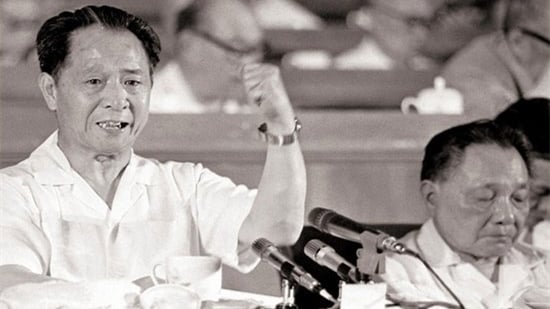
From popular sentiment rising from below, the CCP leadership tends to draw lessons in reverse. In the authorities’ view, the death of an official with popular support often serves as a trigger for political upheaval, as in the case of Hu Yaobang.
The secrecy surrounding current senior figures is believed to reflect several considerations. Different Party factions—the Xi camp, the Communist Youth League camp, and remnants of the Jiang camp—often disagree over how the deceased should be judged. The wording of the eulogy and whether the ceremonial level should be classified as that of a state leader or higher requires repeated bargaining. If such deaths coincide with the annual “Two Sessions” or major plenary meetings, negative or mournful news is often suppressed to project an image of unity and success.
Above all, the authorities fear that public mourning could become a channel for expressing dissatisfaction with the status quo. Hu Yaobang’s death led to the events of June Fourth, leaving the CCP deeply fearful of mass commemorations. If a deceased figure enjoys high public esteem, the authorities may choose to announce the death at a time when social mobilization is most difficult, such as late at night or just before the end of a holiday, and then proceed rapidly with cremation.
It is said that Zhu Rongji once told people around him that he would “not join the commotion,” referring to his refusal to attend celebrations in the Xi Jinping era. Such past noncooperation means Zhongnanhai will handle any news related to Zhu with particular caution. Party insiders have also circulated the account that Zhu once told an old friend in private: “After I die, I don’t want those hollow honorary titles. Just one line saying ‘a clean official’ will do.” Within the CCP system, that is precisely what the current leadership is least willing to grant. The words “clean official” themselves amount to a sharp satire of the present state of affairs.