By Chen Jing
Saving a last breath for Chinese civilization: Qian Mu and the newspaper that decided his fate
“The wind direction shows where most people are running. The weather pattern reveals where that wind will ultimately drive them.”
In 1949, China’s political landscape was undergoing a historic rupture. Amid fear and uncertainty at that turning point, one scholar spent just three minutes reading a single newspaper and saw decades into the future. On that basis alone, he chose a path starkly different from that taken by the 81 members of the Academia Sinica: exile.
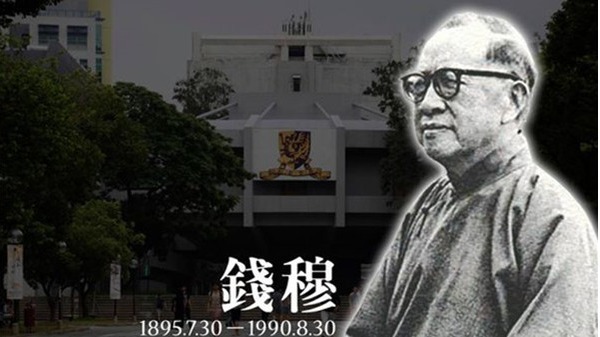
His name was Qian Mu.
At one of the darkest moments of modern Chinese history, this slight, unassuming scholar used his own shoulders to preserve a final, unbroken breath of Chinese civilization.
Success
You are now signed up for our newsletter
Success
Check your email to complete sign up
Many watched the wind; few grasped the weather
In the spring of 1949, the People’s Liberation Army crossed the Yangtze River in force. China’s intellectual community suddenly faced an unprecedented moment of alignment and choice.
Friends and relatives came one after another to urge Qian Mu to stay. Even Qian Jibo, the father of Qian Zhongshu and a renowned scholar of classical learning, personally tried to dissuade him. “Wait a little longer,” he said. “Watch a little more. Perhaps a new dynasty will bring a new atmosphere.”
At the time, 60 of the 81 members of the Academia Sinica chose to remain on the mainland. Many clung to a scholar’s idealism, believing that dynastic change was merely a political transition and that culture would always find custodians to carry it forward.
Qian Mu did not argue. He did not raise his voice. He simply spread a newspaper across the table—printed with Mao Zedong’s personally authored Proclamation for Crossing the Yangtze—pointed to its charged language, and asked quietly, “Please read this proclamation. Do you see any sign of magnanimity or tolerance between the lines?”
The room fell silent.
What Qian Mu was reading was not literary style, but political “weather.” To a historian, the founding temperament of a new regime—whether benevolent or harsh—signals the direction of national fate. In that proclamation, he found no compassion for the people and no reverence for culture. What he read instead was the resolve to “pursue the enemy to the end,” a philosophy rooted in struggle.
He understood clearly that the road ahead led not to lecture halls, but to endless written self-criticisms.
Xu Zhimo traveled to the Soviet Union in 1925 and fled after three days, leaving behind the line: “Between heaven and reality lies a sea of blood.” Eileen Chang attended a single meeting in 1950, dressed in a gray-blue uniform, and immediately sensed that “even one’s way of breathing would have to change.” They, too, understood the political weather.
Qian Mu went further—and his choice proved the most enduring.

A monk preserving life by lamplight: the ascetic years of New Asia College
Before leaving, Qian Mu visited nearly every friend he could. He urged Chen Yinke to depart: “As long as the green hills remain, the books can still be finished.” Chen did not leave. He advised Xiong Shili, who declined. He wrote to Liang Shuming, but received no reply.
In the end, he could only carry a few crates of books and head south alone to Hong Kong. To his students, he left behind a prophetic line: “Within ten years, you will understand why I had to leave.”
Hong Kong was no “Pearl of the Orient” then. The streets were crowded with refugees cast aside by history. Displaced young people packed into narrow alleys, their eyes hollow—leaning on anger as a crutch and pressing the future up against a wall.
Qian Mu was shaken. He knew that if no one taught these young people how to think, the roots of Chinese culture would be severed overseas.
So he did the most arduous and unyielding thing possible: he founded a school.
On Guilin Street in Kowloon, New Asia College began in a few dilapidated residential rooms. Three classrooms leaked when it rained. There was no library and no funding. Students could not afford tuition. Teachers received no salaries. By day, Qian Mu went from place to place seeking donations. At night, he slept on desks pushed together as a makeshift bed.
This was not running a university. It was an ascetic preserving a tradition.
Yet in those broken classrooms, when Qian Mu lectured, something lit up. People stood listening in the corridors. Others pressed against the windows outside. Exiled youth heard of Han and Tang grandeur, of Song and Ming philosophy. Some later said that in those storm-tossed years, Qian Mu forced a final breath into Chinese civilization within those few crumbling rooms.
That breath was called “flowers scattered, fruits fallen.” It was also called “roots planted anew.”
When seeds grow into trees: defending dignity against erasure
Some preserve documents. Qian Mu preserved a civilization.
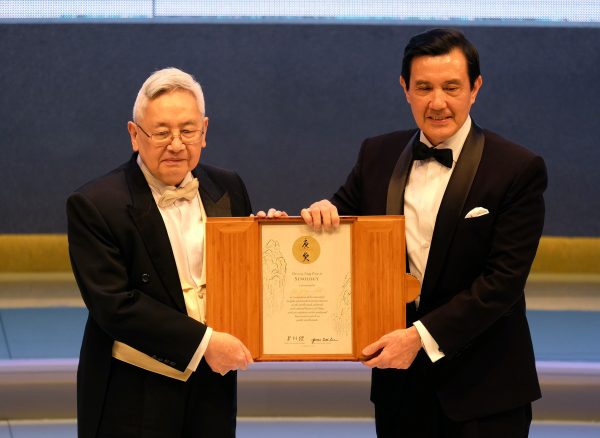
Over time, New Asia College expanded and was later incorporated into the Chinese University of Hong Kong, becoming one of its foundational pillars. Qian Mu’s most accomplished student, Yu Ying-shih, later became the first ethnic Chinese scholar to receive the Kluge Prize, often regarded as the Nobel Prize in the humanities.
When Yu accepted the award in 2006, he said with emotion, “All of my learning was rooted in those rain-leaking classrooms at New Asia College.”
The seed had indeed grown into a towering tree.
In his later years, voices calling for Qian Mu’s return to the mainland grew louder. Some assured him there would be “no danger of violence,” even promising ceremonial treatment. For an exile, the pull of home was immense.
Qian Mu refused.
“Returning may involve no physical peril,” he replied, “but it would require self-criticism and being remade as a person. Losing one’s human dignity is something a student must never accept.”
This was not stubborn pride, but a line he would not cross. Having studied history his entire life, Qian Mu understood the logic of such a system: first you change your words, then your thoughts, and finally your fate. When survival requires you to cease being yourself, living becomes a form of death.
For the shi dafu—the scholar-official class—the most precious thing is not safety, but dignity. The most terrifying fate is not physical destruction, but spiritual submission.
Seeing a thousand years at a glance: China’s Political Systems Past and Present
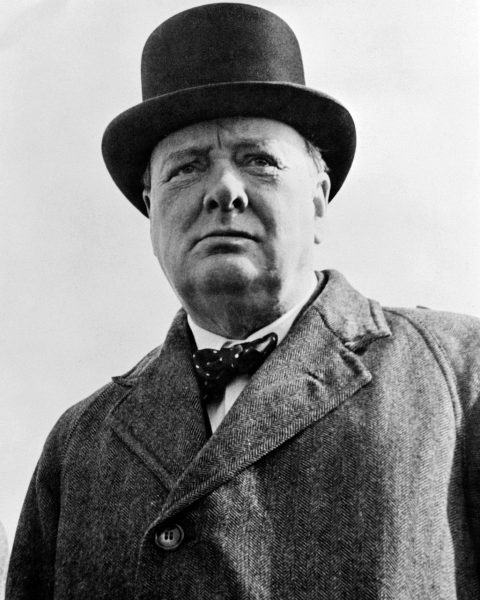
Winston Churchill once said, “The farther backward you can look, the farther forward you are likely to see.” Qian Mu lived by this principle. He distilled that long echo of history into a slender but incisive book, China’s Political Systems Past and Present.
The book avoids palace intrigue and tales of victors and losers. Instead, it dissects the political skeletons of the Han, Tang, Song, Ming, and Qing dynasties with surgical precision. How does power operate? How does bureaucracy form? How are finances sustained? How is military authority allocated and restrained?
Layer by layer, Qian peels back the structure to its marrow. He shows why systems that appear airtight grow rigid, and why extreme concentration of power inevitably produces systemic collapse. The book is a key he left behind—one meant to explain China’s political past and to help anticipate its future.
The ink on that 1949 proclamation dried long ago. But Qian Mu’s decision to turn away continues to send ripples through history. He did not gamble on fortune like so many others. Instead, he spent the latter half of his life guarding a single lamp.
He understood that the wind may stop and the rain may pass. But once the lamp goes out, the road is truly lost.
Only today, looking back, do we fully understand Qian Mu. The breath he preserved was not merely the sound of books at New Asia College, but the living spark of independent spirit and free thought carried forward within Chinese civilization.