By Cai Siyun, Vision Times
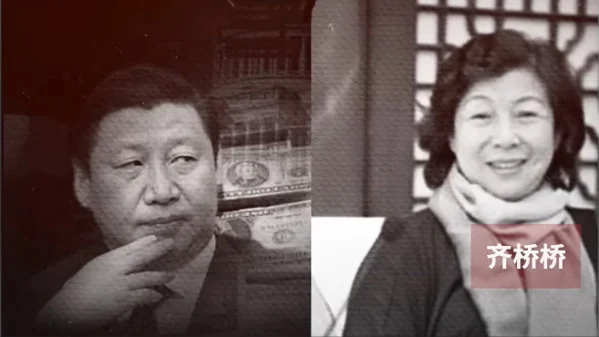
Recent allegations have reignited scrutiny within the Chinese Communist Party’s top leadership, with claims circulating that Chinese President Xi Jinping’s family, particularly his elder sister Qi Qiaoqiao, amassed enormous wealth through proxy-controlled businesses spanning oil, rare earths, real estate, and finance. While Beijing has consistently denied such accusations, analysts note that China’s opaque political and commercial systems make independent verification difficult.
According to reporting summarized by Radio Free Asia (RFA), a U.S. Office of the Director of National Intelligence (ODNI) assessment released last year stated that as of 2024, Xi Jinping’s family may still hold millions of dollars in business and financial interests. The report added that after international media investigations in 2012 exposed extensive family wealth, Xi reportedly asked relatives to divest to reduce perceptions of conflicts of interest.
However, industry research cited by the ODNI suggested that substantial interests may have been retained through indirect means.
Allegations of oil arbitrage via proxies
Veteran media commentator Lao Deng said in a Feb. 1 program that recent online claims allege Qi Qiaoqiao monopolized low-cost oil sourced from Venezuela and Iran. U.S. Secretary of State Marco Rubio recently disclosed that Venezuelan crude had been supplied to China at prices as low as US$20 per barrel to settle debts.
Success
You are now signed up for our newsletter
Success
Check your email to complete sign up
RELATED: Zhang Youxia’s ‘Strategic Sacrifice’ Leaves Xi Jinping With No Way Out
Lao Deng cited unnamed former Chinese officials claiming that this discounted oil was controlled by Qi via intermediaries and resold domestically at US$40–60 per barrel, generating annual net profits of roughly RMB 400 billion, about 2 percent of China’s annual GDP by his estimate.
Lao Deng further alleged that Qi controls seven investment firms under a proxy named Long Jie, a 59-year-old Hunan native, using import quotas to consolidate oil trading. Similar proxy structures were said to extend to construction materials, with claims that Qi once dominated concrete supply in Shenzhen and Guangzhou, earning up to RMB 130 billion annually at peak and controlling more than 170 companies in Shenzhen alone.
Strategic resources and rare earths
Claims of the Xi family’s involvement in strategic resources have circulated for years. A 2012 Bloomberg investigation reported that relatives of Xi held stakes in a Jiangxi rare-earths company. Rare earths, critical to defense, electronics, and clean energy, are tightly regulated in China, heightening sensitivities around elite access. Lao Deng asserted that the family’s footprint in rare earths and other minerals has long been concealed behind layered proxies.
RELATED: Yang LanLan Mystery Deepens Amid Court Absences, Alleged Ties to Xi Jinping
In mining, reports allege Qi and her husband Deng Jiagui invested via Shanghai Wangchao into Jiangxi Rare Metals Tungsten Holdings, a firm tracing its origins to the Soviet-era Zhonghua Tungsten Mine and said to control valuable reserves.
Hong Kong media have also reported that Deng Jiagui is an undisclosed major shareholder in Excellence Group, once ranked among China’s top real-estate firms and a dominant player in Shenzhen’s office market.
Real estate, finance, and capital markets
Qi Qiaoqiao’s business activities reportedly expanded in the 1990s under a Hong Kong investor identity, with projects in Beijing and Shenzhen. She and Deng Jiagui were linked to metro-adjacent property development via joint ventures with Shenzhen Metro, later injecting land assets into listed firms such as Vanke and other property giants.
RELATED: Monthly Pay Sinks Below 2,000 Yuan as Jobs and Businesses Vanish in Shenzhen
The family’s reach is also alleged to extend into insurance and finance. Lao Deng claimed that a major insurance and credit conglomerate once associated with the Ye Jianying family later fell under Qi’s control through intermediaries, again without her appearing publicly.
Qi’s daughter, Zhang Yannan, has been described as an active equity investor, with reports of outsized gains from early stakes in manufacturing firms and holdings in listed companies. Hong Kong property purchases attributed to Zhang, seven luxury homes valued at HK$350 million, have also drawn attention.
Official denials
Chinese authorities have consistently denied that Xi’s relatives engage in business or monopolistic practices, maintaining that leaders’ families exited commerce years ago. Critics counter that China’s lack of transparency allows wealth to be hidden through proxies, trusts, and layered ownership.
Lao Deng argued that the sectors cited, oil, rare earths, infrastructure, property, pharmaceuticals, are high-margin businesses with formidable policy barriers, where the fusion of political power and capital can accelerate wealth accumulation far beyond normal market dynamics. He contended that the alleged RMB 400 billion oil profits represent “only the tip of the iceberg,” suggesting a far larger, compounding fortune if all sectors were tallied.
Online reactions have been blistering, with commenters accusing the family of hypocrisy amid Xi’s decade-long anti-corruption campaign. Others questioned whether entrenched interests help explain Xi’s determination to retain power and underscores enduring concerns about elite privilege, proxy ownership, and accountability at the apex of China’s political system.
Editorial note: This article is based on publicly circulating reports and commentary from independent analysts. The claims described have not been independently verified by Vision Times, and relevant authorities have not publicly confirmed the allegations.