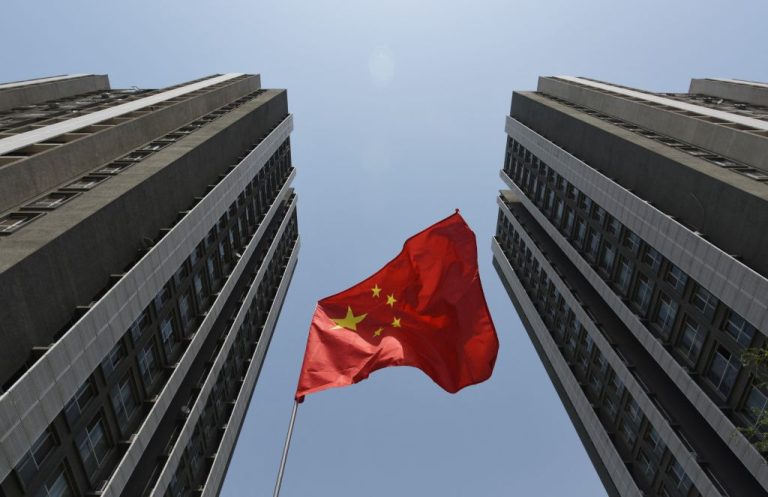
Since the founding of the People’s Republic of China in 1949, the Chinese Communist Party has never resolved a basic problem faced by all modern political systems: how power at the very top is supposed to end.
From Liu Shaoqi and the Gang of Four to Hua Guofeng, Hu Yaobang, Zhao Ziyang, and more recently senior military figures such as Central Military Commission Vice Chairman Zhang Youxia, leadership exits have followed a familiar pattern. They are abrupt, opaque, and retrospective. Authority disappears first; explanation comes later.
These moments are often described as purges, internal discipline, or anti-corruption campaigns. In functional terms, however, they resemble political coups. Power does not pass through rules or procedures. It collapses.
This pattern is not the result of unusually cruel leaders or exceptional historical circumstances. It is embedded in the CCP’s political design. More than seven decades after taking power, the Party has never created a predictable, institutionalized mechanism for leadership succession. When authority changes hands, it does so through political reckoning rather than lawful transition.
At the core of this system lies a simple hierarchy: the Party stands above the law. The CCP claims historical correctness as its source of legitimacy, while legal institutions exist primarily as tools of governance, not as constraints on power. There is no constitution capable of overruling the Party, no independent judiciary to arbitrate elite conflict, and no recognized opposition that can lose power without being morally or politically delegitimized.
Success
You are now signed up for our newsletter
Success
Check your email to complete sign up
Under these conditions, elite struggle cannot be resolved through compromise or orderly replacement. It ends with winners and losers, and losers must be redefined. Political defeat becomes evidence of fundamental error.
This logic is reinforced by the CCP’s origins as a revolutionary party rather than a constitutional one. Revolutionary parties do not rotate leadership according to neutral rules. They operate on judgments of correctness: who represents the right line, and who has been rejected by history. Leadership change therefore functions as a final verdict, not a procedural handover.
Each generation leaves unresolved figures behind. Mao Zedong left Liu Shaoqi. Deng Xiaoping left Hu Yaobang and Zhao Ziyang. Later leaders dealt with Chen Xitong and Bo Xilai. Under Xi Jinping, the scope of purges—especially within the military—has expanded further. This continuity is not accidental. A system that cannot tolerate legitimate political failure must eventually eliminate those who fail.
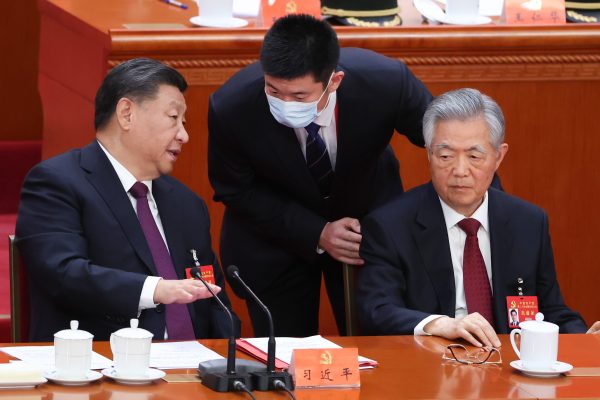
A mismatch between authority and responsibility
Power in China is also shaped by a dangerous mismatch between authority and responsibility. Decision-making is concentrated in the hands of a few individuals, while accountability is diffused into abstractions such as “collective leadership,” “historical necessity,” or “correct political lines.” The result is a climate in which open debate is risky, retirement is unsafe, and stepping aside invites retrospective punishment.
For senior officials, leaving office is not a neutral transition. It is a potential threat. When loss of power equals loss of security, rational actors do not prepare for orderly exit. They cling to authority, preempt rivals, or remove uncertainty through purges.
The military occupies a particularly sensitive position in this structure. In constitutional states, armed forces serve the state and remain subject to civilian oversight. In the CCP system, the People’s Liberation Army serves the Party directly. It is both the ultimate guarantor of political power and a persistent source of anxiety.
As a result, loyalty within the military is treated as an absolute condition. Once loyalty is questioned, removal becomes unavoidable. These removals are sudden, secretive, and irreversible. Though often framed as anti-corruption efforts, they function in practice as preventive counter-coups—designed to eliminate potential threats before they materialize.
This system perpetuates itself. The Party’s distrust of institutions leads to greater personalization of power. Personalized power makes succession opaque. Opaque succession intensifies elite struggle. Elite struggle produces purges. Each purge, in turn, makes institutional reform more dangerous.
The cycle does not break because breaking it would require the CCP to accept something it has consistently rejected: the idea that power can be lost without moral condemnation, and authority can end without political liquidation.
In contemporary China, political purges have become routine not because power is excessive, but because power has no exit. Without legal opposition, secure retirement, judicial arbitration, or constitutional supremacy, authority can only be renewed through sudden loss. Politics operates permanently in a state of exception.
This is not the failure of a single leader or generation. It is the unresolved legacy of a revolutionary regime that never completed its transition to a modern political order.