By David and Li Jingyao
A vice chairman falls—and the army stirs
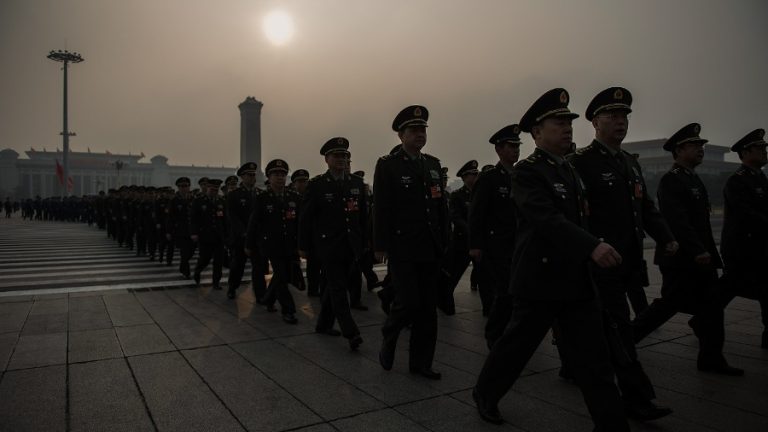
On Jan. 24, the Chinese Communist Party (CCP), China’s ruling Leninist party-state, announced that Zhang Youxia, a Politburo member and vice chairman of the Central Military Commission (CMC), the Party’s top body controlling the armed forces, was under investigation for “serious violations of discipline and law.” More than a week later, rumors of military unrest began circulating across Chinese social media, including reports of troop movements, gunfire, and explosions in multiple regions.
He Liangmao, a veteran Chinese journalist and longtime observer of elite politics, told Vision Times that Xi Jinping, China’s paramount leader and CMC chairman, remains deadlocked with Party elders, with no force capable of breaking the stalemate. “If Xi insists on acting unilaterally,” He said, “China will resemble a driverless train. The probability of the CCP ending in total destruction—car and passengers alike—is extremely high.”
Interpretations of Zhang’s detention have sharply diverged. Some observers portray it as an extension of Xi Jinping’s anti-corruption campaign, a long-running political purge targeting officials across the system, arguing that even his closest allies are not immune. Others see it as something far more drastic: an attempt by Xi to preemptively seize full control of the People’s Liberation Army (PLA), China’s party-controlled military, through internal purge tactics amounting to a political coup.
In Shandong Province, residents of Weifang, a major industrial city, reported days of deafening explosions. Online commentators openly questioned whether the sounds were gunfire or artillery. Although these claims remain unverified, their spread reflects mounting public unease over instability at the heart of China’s power structure.

Success
You are now signed up for our newsletter
Success
Check your email to complete sign up
Rumors of armed confrontation and a possible rescue
He Liangmao believes the reported explosions and troop movements suggest the possibility of armed confrontations or stand-offs within the PLA. Some rumors claim Zhang Youxia is being held at a sealed facility run by the Central Guard Bureau, the elite unit responsible for protecting top Party leaders, in Gu’an County, Langfang, a security-sensitive area near Beijing. The source of this allegation is Hu Liren, a former Shanghai entrepreneur now living outside China. Other reports allege Zhang has been subjected to torture.
“If these accounts are true,” He said, “units loyal to Zhang Youxia may attempt to mount a rescue.”
According to He, the confrontation between the military and the CMC chairman—Xi Jinping himself—has not been resolved. Meanwhile, a shadowy body reportedly organized by Party elders, sometimes described as a “central decision-making and coordination mechanism,” has made no public statement. Outwardly, the silence suggests behind-the-scenes bargaining rather than resolution.
“There is widespread speculation that if negotiations collapse, the conflict could escalate,” He said. “The real question is whether Xi Jinping has the capacity to control what follows.”
Adding to the uncertainty are reports that Zhang Shengmin, head of the CMC Discipline Inspection Commission, the military’s internal watchdog, has stepped down. If accurate, Xi Jinping is now effectively commanding a two-million-strong military on his own. “This is an extraordinarily abnormal command structure,” He noted. “Whether the army will obey is very much in doubt.”
A ‘bare commander’ and a silent chain of command
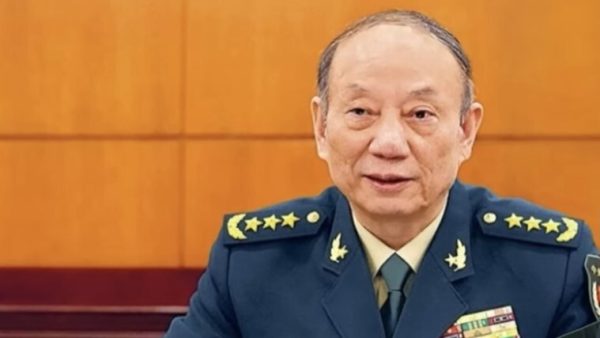
He Liangmao described Xi Jinping as having become a “bare commander,” ruling both Party and military alone. “If he were a founding emperor like Tang Taizong, an early imperial ruler celebrated for consolidating power through capable governance,” He said, “one might expect strategic judgment. But Xi is closer to Chongzhen, the last Ming emperor who presided over dynastic collapse.”
With Zhang Youxia and Liu Zhenli, chief of staff of the PLA Joint Staff Department, the body responsible for operational command, both reportedly removed, the Central Military Commission has been hollowed out. Decision-making now rests with a single individual.
“For a force of two million,” He argued, “both obeying and disobeying Xi are dangerous. Officers cannot be sure his orders are grounded in reality or even basic military logic.”
More than a week after the official announcements, commanders of China’s five theater commands, the PLA’s highest regional operational units, have conspicuously refused to publicly endorse Xi or voice support for the purge of Zhang and Liu. Their silence, He said, is itself a statement.
“The military’s refusal to line up behind Xi, combined with signs of unrest, reflects open noncompliance,” he said. “The official charges against Zhang and Liu have failed to convince them. That is why the rumors of gunfire and explosions may point to an attempted rescue.”

Xi’s governing style: loyalty exhausted
He Liangmao argued that the purge of Zhang Youxia and Liu Zhenli represents the most severe internal power struggle within the CCP since its founding in 1949. When Lin Biao, Mao Zedong’s designated successor and defense minister, fell out with Mao Zedong, the founding leader of the People’s Republic, in 1971 and attempted to flee, Mao still exercised iron control over the military. Xi Jinping, by contrast, appears unable to command even public loyalty.
Provincial leaders and senior local officials have likewise remained silent. “They are afraid of choosing the wrong side and paying with their lives,” He said. “Once you place this bet, there is no way back.”
This paralysis, He insisted, is the product of Xi’s own political style. “This is textbook Xi Jinping governance,” he said. “Extreme suspicion, absolute distrust, and total intolerance of dissent. Under such a ruler, no one is willing to die for him.”
Xi’s governing record has only deepened elite cynicism. After thirteen years in power, He described Xi as a leader defined by failure and abandonment: Xiong’an New Area, a flagship state-planned city project near Beijing, reduced to a ghost city; Hong Kong, a former British colony promised autonomy, “completely destroyed” by the National Security Law, a sweeping security statute imposed in 2020; and grand projects such as the Hainan Free Trade Port, a state-led economic experiment, producing little beyond slogans. “His political liabilities,” He said, “are too numerous to count.”
No exit, no arbiter, no brake
He Liangmao identified two structural crises at the core of China’s predicament. First is an authoritarian ideology fundamentally incompatible with universal values—sustained through censorship, propaganda, and repression. Second is a power system devoid of internal restraint.
“There is no political balance, no institutional check, no counterweight between center and locality,” He said. “Separation of powers is not merely absent—it is structurally impossible.”
Xi Jinping rules alone, yet “his moral authority does not match his position.” This mismatch, He argued, has become fatal. After thirteen years of centralized rule, China is “barely alive.”
That the PLA no longer appears reliably loyal suggests that years of ideological indoctrination have failed to override the personal bonds Zhang Youxia cultivated within the military. “This is Xi’s hard weakness,” He said.
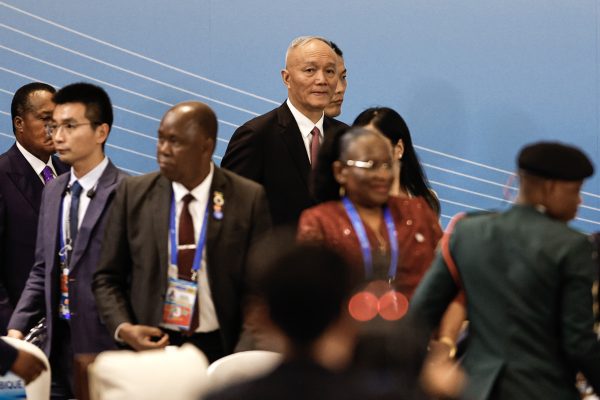
Surrounding Xi is an inner circle—Cai Qi, the Party’s top organizational enforcer; Wang Huning, the chief Party ideologue; and Li Qiang, the premier overseeing the economy—that He dismissed as courtiers rather than statesmen. “They know only how to flatter,” he said. “As a result, Xi hears neither public sentiment nor reality.”
China, He warned, is now a train driven by a single man, racing toward disaster. “No one can resolve this deadlock—not even the Party elders,” he said. “They have retreated and refuse to speak. The situation can only be watched.”
He concluded bluntly: “If Xi Jinping continues on this path, I welcome it. The Party and the military will be destroyed by his own hand.”