By Fu Longshan
In official Chinese Communist Party (CCP) mythology, He Long occupies a sanctified place: the rough-edged revolutionary who “started the revolution with two kitchen knives,” a founding marshal whose loyalty was never meant to be questioned. Yet during the Cultural Revolution, that image was systematically dismantled. Lin Biao, Kang Sheng, and their allies exhumed He Long’s long-buried historical interactions with the Kuomintang (KMT) and reassembled them into a capital political crime.
The “He Long case” cannot be understood in isolation. It unfolded at the opening stage of the Cultural Revolution, when Mao Zedong was reordering the Party-state through fear, purges, and selective sacrifice. This was not a technical personnel adjustment within the People’s Liberation Army (PLA). It was a strategic elimination embedded in a larger struggle among Mao, Lin Biao, Zhou Enlai, and Liu Shaoqi over who would control the gun—and therefore the Party.
Lin Biao’s obstacle: why he long had to be removed
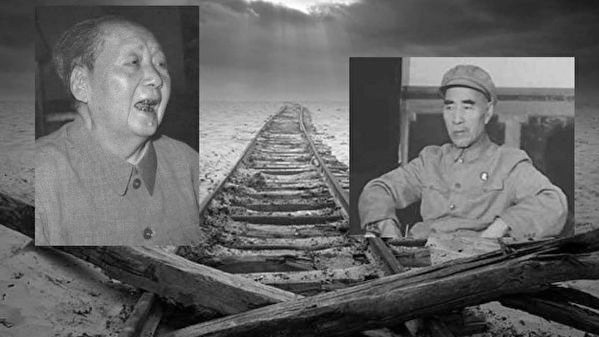
Among the CCP’s ten marshals, no relationship was as structurally unstable as that between He Long and Lin Biao. Archival materials and insider accounts converge on one point: removing He Long was Lin Biao’s necessary entry fee for monopolizing power within the Central Military Commission (CMC), the Party’s highest military organ.
For Lin, He Long represented a threat that could not be neutralized by demotion alone.
An independent power base inside the PLA
Success
You are now signed up for our newsletter
Success
Check your email to complete sign up
He Long founded the Red Second Army Corps and retained deep loyalty among its veterans. Over decades, this translated into a sprawling network across the military and civilian-adjacent systems: former subordinates embedded in regional commands, influence within the armored forces, and control of the State Physical Culture and Sports Commission, which he chaired.
In CCP military politics, such networks are not tolerated unless they serve the top leader. Lin Biao’s goal of “unifying the military” meant dismantling all non–Lin-aligned centers of authority—what the Party euphemistically calls “small mountains.”
Acting control of the military
In the early 1960s, Lin Biao’s prolonged illness kept him away from day-to-day command. Mao Zedong appointed He Long to preside over routine CMC operations. For Lin, this was not administrative substitution but existential danger. He interpreted it as a prelude to the loss of real command authority.
Personal hostility compounded institutional rivalry. Lin’s wife, Ye Qun, reportedly despised He Long. Blunt, irreverent, and indifferent to hierarchy, He Long had humiliated Lin publicly on more than one occasion. In the Cultural Revolution, personal resentment did not remain private; it became raw material for political annihilation.

The CCP purge playbook applied
The removal of senior military figures in the CCP follows a recognizable sequence: isolation, criminalization, destruction. In He Long’s case, Lin Biao’s camp worked closely with Kang Sheng—the Party’s chief of internal security and ideological terror—to execute this script with precision.
Manufacturing a coup that never existed
The purge began by severing He Long from his inner circle. Senior officers such as Yang Yong, commander of the Beijing Military Region, and Xu Guangda, commander of the armored forces, were detained first. They were labeled members of a “He Long anti-Party clique” and subjected to coercive interrogation.
From these interrogations came confessions, denunciations, and “materials” that formed the evidentiary core of the case. The process created the illusion of bottom-up exposure—“mass reporting” and “grassroots accusations”—while every step was directed from above.
He Long was accused of exploiting the sports system to create a clandestine armed force beyond CMC oversight. Rumors alleged secret links to overseas KMT intelligence. At a central meeting, Kang Sheng presented supposed evidence that He Long had once remarked: “If the Chairman [Mao] cannot continue, we must support Liu [Shaoqi].” When combined with alleged coordination with figures such as Beijing mayor Peng Zhen, this was framed as preparation for a “Kuomintang-style coup.”
Lin Biao escalated the campaign by ordering Wu Faxian, Li Zuopeng, and others to send accusatory letters directly to Mao Zedong. As these circulated among the top leadership, doubt hardened into political consensus: He Long was dangerous.
Routine troop movements and defense construction on Beijing’s outskirts were rebranded as preparations for an armed uprising. The charge solidified into a specific claim: He Long planned a coup in February 1966, aimed at assassinating Mao.
At an expanded CMC meeting, Lin reportedly summarized the verdict with naked hostility: “He Long is a big bandit. He reaches everywhere. He wants to get rid of us.”
Weaponizing the past: turning history into treason
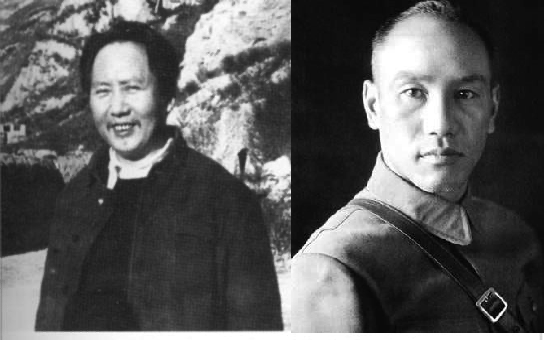
The decisive blow came from reopening a decades-old incident. In 1933, during a crisis period for the Red Army, Chiang Kai-shek sent Xiong Gongqing—a former subordinate of He Long—to persuade him to defect, offering rank and reward. The CCP later canonized He Long’s response as exemplary loyalty: he extracted intelligence, executed Xiong, and reported the matter to the Party.
During the Cultural Revolution, Lin Biao and Kang Sheng inverted this narrative. They claimed He Long had been “waiting for a better offer.” Kang alleged the discovery of a draft surrender letter addressed to Chiang Kai-shek, asserting that He Long had written he could bring his troops over “if conditions were right.”
From this, they constructed an accusation that struck at Mao’s deepest paranoia: political disloyalty. Worse still, they suggested He Long was willing to defect not only to the KMT but potentially to the Soviet Union.
Inside the CCP, the logic is unforgiving. Any private contact with the KMT—regardless of outcome—is retroactively treated as proof of latent betrayal. The past becomes evidence not of what one did, but of what one might do.
Mao’s calculation and Zhou Enlai’s role
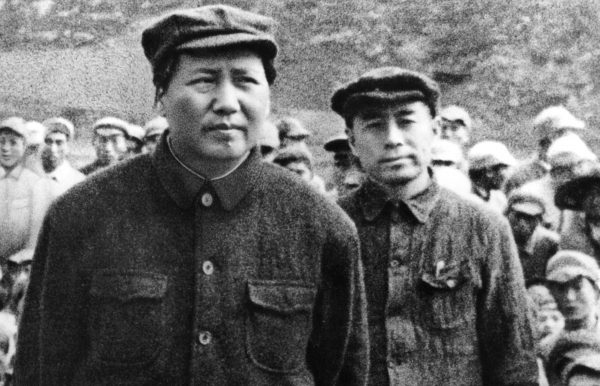
Mao Zedong initially trusted He Long. He once told him, “I will be your royalist.” But trust in the CCP system is conditional and reversible. Every senior cadre’s file contains compromising material: insurance in times of loyalty, a death warrant in times of struggle.
When Mao needed He Long’s military competence, his past dealings were reclassified as political achievements. When Mao launched the Cultural Revolution to destroy the Liu Shaoqi–Deng Xiaoping bloc, the same history became proof of treason. As the conflict escalated, Mao required Lin Biao’s unquestioned control of the PLA. The price of that loyalty was He Long.
Official histories portray Zhou Enlai as He Long’s protector, emphasizing that he was brought into Zhongnanhai. The record suggests a harsher reality. Once Mao and Lin reached agreement, Zhou oversaw the mechanics of isolation and investigation. “Protective custody” became the bureaucratic euphemism for terminal detention.

Isolation, medical abuse, and a controlled death
Isolation marked the final phase. Targets were removed to secret locations, cut off from family, comrades, and the outside world. He Long was detained at Xiangbizigou in Beijing’s Western Hills; Peng Dehuai was held by the Capital Garrison Command.
He Long was a severe diabetic. During detention, interrogators deliberately restricted his access to water. According to internal details later leaked by descendants of revolutionary families, he endured food and water deprivation, extreme heat, and systematic medical abuse.
On June 8, 1969, as his condition worsened, the medical team—acting on orders—administered a high-concentration glucose injection. For a diabetic patient, this was not treatment. It was a controlled, deniable execution.
Once the body collapsed, the Party completed the process with paperwork. An internal resolution was issued, fixing He Long permanently in the category of traitor. Shortly before his death, he reportedly said: “I understand now. They intend to kill me.”