By Li Deyan
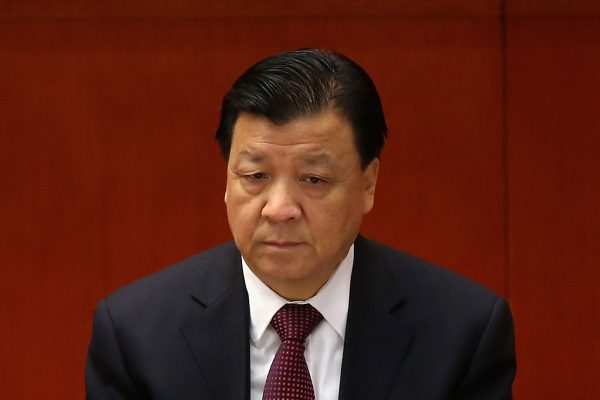
China’s Central Commission for Discipline Inspection (CCDI)—the Communist Party’s top internal watchdog—has announced that Lian Ji, former president of the China National Academy of Arts, is under investigation for “serious violations of discipline and law.” He is the ninth centrally managed official placed under investigation since the beginning of 2026.
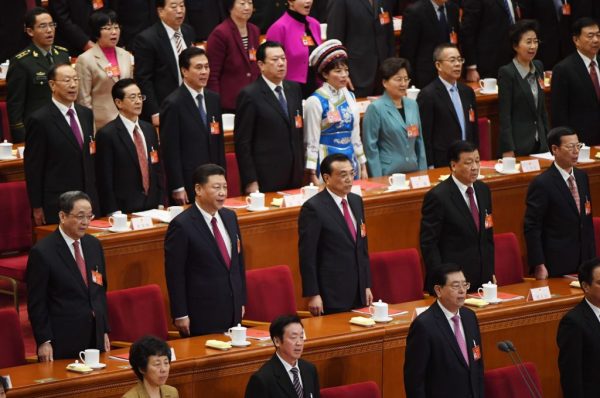
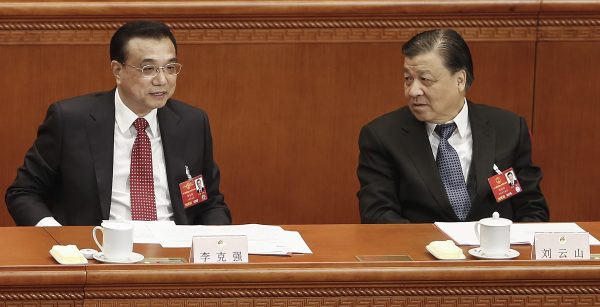
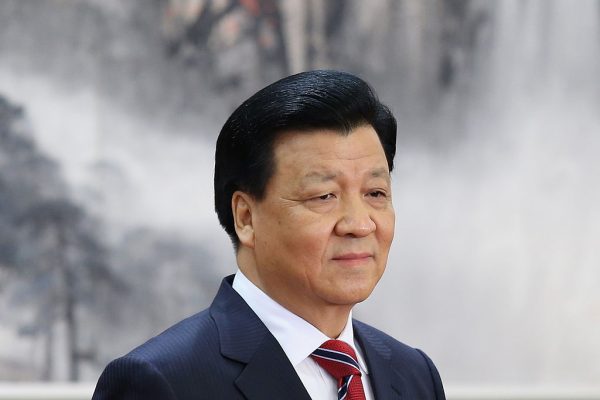
Lian is widely known as a longtime loyalist of Liu Yunshan, a former member of the Politburo Standing Committee—the Party’s top ruling body—who controlled ideology, propaganda, and media for a decade. More significantly, Lian played a direct role in the political campaign that dismantled Yanhuang Chunqiu, a liberal-leaning intellectual journal long regarded as one of the last institutional spaces for reform-minded voices tolerated within the Chinese Communist Party (CCP).
A patron–client relationship forged in propaganda
On Feb. 3, 2026, the CCDI publicly confirmed Lian Ji’s investigation. Days earlier, on Jan. 30, Du Wen—a former Inner Mongolia government official turned overseas critic—revealed that Lian and his wife had been taken from their Beijing home by CCDI investigators.
Public records show that Lian was born in October 1955 in Qinyuan County, Changzhi City, in northern Shanxi Province. He and Liu Yunshan hail from the same province and followed strikingly parallel early career paths.
Success
You are now signed up for our newsletter
Success
Check your email to complete sign up
Both men built their rise through Inner Mongolia’s propaganda apparatus and the Communist Youth League, the Party’s traditional training ground for future officials. Lian later served as Party secretary of Hulunbuir and as vice chairman of the Inner Mongolia regional government, positions that placed him firmly within the local power structure cultivated by Liu.
In October 2002, Liu Yunshan assumed leadership of the CCP Central Propaganda Department, the institution that oversees censorship, publishing, and ideological enforcement nationwide—a position he held for ten years. In October 2011, Lian was transferred across provincial lines to Gansu, where he joined the provincial Party Standing Committee and took charge of propaganda work.
At the CCP’s 18th National Congress in November 2012, Liu was elevated to the Politburo Standing Committee and inherited the Party’s ideological portfolio from Li Changchun, his predecessor as propaganda chief. In February 2016, Lian followed him to Beijing, where he was appointed president of the China National Academy of Arts, a state-run cultural institution under the Ministry of Culture.
After the CCP’s 19th National Congress in October 2017, Liu Yunshan retired from top leadership. Lian departed the academy less than a year later, in July 2018.
Across two decades, their careers intersected at every decisive juncture. Within official circles, Lian came to be seen not merely as an associate but as one of Liu Yunshan’s most dependable executors.
How Yanhuang Chunqiu was neutralized
While Liu Yunshan sat on the Politburo Standing Committee, the Central Propaganda Department and the Ministry of Culture—the government body overseeing publishing and cultural institutions—moved in tandem to suppress Yanhuang Chunqiu, triggering rare public backlash among elite circles.
Founded in 1991 as a monthly journal devoted to history and culture, Yanhuang Chunqiu was renowned for its blunt editorial line. It was widely regarded as the most influential liberal publication tolerated within China’s political establishment. Retired Party elders with reformist leanings openly defended the magazine, which came to symbolize the last vestige of institutional liberalism still operating inside the CCP system.
The journal’s founding publisher was Du Daozheng, a veteran Party intellectual and former senior propaganda official. After Zhao Ziyang—the former CCP general secretary purged for opposing the 1989 Tiananmen Square crackdown—was removed from power, Du secretly recorded Zhao’s reflections while he remained under house arrest.
By November 2008, sources in Beijing disclosed that Yanhuang Chunqiu had repeatedly published material related to Zhao Ziyang. Jiang Zemin, a former CCP leader who retained influence after retirement, reportedly demanded that Li Changchun—then the Politburo Standing Committee member overseeing ideology—take decisive action. The Ministry of Culture subsequently attempted to force Du Daozheng into retirement on the pretext of age.
That effort was blocked by then–CCP general secretary Hu Jintao, allowing Du to remain in his position—temporarily.
The Xi-era takeover mechanism
After Xi Jinping, China’s current top leader, assumed power following the 18th Party Congress, pressure on the magazine escalated sharply.
On Sept. 10, 2014, Luo Shugang, then executive deputy head of the Central Propaganda Department, personally convened an interministerial meeting. Without informing Yanhuang Chunqiu’s editorial staff, the meeting decided to strip the journal of its supervising body, transferring control from the China Yanhuang Culture Research Association to the China National Academy of Arts.
Two months later, in December 2014, Luo simultaneously became Party secretary and minister of culture, consolidating administrative authority with ideological control.
The final blow came soon after Lian Ji assumed leadership of the academy in February 2016. On July 14, 2016—just ahead of the Sixth Plenum of the 18th Central Committee, a major internal Party meeting—the academy issued a sweeping personnel directive targeting Yanhuang Chunqiu.
Every key editorial position was seized by officials installed by the authorities. Du Daozheng was removed as publisher. Deputy publisher Hu Dehua—the son of Hu Yaobang, a reformist CCP leader purged in 1987—and editor-in-chief Xu Qing were stripped of their posts as well.
From ‘enlightened insider’ to willing executor
In a Jan. 30, 2026 social media post, Du Wen portrayed Lian Ji as a figure marked by contradiction. According to Du, Lian had once expressed sympathy for the 1989 Tiananmen movement and, in private discussions, voiced deep skepticism about the CCP system. He even regarded himself as part of an “enlightened faction” within the Party.
Yet when the decisive moment arrived, Du wrote, Lian personally supervised the destruction of Yanhuang Chunqiu—a publication that preserved what Du described as the Party’s final, minimal reservoir of historical conscience and memory.
Lian, Du argued, was neither a passive participant nor a coerced official. He was an executor by choice. “They were not passive followers,” Du wrote. “They were executioners.”
The suffocation of the journal had begun even before the formal takeover. In July 2015, editor-in-chief Yang Jisheng, a prominent investigative journalist and historian, resigned under sustained internal pressure. Before departing, he published two open letters—A Farewell Letter to the Editorial Committee and Readers of Yanhuang Chunqiu and A Final Statement to the State Administration of Press, Publication, Radio, Film and Television, China’s chief media regulator—detailing the rectification campaign directed by the Central Propaganda Department under Liu Yunshan.
Yang also documented the personal political coercion he faced, leaving behind a rare written record of how ideological enforcement operates inside the system.
Inner Mongolia and the logic of purge
In recent years, Inner Mongolia—the northern region where both Liu Yunshan and Lian Ji launched their political careers—has been swept by relentless political purges, particularly in the mining and natural resources sectors.
Earlier disclosures alleged that Liu Yunshan’s family controlled substantial mineral assets in the region, including coal and molybdenum mines.
On Jan. 29, 2026, Sun Shaocheng, the former Party secretary of Inner Mongolia and the region’s top political authority, was brought down. Months earlier, in August 2025, Wang Lixia—the regional chairman and head of the local government—fell while still in office.
Lian Ji’s downfall ties these developments together. It underscores how past ideological crackdowns and today’s disciplinary purges are not separate phenomena, but components of the same machinery—one that rewards obedience in one era and punishes expendability in the next.