By Li Jingyao
Former Hong Kong Secretary for Constitutional and Mainland Affairs Tsang Kwok-wai was removed from office last Tuesday, Jan. 27, leaving the bureau in an unusual state with no secretary, no permanent secretary, and no political assistant. While Tsang cited health reasons for his departure, saying his prostate cancer index had risen, the timing has fueled speculation following the deadly Hung Fuk Estate fire and mounting rumors of an impending shake-up among senior government officials.
Before Tsang’s removal, Hong Kong media had reported that both Tsang and Secretary for Housing Ho Wing-yin were expected to leave office in the near term. With Tsang now officially out, attention has increasingly turned to Ho’s political prospects.
Xinhua News Agency reported on Jan. 27 that, in accordance with the Basic Law of the Hong Kong Special Administrative Region and following a recommendation by Chief Executive John Lee, China’s State Council had decided to remove Tsang from his post as Secretary for Constitutional and Mainland Affairs. Lee later said the 62-year-old official resigned for health reasons.
Tsang explained that after consultations with his family and doctors, he decided to step down due to an elevated prostate cancer index.
Success
You are now signed up for our newsletter
Success
Check your email to complete sign up
Earlier, Ming Pao reported on Jan. 22 that Tsang and Housing Secretary Ho Wing-yin were expected to leave office in the short term. When asked about the report at the time, Tsang replied only that it was “not convenient to comment.” The report sent shockwaves through Hong Kong’s political circles and prompted speculation over its accuracy and the reasons behind the potential departures.
‘Health reasons’ in question: Tsang’s resignation sparks speculation
According to HK01, Tsang’s wife, former Immigration Department director-general Denise Ho Pui-shan, declined to respond on Feb. 1 to questions about when Tsang first discovered the elevated index and whether health reasons were the sole factor behind his resignation.
The report noted that Tsang was removed from office citing prostate-related health issues. However, urology specialists pointed out that an elevated prostate cancer index does not equate to a cancer diagnosis, with the risk of confirmed cancer estimated at around 40 percent. This explanation has raised doubts, particularly as Tsang said in his farewell remarks that he still hoped to “contribute to society in different capacities.”
To date, Tsang has not clarified whether health issues were the sole reason for his departure, when the elevated index was first detected, or whether a biopsy had confirmed prostate cancer. There were also previous reports of strained relations between Tsang and senior government figures, as well as disagreements with some accountability officials over election-related work.
Suggestions that Tsang might be suffering from prostate cancer also came as a surprise to some observers, as he had long been regarded as being in excellent health, with no apparent issues related to diet, alcohol, or smoking.
Analysis by Vision Times’ Hong Kong desk notes that if reports of strained relations with senior officials and internal disagreements over election matters are accurate, Tsang’s departure may have been unavoidable. That, in turn, would underscore that political loyalty and professed patriotism offer no immunity, and that removal from office can follow once senior leaders become displeased.
Ming Pao had previously reported, citing multiple sources, that at least two bureau chiefs were expected to be replaced in the near term, including Tsang. When asked to comment, the government dismissed the report as speculative. Five days later, those “speculations” were confirmed by Tsang’s removal.
Some netizens have argued that Tsang’s stated reason for resignation lacks credibility. They contend that if he had been diagnosed with prostate cancer, he would likely have said so directly, rather than citing a rise in an index. If the index alone had risen, they argue, further tests could quickly determine whether cancer was present.
They also note that if cancer were detected early and without metastasis, surgery is relatively straightforward and would not typically require resignation from office. As an example, Singapore’s former prime minister Lee Hsien Loong was diagnosed with prostate cancer in January 2015 and underwent robot-assisted prostate surgery the following month. By May of that year, Lee said follow-up blood tests showed he had fully recovered.
Speculation intensified
Following Tsang’s removal, speculation has intensified over potential senior appointments. According to HK01, political circles have floated various scenarios, including the possible departure of Deputy Chief Secretary for Administration Michael Cheuk Wing-hing, with Secretary for Home and Youth Affairs Alice Mak or Secretary for Security Chris Tang emerging as leading contenders for promotion.
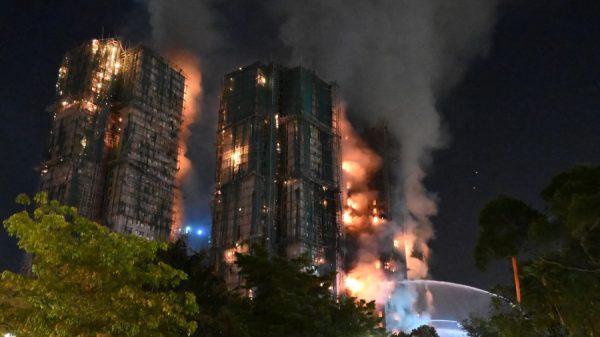
After the deadly Hung Fuk Estate fire in Tai Po, rumors of a broader shake-up among senior officials have continued to circulate. Chief Executive John Lee has said that anyone found responsible—whether within or outside the government, at any level—would be held accountable based on the facts.
Ming Pao had earlier named Housing Secretary Ho Wing-yin alongside Tsang as officials expected to leave office in the near term, a claim the government rejected as speculative. With Tsang now officially removed, attention has increasingly focused on whether Ho could be next.
Public records show that Tsang joined Hong Kong’s Immigration Department in 1987 as an assistant immigration officer. He became Director of Immigration in 2016 and left the civil service early in 2020 to take up his post as Secretary for Constitutional and Mainland Affairs.
On Aug. 7, 2020, the U.S. government announced sanctions against 11 Chinese and Hong Kong officials for what it described as undermining Hong Kong’s autonomy and restricting freedoms of expression and assembly. Tsang was among those sanctioned. Under the measures, U.S.-based assets of designated individuals may be frozen, access to banking services overseas and in Hong Kong could be curtailed, and the use of U.S. company products and services restricted.