By Jian Yi
“The People’s Liberation Army is entering a period of severe crisis, with leadership instability unseen since the height of the Cultural Revolution.”
That assessment appeared in an article published on Jan. 26 by The Diplomat, written by Dr. Zi Yang, a researcher at Singapore’s S. Rajaratnam School of International Studies. The piece examined why senior generals Zhang Youxia and Liu Zhenli were purged, and what direction China’s military may now take.
Only days earlier, Chinese authorities had announced that Zhang and Liu were under investigation.
The analysis came as commentary in China’s own military media suggested that Beijing’s intentions toward Taiwan may rely less on overt force than on internal destabilization. According to the assessment, the most serious threat facing Taiwan may not lie solely in military pressure from across the Strait, but in covert networks operating within the island itself.

Success
You are now signed up for our newsletter
Success
Check your email to complete sign up
An unprecedented leadership vacuum
In the article, Yang noted that in a piece he published in The Diplomat in October 2025, he had warned that the removal of Zhang Youxia could trigger internal turmoil within the PLA. He wrote that this moment had now arrived.
Yang pointed to an unusual departure in the Chinese Defense Ministry’s public messaging. Officials avoided the standard anti-corruption narrative typically used in such cases. According to Yang, the shift exposed the severity of personal and institutional conflicts at the highest levels of the military.
Multiple analysts have observed the same pattern, including the rapid de-escalation of official rhetoric following the announcements involving Zhang and Liu.
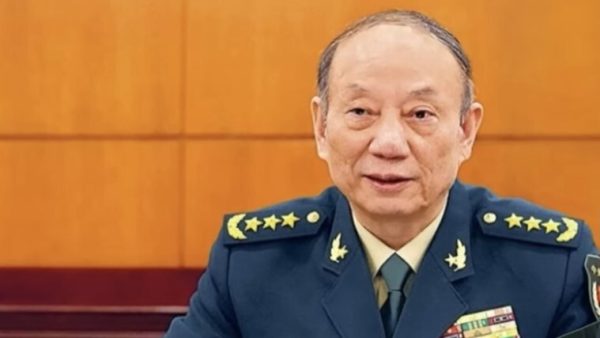
Yang wrote that China’s Central Military Commission is now left with only two members: Xi Jinping and Zhang Shengmin. Zhang Shengmin, he noted, is a career political commissar with little operational command experience.
With Zhang Youxia and Liu Zhenli, both described as senior commanders with real combat experience, removed from their posts, Yang argued that the professional core of the PLA leadership has been hollowed out.
He further warned that their removal could implicate a large number of associated personnel, increasing the likelihood of broader instability.
“The level of instability within the PLA leadership is unprecedented since the peak of the Cultural Revolution,” Yang wrote.
Motives remain opaque
According to Yang, determining the precise reasons for the purge is difficult due to the PLA’s highly secretive nature. He wrote that, aside from a small group responsible for orchestrating the arrests, almost no one possesses a complete picture of what transpired.
Even among those insiders, Yang suggested, it is not clear that they fully understand Xi Jinping’s intentions. Historically, he wrote, Chinese Communist Party leaders have cultivated secrecy to project an image of inscrutability.
Yang described the removal of Zhang and Liu as both abnormal and puzzling.
He argued that Xi Jinping requires trusted figures in key positions to maintain control over the military. Liu Zhenli, in particular, was responsible for the PLA’s C4ISR capabilities, encompassing command, control, communications, computers, intelligence, surveillance, and reconnaissance.
Yang noted that such systems are critical in modern warfare and depend heavily on professional expertise. He did not suggest that Xi Jinping or Zhang Shengmin possess comparable technical capabilities.
A familiar pattern in Party history
The article placed the current purge within a broader historical context of intra-party struggles.
Yang cited the work of noted Chinese Communist Party historian Gao Hua, particularly How the Red Sun Rose, which documents repeated episodes of brutal internal purges.
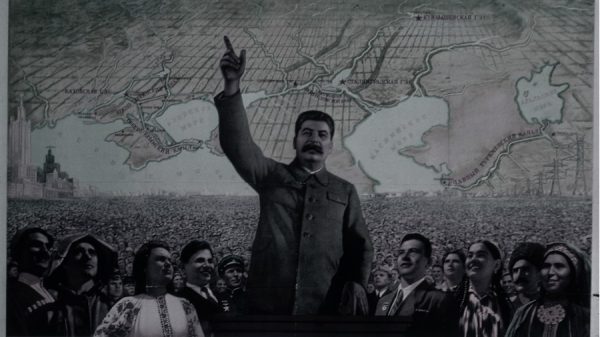
Beginning in 1927, Joseph Stalin launched mass purges within the Soviet Communist Party under the banner of eliminating opposition factions. By 1937, these campaigns escalated into widespread terror and mass killings.
Yang noted that similar practices occurred within the Chinese Communist Party. He referenced accounts describing how Kang Sheng oversaw interrogations involving torture, forced confessions, and fabricated evidence. According to testimony later revealed by Shi Zhe, a former Social Affairs Department official and political secretary to Ren Bishi, detainees were subjected to extreme abuse during the Yan’an “anti-Trotskyist” campaigns of the early 1940s.
Shi described visiting a hospital in Yan’an where preserved corpses of executed detainees were kept for medical dissection. According to the account, the individuals had been delivered alive under the pretense of medical treatment before being killed.
Yang wrote that such historical accounts inevitably invite comparisons with contemporary reports of unexplained disappearances and allegations of organ harvesting in China. Many, he noted, once believed the Communist Party might evolve over time.
The late science fiction writer Ni Kuang once dismissed such assumptions, observing that claims of Communist progress were akin to suggesting cannibal tribes had become civilized simply because they adopted Western attire and utensils.

Irreparable fractures at the top
Yang argued that tensions between Xi Jinping, Zhang Youxia, and Liu Zhenli may have reached an irreversible stage, leading to a complete breakdown in trust.
Like many aging strongmen, Yang wrote, Xi may have grown increasingly suspicious of his surroundings. His lack of deep ties to the professional officer corps has likely intensified this anxiety. When career officers expressed dissenting views, it may have further fueled mistrust.
Regardless of motive, Yang concluded that the removal of Zhang and Liu represents a development of major significance, with long-term consequences.
He wrote that the PLA leadership is now in a state of turbulence, with outside observers seeing only a fraction of what is unfolding behind closed doors. Negative sentiment among senior officers, he argued, would inevitably weaken command stability and cohesion.
Under the current configuration, Yang concluded, the Central Military Commission is no longer capable of functioning normally.

The risk of limited military action
Yang’s analysis then turned to what these developments could mean operationally.
He argued that internal infighting and the risk of factional splits within the military leadership have increased significantly. Growing uncertainty and resentment among senior officers could intensify internal pressure, potentially pushing the situation toward an irreversible stage.
The purge of Liu Zhenli, Yang wrote, has clearly weakened the PLA’s execution capabilities. With senior leadership in disarray and the professional command structure effectively decapitated, the likelihood of a large-scale military operation against Taiwan in the near term has diminished.
However, he cautioned that this does not rule out limited military action.
Such actions, Yang argued, could serve to deter external actors probing the PLA’s vulnerabilities, while also generating a rally-around-the-flag effect for Xi Jinping during a period of intense internal turmoil.

PLA rhetoric hints at strategy
Yang’s assessment aligns with recent language appearing in the PLA Daily.
On Feb. 2, the newspaper’s “Great Wall Outlook” column published an article titled Enhancing the Targeted, Proactive, and Shaping Nature of Military Struggle.
The phrasing, while opaque, offered clues. The article emphasized the need to fully understand adversaries’ policy bottom lines, strategic approaches, and operational patterns. It called for selecting appropriate methods, calibrating timing and intensity, and coordinating military actions with political, economic, and diplomatic tools.
The article also cited The Art of War: “To subdue the enemy without fighting is the acme of skill. Thus, the highest form of warfare is to attack strategy, followed by alliances, then armies, and lastly cities.”
According to Yang’s interpretation, these passages suggest an approach that combines external military pressure with internal subversion. Rather than relying solely on direct force, Beijing may seek to exploit sympathetic networks within Taiwan to undermine resistance from within.
He argued that the emphasis on “targeted, proactive, and shaping” operations reflects an effort to use military pressure to support covert internal actors, shaping perceptions within Taiwanese society to achieve political objectives without open conflict.
Under such circumstances, Yang warned, external intervention would become far more difficult.
In that sense, he concluded, the most serious threat facing Taiwan today lies not only in military coercion from Beijing, but in covert forces and propaganda networks operating inside the island itself.