By Fu Longshan
Symbols of the united front
In the history of the Chinese Communist Party’s united front strategy, Fu Zuoyi and Zhang Zhizhong occupy a prominent place. Both were senior Nationalist generals whose decisions to remain on the mainland in 1949 were presented by the new regime as evidence of a “peaceful transition” and political reconciliation.
Yet accounts of their lives after 1949 suggest a more complex and often harsher reality. While the two generals themselves were preserved as symbols, those who followed them—adjutants, secretaries, staff officers, and mid-ranking commanders—were largely excluded from protection and were left vulnerable during successive political campaigns.
Later recollections describe a clear distinction: senior defectors were retained for political display, while their accompanying personnel were treated as expendable once their immediate usefulness ended.
Fu Zuoyi: a minister without authority
In 1949, Fu Zuoyi led approximately 250,000 troops in what the CCP described as a “peaceful uprising,” clearing the way for the Communist takeover of Beiping. He was later appointed minister of water resources, one of the highest-ranking posts granted to a former Nationalist general.
Success
You are now signed up for our newsletter
Success
Check your email to complete sign up
According to multiple later accounts, the appointment was largely symbolic. Real authority within the ministry reportedly rested with Party-appointed vice ministers, leaving Fu with limited control over personnel or policy. He was said to have privately remarked to former associates that even minor staffing decisions required approval from others.
During the Cultural Revolution, Fu’s status offered only partial protection. Despite reportedly appearing on lists associated with Premier Zhou Enlai’s efforts to shield certain figures, accounts describe Red Guards entering his home and subjecting him to public humiliation, including forced confessions.
Some sources claim that during the 1960s Fu attempted, through indirect channels, to convey regret to Chiang Kai-shek, expressing a sense of divided loyalty. These claims cannot be independently verified. Fu died in 1974. According to later recollections, in his final years he repeatedly urged his children to remain cautious and silent, avoiding political discussion.
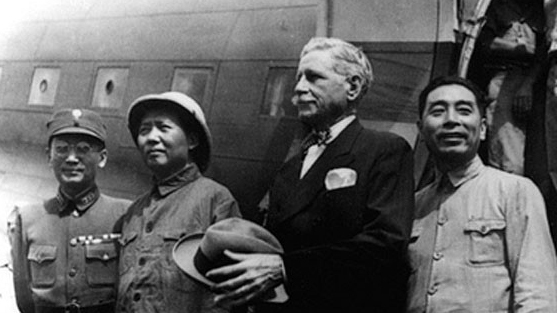
Zhang Zhizhong: from peace negotiator to political target
Zhang Zhizhong was unique among Nationalist generals in visiting Yan’an three times as a peace negotiator. He remained on the mainland during the 1949 negotiations, a decision that earned him the label of a “surrendering general” among critics.
After joining the CCP’s political framework, Zhang was reportedly required to demonstrate political reliability through repeated written self-criticisms. Accounts describe him being called upon at meetings to publicly endorse political campaigns, including those directed against former colleagues.
Following the launch of the Cultural Revolution in 1966, Zhang was classified as a “reactionary warlord.” His home was reportedly searched multiple times, property confiscated, and he was subjected to physical and psychological abuse.
According to meeting records cited in later sources, Zhang expressed deep personal regret during a period of serious illness, telling visiting united front officials that he felt he had failed both Chiang Kai-shek and the public. He died in 1969 after years marked by depression and psychological strain.
Life after defection
Accounts consistently indicate that defection did not lead to lasting political authority or personal security. Instead, former Nationalist generals were required to sever ties with associates in Taiwan and repeatedly engage in public self-criticism.
Beyond physical abuse and material loss during the Cultural Revolution, access to medical care and daily necessities was reportedly subject to approval by special oversight groups. Their families were also affected. Children were frequently assigned stigmatized political classifications and faced discrimination in education and employment. Some accounts describe cases of suicide or unexplained disappearance.

Why aides suffered the harshest consequences
Later accounts draw attention to the fate of the generals’ aides and secretaries, whose experiences were often far more severe. In Party classifications, such individuals were viewed as remnants of the old system and considered to pose a deeper political risk than the generals themselves.
In the early 1950s, many were sent to revolutionary universities or military schools for ideological remolding. While publicly labeled “uprising personnel,” internal records reportedly classified them as former officers or potential agents. Failure to meet investigative demands could result in transfer to labor camps in remote regions.
During the mid-1950s campaigns against counterrevolutionaries, aides were frequently targeted. Some accounts state that individuals who had accompanied Fu Zuoyi during negotiations in Beiping were later denounced, often by colleagues placed among them by Party organizations, and executed after public trials.
Those who survived into the Cultural Revolution faced renewed scrutiny. Former adjutants were accused of acting as intermediaries between Fu Zuoyi and Chiang Kai-shek. Secretaries, because of their education and access to information, were often labeled “hidden agents.” Persecution frequently extended to their families, particularly their children.
One account describes a long-time attendant of Zhang Zhizhong who was sent to rural labor and assigned to raise pigs. After repeated public denunciations, he reportedly developed mental illness and later took his own life. The incident was subsequently classified as a suicide.
Political symbols and expendability
Taken together, these accounts depict a system in which defected generals were preserved as political symbols, while their aides were left exposed once the symbolic value had been secured. Knowledge of negotiation details and inducements surrounding defections reportedly further increased the vulnerability of those closest to the generals.
Protection mechanisms, according to these narratives, rarely extended beyond the senior figures themselves. When political violence escalated, aides were often the first to bear the consequences.
Their experiences, as described in these sources, illustrate how political utility—and its eventual exhaustion—shaped individual fate within the CCP’s united front framework.
Editor’s Note: This article draws on historical accounts, memoirs, media reports, and testimonies circulated in overseas Chinese-language sources. Some details, particularly those involving internal party discussions and private communications, cannot be independently verified and are presented as accounts attributed to the sources cited.