By Yang Tianzi
On Feb. 6, the United States and Iran held a highly watched indirect meeting in Muscat, the capital of Oman. This marked the first formal official contact between the two sides since the joint U.S.-Israeli large-scale airstrikes on Iran last June. The meeting signals a potential turning point in U.S.-Iran relations but also exposes fundamental disagreements on core issues.
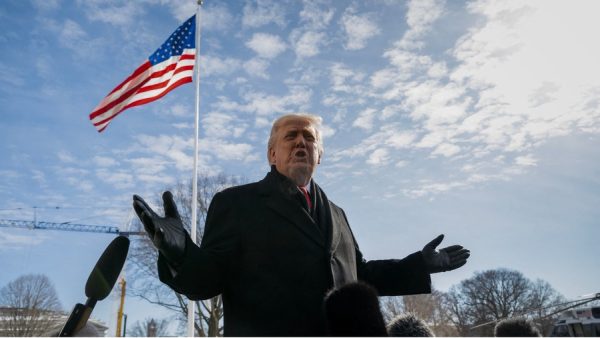
US-Iran talks: Trump: Iran must be fully denuclearized
White House spokesperson Levitt made it clear ahead of the talks that the negotiation would focus on advancing the diplomatic process, with achieving a “zero nuclear capability” in Iran being a position repeatedly emphasized by President Trump. She revealed that Trump “wants to see if an agreement can be reached,” but also warned Iran that the U.S. president “has multiple options beyond diplomacy at his disposal,” though “his preference is always diplomacy.”
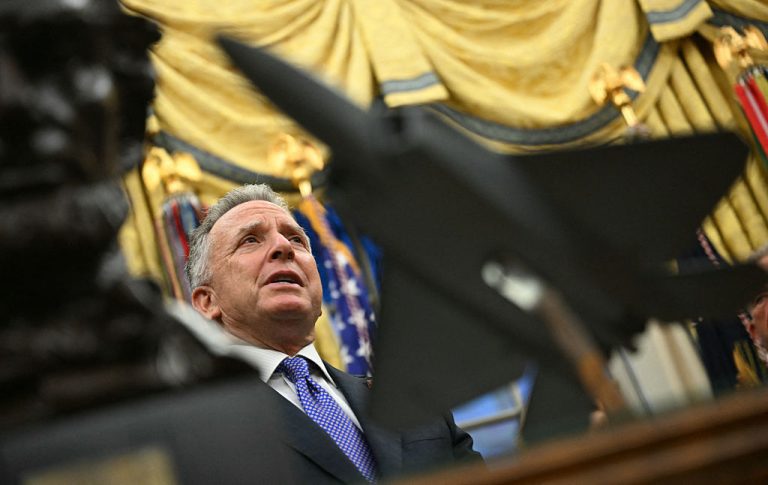
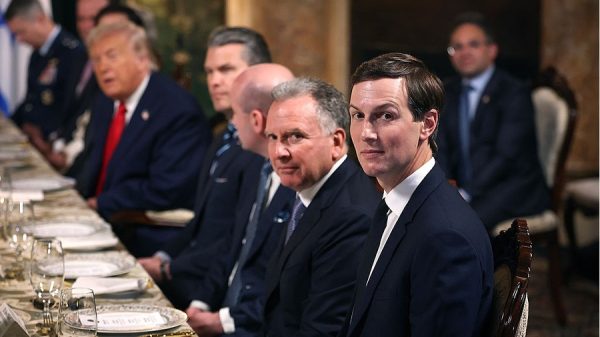
Given the long-standing lack of mutual trust between the U.S. and Iran, the talks were conducted in an extremely cautious indirect format. The Iranian delegation was led by Foreign Minister Araqi, while the U.S. sent Middle East envoy Steve Witkoff and Trump’s son-in-law Jared Kushner. Most notably, U.S. Central Command commander Cooper also joined the delegation. The presence of the highest-ranking U.S. military officer in the Middle East, a stark contrast to past U.S.-Iran talks, sent a strong signal of military deterrence.
The structure of the talks reflected careful diplomatic planning: the Iranian delegation first met with Omani Foreign Minister Busaidi to present detailed positions and demands regarding nuclear issues, sanctions relief, and security concerns. Minutes later, the U.S. delegation met with Busaidi to exchange views through Oman as a mediator. This “shuttle diplomacy” allowed both sides to communicate without direct confrontation.
Success
You are now signed up for our newsletter
Success
Check your email to complete sign up
After the talks, Iranian Foreign Minister Araqi described the atmosphere as “very positive.” The U.S. and Iran agreed to continue negotiations and will determine the format and timing of follow-up talks. He emphasized that it was a “good start,” noting that both sides exchanged arguments and shared perspectives, but the discussion focused solely on Iran’s nuclear program.
However, beneath the diplomatic language, fundamental gaps remain. The U.S. demands that Iran completely give up its uranium enrichment stockpiles, limit its ballistic missile program, and stop funding and arming military groups in the Middle East. The Trump administration’s “zero nuclear capability” goal effectively requires Iran to abandon nuclear development entirely, a stricter standard than the 2015 Iran nuclear deal.
Iran firmly rejects these demands. According to Iran’s Mehr News Agency, the Iranian side explicitly stated in the talks that it “will never accept conditions that ban uranium enrichment.”
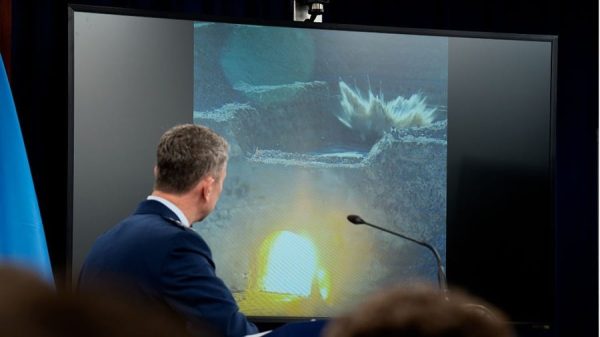
US issues urgent evacuation warning to its citizens in Iran ahead of talks
While diplomatic efforts proceed, the threat of military conflict looms larger. On the same day as the talks, the U.S. State Department issued a “Security Alert: Land Border Crossing” through its virtual U.S. embassy in Iran, again urging American citizens to “leave Iran immediately.” This was the second similar warning in a short period, the previous one being Jan.12.
The alert was specific and urgent: Americans in Iran were instructed to immediately make exit plans independent of U.S. government assistance, as flights could be canceled or disrupted with little notice. For those unable to leave, the alert advised seeking shelter in homes or secure buildings, stocking sufficient food, water, medical supplies, and other necessities, and closely monitoring local media for major developments.
President Trump had publicly threatened military action if Iran did not meet U.S. demands. Iran responded in kind, warning of strong retaliation against U.S. military targets in the Middle East and Israel. These reciprocal threats have further heightened regional tensions.
In response, several Middle Eastern and Muslim-majority countries are actively acting as mediators. The Israel Times, citing two Middle Eastern diplomats, reported that six countries — Saudi Arabia, Qatar, Egypt, Oman, the UAE, and Pakistan — are jointly urging the U.S. and Iran to sign a non-aggression agreement.
These regional actors are keenly aware that a U.S.-Iran military conflict would have catastrophic consequences for the Middle East and are thus promoting a diplomatic solution. Oman’s Foreign Ministry issued a statement after the talks emphasizing that the meeting aimed “to create suitable conditions for resuming diplomatic and technical-level negotiations between the U.S. and Iran,” indicating that fundamental communication channels are still being rebuilt.
Extreme pessimism concerning the negotiations
Rapidan Energy Group CEO McNally expressed extreme pessimism about the talks. He noted that the U.S. and Iran have a “zero trust” situation and are “uncompromising on core demands,” making the likelihood of a meaningful agreement or real de-escalation “very low.”
The U.S.-Iran meeting in Oman represents both a faint hope for dialogue and potentially the last diplomatic effort before conflict. The Trump administration is using a “carrot-and-stick” approach to pressure Iran, emphasizing diplomacy while signaling military deterrence. Iran is attempting to gain relief from sanctions through diplomacy without abandoning its core interests.
The involvement of the U.S. Central Command commander, the issuance of urgent evacuation warnings, and the deep divisions on core issues all suggest that the margin for error in this diplomatic game is extremely narrow. With mutual trust lacking and domestic political pressures high on both sides, whether the Oman talks can become a starting point for a new agreement rather than a prelude to renewed conflict depends on follow-up negotiations and actions.
The coming weeks will be critical. The international community is closely watching this major strategic contest, which could either end in a diplomatic breakthrough or escalate into military confrontation.