By Gao Yun
For decades, Costco has built its reputation around a single operational commitment: delivering consistently low prices to its members. This commitment is embedded in the company’s structure and enforced through internal discipline, rather than driven by short-term promotions or marketing campaigns.
At the center of Costco’s model is its membership system. According to financial outlet TheStreet, shoppers must pay an annual fee to access Costco’s warehouses. A standard Gold Star membership costs $65 per year, while the Executive membership costs $130 and includes a 2 percent annual reward on purchases, capped at $1,250.
These membership fees form the backbone of Costco’s profitability. The revenue they generate covers a substantial portion of the company’s operating income, allowing Costco to sell merchandise at margins far lower than those of conventional retailers without undermining financial stability.
Lower unit costs through bulk sales
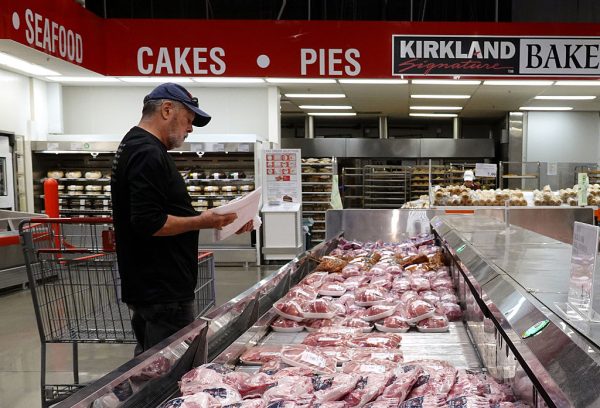
Costco’s pricing strategy focuses on reducing unit costs rather than adjusting shelf prices. This emphasis explains the company’s reliance on bulk packaging and large-volume sales.
Success
You are now signed up for our newsletter
Success
Check your email to complete sign up
Purchasing a multi-year supply of household items—such as a 12-pack of toothbrushes—often results in meaningful savings over time. For frequent shoppers, these efficiencies accumulate steadily.
The approach, however, places greater responsibility on consumers. Large-format items can lead to waste if they are not used before expiration. A 500-count bottle of Tylenol or a 200-count box of K-Cup coffee pods represents value only when consumption matches quantity. Costco’s model rewards planning and exposes inefficiencies in everyday purchasing habits.
Pricing governance inside Costco
During a recent earnings call, Costco Chief Financial Officer Gary Millerchip outlined the company’s internal pricing framework. The company prioritizes price reductions whenever cost conditions allow and treats price increases as a last measure.
This framework depends on detailed cost visibility, particularly within Costco’s private-label brand, Kirkland Signature. Millerchip noted that the company maintains a comprehensive understanding of Kirkland’s cost structure across categories. In the most recent fiscal year, Kirkland generated $86 billion in sales, a scale that rivals or exceeds that of many multinational consumer brands.
When analysts questioned whether Costco’s pricing adjustments focused primarily on Kirkland products, Millerchip emphasized that the same principles apply across the entire assortment. Cost savings achieved through improved sourcing, logistics, or supplier negotiations are systematically returned to members.
Costco frequently collaborates with established manufacturers to produce Kirkland-branded goods. Buyers and category managers continuously evaluate procurement efficiency and global sourcing opportunities, advancing initiatives that reduce costs while preserving product standards.

The structural foundations of Costco’s low-price model
Membership revenue as a profit anchor
Analysis from Nasdaq.com shows that Costco’s profits are driven primarily by membership renewals rather than retail markups. This revenue structure supports thin margins on merchandise and stabilizes earnings across economic cycles.
Concentrated product selection
Each Costco warehouse typically carries around 4,000 items, a fraction of the selection offered by most supermarkets or big-box retailers. This narrow assortment increases order volumes per item and strengthens negotiating leverage with suppliers. The Motley Fool identifies this concentration as a central driver of Costco’s purchasing power.
Enforced margin limits
Costco maintains strict markup ceilings: up to 14 percent on national brands and up to 15 percent on Kirkland products. These limits are significantly below industry averages and reduce reliance on promotional pricing. Customers encounter consistent pricing rather than periodic discounts.
Lean Store Operations
Warehouse-style layouts, limited in-store advertising, and streamlined staffing reduce operating expenses. According to Marketing Scoop, these operational choices play a decisive role in sustaining Costco’s pricing structure.
Scale and supplier leverage
High membership retention and large transaction volumes give Costco considerable influence in supplier negotiations. Nasdaq.com describes this scale-driven leverage as one of the company’s most durable competitive advantages.
Kirkland Signature as a growth platform
The Wall Street Journal notes that since the launch of Kirkland Signature in 1995, Costco has pursued a private-label strategy distinct from that of traditional retailers. Kirkland’s annual sales now exceed those of Procter & Gamble and Kraft Heinz.
Rather than managing multiple private-label brands, Costco has concentrated investment and identity into a single label. This approach simplifies operations, reinforces consumer trust, and improves bargaining efficiency. Membership-based retailers such as Costco and Sam’s Club have demonstrated particular strength in private-label food and beverage categories, where consistency carries greater weight than novelty.

Brand simplicity and consumer trust
RetailWire highlights Costco’s markup discipline as a notable exception within the retail industry. Few competitors impose comparable internal limits on pricing.
RetailWire think-tank member Craig Sundstrom observes that in highly standardized product categories—such as paper goods or canned foods—a unified brand reduces decision fatigue for consumers. Retailers that frequently rebrand private-label products or mimic national-brand aesthetics often dilute recognition and weaken long-term trust.
Gary Sankary, a retail veteran with five decades of experience, shares this assessment. He argues that constant rebranding in pursuit of novelty erodes perceived value and undermines consumer confidence.
According to Wikipedia, as of July 2025, Costco operated 905 warehouses worldwide.