By Fu Longshan
Between 1937 and 1949, how did the Chinese Communist Party (CCP), operating under the banners of “resistance against Japan” and “cooperation,” use calculated strategy and political deception to escape near destruction and ultimately seize state power in China?
The prelude to power: the Xi’an incident and the theft of legitimacy
By the end of 1936, following the Long March, the CCP had retreated to northern Shaanxi and was facing what appeared to be the Nationalist government’s final military encirclement. The Xi’an Incident abruptly altered that trajectory.
National Taiwan University emeritus professor Ming Chu-cheng, a scholar of Chinese politics, has described the incident as a decisive political turning point. In its aftermath, the CCP was transformed from an illegal insurgent organization into the Eighth Route Army and the New Fourth Army, units nominally incorporated into the National Revolutionary Army. This new legal status allowed the Party to openly receive salaries and supplies from the Nationalist government, avoid direct military suppression, and establish liaison offices in major cities to facilitate infiltration and expansion.
Despite receiving weapons and funding from Chongqing during the early years of the war, CCP forces did not operate under central command. Mao Zedong insisted on collecting military pay while declining to follow operational directives. Instead, the Eighth Route Army shifted into rural areas behind Japanese lines, presenting its actions as guerrilla resistance but using the opportunity to fill political and administrative vacuums in occupied territory.
Success
You are now signed up for our newsletter
Success
Check your email to complete sign up
At the 1937 Luochuan Conference, Mao articulated the Party’s guiding strategy as “one part resistance, two parts accommodation, seven parts development.” While the CCP has officially denied this formulation, historians cite contemporary records and wartime behavior as evidence of its authenticity.
Throughout the conflict, the CCP largely avoided sustained direct confrontation with Japanese forces. After the Battle of Pingxingguan, Mao cautioned Lin Biao against being emboldened by victory. Following the Hundred Regiments Offensive, Peng Dehuai was criticized internally for exposing the Party’s strength and inviting Japanese counteroffensives. Preserving elite forces and preparing for a resumed civil war with the Nationalists remained the overriding objective.
In many areas behind enemy lines, CCP units treated Nationalist guerrillas, rather than Japanese troops, as their primary adversary. One prominent example was the 1940 Huangqiao Campaign, in which the New Fourth Army attacked Nationalist forces under Jiangsu provincial chairman Han Deqin, killing several thousand soldiers. Conducted under the banner of national resistance, such operations illustrated the Party’s practice of eliminating rivals while maintaining claims of unity.
Historical accounts also indicate that CCP intelligence operative Pan Hannian was instructed to contact both the Wang Jingwei collaborationist regime and Japanese intelligence agencies, including the Iwai Agency, to reach tacit local non-aggression understandings. These arrangements allowed the CCP to concentrate its efforts against Nationalist forces. After the founding of the People’s Republic of China, Pan was imprisoned on Mao’s orders and later died in custody, a case widely regarded as an effort to bury this episode of the Party’s past.
The Wannan incident and coded telegram politics
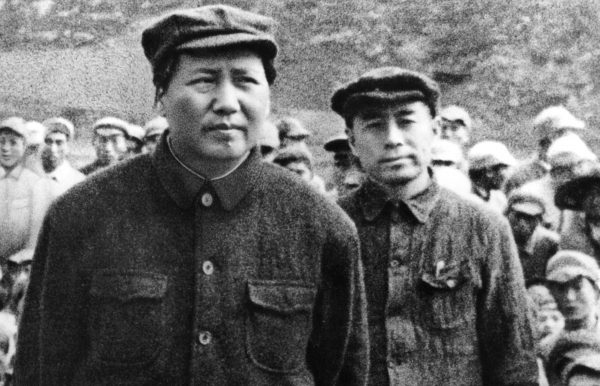
The 1941 Wannan Incident has long been portrayed in CCP narratives as a premeditated Nationalist ambush. Declassified communications, however, point to a more complicated internal struggle for power.
Orders sent from Yan’an to New Fourth Army deputy commander Xiang Ying were deliberately ambiguous. Ming Chu-cheng has argued that Mao Zedong may have guided Xiang, a political rival, into a Nationalist encirclement, effectively using what he describes as “borrowed knives” to eliminate him. After the fighting began, Mao made no attempt to rescue the trapped forces. Instead, the deaths of roughly 9,000 soldiers were used to portray Chiang Kai-shek internationally as sabotaging the war of resistance.
The episode allowed Mao to claim moral advantage abroad while launching the Yan’an Rectification Movement at home, consolidating ideological and political control within the Party.
A ‘naive’ America: how a giant was swayed by CCP propaganda
During the Marshall Mission from 1945 to 1947, the CCP mounted a carefully calibrated propaganda campaign designed to exploit American political assumptions and expectations.
The illusion of ‘land reformers’
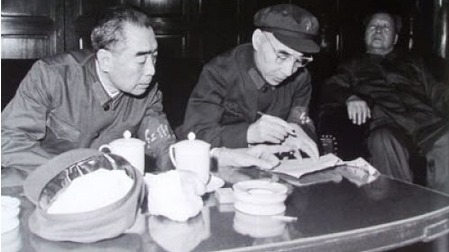
Through coordinated messaging by CCP operatives and Zhou Enlai, American “China Hands,” including John S. Service, came to portray the CCP as land reformers pursuing a form of Lincoln-style democracy. Ming Chu-cheng has noted that this semantic framing led U.S. policymakers to misjudge the CCP as a democratic force with which cooperation was both possible and desirable.
The Dixie Mission and the Yan’an Illusion
Members of the U.S. military observation group stationed in Yan’an encountered displays of equality and austerity but failed to grasp the coercive reality of the Yan’an Rectification Movement. As a result, figures such as General Joseph Stilwell grew increasingly hostile toward Chiang Kai-shek and argued for diverting U.S. military assistance directly to Communist forces.
The fatal ceasefire order of 1946
As mediator, George C. Marshall placed strong faith in goodwill and compromise. The CCP exploited this approach through a strategy of preemptive accusation, filing complaints first whenever clashes occurred. After Nationalist forces routed Lin Biao’s troops at Siping in Manchuria, Marshall — responding to pressure shaped in part by CCP-influenced opinion — pressed Chiang Kai-shek to accept a ceasefire.
The pause proved decisive. It gave the CCP critical time, with Soviet assistance, to absorb large quantities of weapons left behind by Japan’s Kwantung Army.

Mao Zedong ‘descends the mountain to pick the fruit’
In 1937, the CCP fielded roughly 30,000 exhausted troops. By 1945, it had grown into a force of about 1.2 million regular soldiers, backed by two million militia members and exercising control over a population of nearly 100 million.
For the Nationalist government, the War of Resistance against Japan became a costly and ultimately hollow victory. For the CCP, it provided a historic opening. Operating under the legal cover of the Second United Front, and aided by what the author characterizes as American misjudgment and covert Soviet support, the Party steadily eroded Nationalist authority at the grassroots level and achieved military superiority.
It was in this context that Mao Zedong later expressed gratitude for Japan’s invasion, which, he said, allowed the CCP to “grow in the mountains” and ultimately descend to “harvest the fruit.”