Elon Musk, the American entrepreneur who has long regarded creating a colony on Mars as his ultimate goal, has recently made a sudden adjustment to his space strategy, shifting his development focus to the Moon. The change is seen by observers as a significant turning point in the commercial space sector and even in the broader competition for deep space.
According to Interesting Engineering, Musk recently announced that SpaceX has shifted its priority toward building a “self-sustaining city” on the Moon, a goal he believes could be achieved within the next decade. Musk has previously stated on multiple occasions that the Moon was merely a “distraction” on the path to Mars exploration, making his latest announcemnt a surprise to the aerospace community.
Musk explained that the move is primarily motivated by concerns about civilizational security. He worries that if a catastrophic event were to occur on Earth, a Martian colony tens of millions of kilometers away might struggle to receive supplies, especially outside of the window in which the distance to the Red Planet is “just” a six-month flight away. By contrast, the Moon — only a three-day journey from Earth — could serve as a more practical and secure testing ground for technology and a backup base for humanity.
Details of the “self-sustaining city” concept have not yet been disclosed. However, the plan is widely seen as potentially ushering in a new round of geopolitical competition in deep space, particularly in lunar development, where it may intersect with China’s ambitions.
Resource and strategic value drive a new round of lunar competition
The Moon is widely regarded as a key pillar of the future space economy. Research suggests that helium-3 resources on the Moon could become an important fuel source for future nuclear fusion energy. Meanwhile, potential water ice at the lunar poles could be separated into oxygen and hydrogen fuel, giving the Moon the potential to serve as a “refueling station” within the solar system.
Success
You are now signed up for our newsletter
Success
Check your email to complete sign up
China has proposed the “Tiangong Kaiwu” initiative, aiming to build a “cislunar economic zone” and advance the construction of the International Lunar Research Station (ILRS). According to plans, Beijing, together with Russia and several partners, intends to establish a functioning lunar base by 2035.
However, such plans still face significant technical challenges. Quentin Parker, an astrophysics professor at the University of Hong Kong, told the South China Morning Post (SCMP) that a true “city” typically requires a population in the tens of thousands—something current technology is not yet capable of supporting.
Parker believes that by around 2035, establishing a semi-permanent, small-scale lunar outpost is more realistic. Achieving a self-expanding city, however, remains separated by a substantial technological gap. Key areas — including closed-loop life support systems, space agriculture, lunar soil mining technologies, and radiation-resistant habitats — have yet to be substantively validated by the United States, China, or commercial space companies.

Lunar advantages stand out: greater feasibility than Mars
Analysts note that Musk’s strategic adjustment reflects clear practical considerations. A journey to Mars takes several months in the best case, while reaching the Moon requires only about three days. In the event of oxygen leaks, power system failures, or medical emergencies, a lunar base could receive rapid assistance from Earth.
USA Today reported that Musk stated on social media platform X that launch frequencies for lunar missions are far higher than for Mars missions. Because Earth and Mars align for optimal launch windows only once every 26 months, while lunar missions can be conducted roughly every ten days, lunar base construction would allow for much faster technological iteration.
Parker suggested that Musk may have realized that the concept of colonizing Mars remains overly ambitious at the current stage of technological development, whereas the Moon better aligns with the engineering and industrial capabilities expected over the next 10 to 15 years.
Artemis program and growing US-China rivalry intensify deep space competition
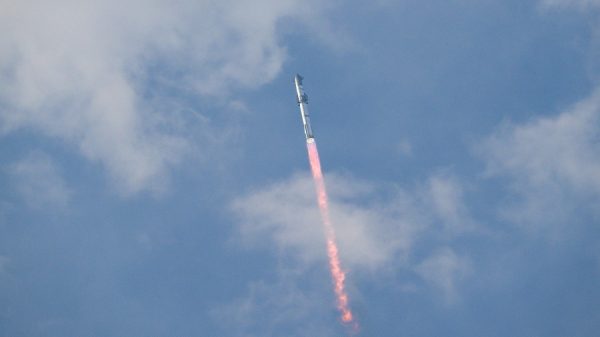
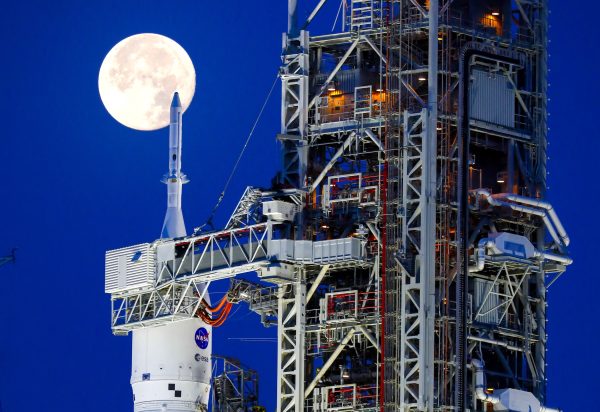
SpaceX’s core technological platform, the Starship system, is both a critical vehicle for NASA’s Artemis program to return to the Moon and a key tool envisioned for future Mars transportation.
Since 2023, SpaceX has conducted ongoing Starship test flights at its Starbase facility in Texas and is preparing to launch a more powerful next-generation rocket in 2026. NASA plans to carry out the Artemis II crewed lunar flyby mission as early as 2026, followed by subsequent crewed lunar landing missions.
As SpaceX shifts its development focus toward the Moon, its strategic direction effectively enters the competitive orbit of China’s International Lunar Research Station initiative. Although China’s space sector has faced some recent setbacks, such as the failed maiden launch of LandSpace’s Zhuque-3 rocket, the country’s overall progress toward lunar base construction continues.
Musk has emphasized that the core objective of building a lunar city is to “ensure the future of human civilization,” and the Moon is increasingly seen as the more realistically achievable first step toward that goal.