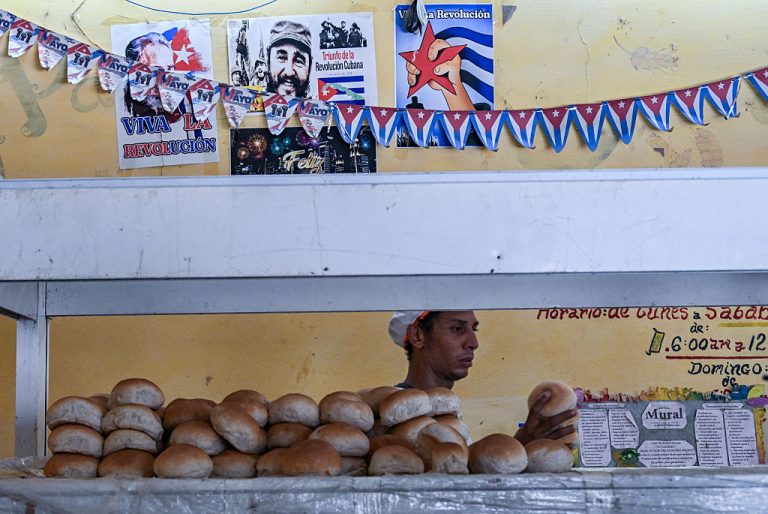
The United States on June 23 imposed sanctions on five Cuban state entities, less than a week after Cuban lawmakers approved sweeping market-oriented reforms for the first time since the 1959 revolution that brought the socialist guerrilla leader Fidel Castro to power.
Secretary of State Marco Rubio designated five revenue-generating entities tied to the Cuban government, including three linked to the previously sanctioned Grupo de Administración Empresarial S.A. (GAESA), as well as a member of the extended Castro family, according to a State Department statement released Tuesday, June 23.
GAESA, a business conglomerate controlled by Cuba’s Revolutionary Armed Forces, accounts for an estimated 40 percent of the country’s GDP and reportedly held US$14.5 billion in liquid reserves in early 2024, according to the Associated Press.
Rubio said the measures were taken under President Donald Trump’s Executive Order 14404, signed on May 1, and are intended to target “those responsible for repression in Cuba and for threats to United States national security and foreign policy.”
The State Department described GAESA as the financial backbone of Cuba’s security apparatus. Rubio said two of the newly sanctioned entities are GAESA-linked financial institutions that move money on behalf of the Cuban government, while another is a logistics company that supports state operations across the island.
RECENT COVERAGE
- Indonesia and China Expand Push to Reduce US Dollar Dependence, Tout Program’s Success
- Pentagon Seeks Additional $80 Billion From Congress Following Iran War: Reports
- Xi Picks Trusted Loyalist Cai Qi to Shape China’s Future Leadership
Success
You are now signed up for our newsletter
Success
Check your email to complete sign up
“I am also designating two additional entities generating revenue for Cuba through the exploitation of the island’s mineral and metal reserves, including Cuba’s state-owned GeoMinera,” Rubio said.
The State Department also sanctioned the wife of Alejandro Castro Espín, the nephew of Fidel Castro and a prominent figure in Cuba’s defense and intelligence establishment who has largely remained out of public view.
Alejandro Castro Espín, the former head of Cuba’s intelligence services, was separately sanctioned on June 4 by the Treasury Department’s Office of Foreign Assets Control (OFAC) under Executive Order 14404 for alleged “subversive anti-American activities.”
In its June 4 announcement, the State Department designated five entities and five individuals, saying the measures were intended to pressure the Cuban government to end its “political, ideological, and institutional warfare” against the United States. It said Alejandro Castro Espín was sanctioned for “being owned, controlled, or directed by, or having acted or purported to act for or on behalf of, directly or indirectly, the Government of Cuba.”
Cuba unveils extensive market reforms
The latest sanctions came days after Cuba, which has doggedly pursued a socialist command economy for decades, announced a package of unprecedented market-oriented reforms on June 18 amid worsening shortages of fuel and food.
A CBS News report said the country’s economic difficulties have been exacerbated by restrictions on oil supplies.
President Trump signed an executive order on Jan. 29 threatening tariffs on countries that directly or indirectly supply oil to Cuba. The move effectively disrupted oil shipments from Venezuela and prompted Mexico, another key supplier, to halt exports to the island, contributing to severe fuel shortages and recurring power outages.
Against that backdrop, Prime Minister Manuel Marrero unveiled 176 economic measures that would allow foreign investors to partner directly with large private Cuban enterprises rather than only through joint ventures with the state. The reforms would also permit both Cuban and foreign investors to acquire stakes in state-owned companies.
Marrero did not provide a timeline for implementing the measures, according to CBS News.
“They’re in the uncomfortable position of making changes to their economic model, seemingly because of the pressure that’s being exerted on them by the United States,” Michael Bustamante, chair of Cuban Studies at the University of Miami, told Agence France-Presse.
Cuban leaders, however, rejected that characterization, insisting the reforms do not signal a departure from socialism.
Lawmakers unanimously approved the reform package, with President Miguel Díaz-Canel invoking Fidel Castro’s well-known slogan, “Socialism or death!”
The president said the government was introducing the reforms not because of “pressure from the Yankees,” but to “preserve” socialism.
London-based Cuban economist Daniel Torralbas described the measures as “the most profound” policy changes since Fidel Castro’s 1959 revolution.