By Li Jingyao
A new U.S. bill would expel China from the G20, the Bank for International Settlements, and the Financial Stability Board if Beijing moves against Taiwan. The House passed it almost unanimously. But the real story is not the vote — it is what the data reveals about China’s financial fragility. The renminbi accounts for just 2.73 percent of global transactions. China imports 12 million barrels of oil a day. And every plausible alternative currency system collapses under scrutiny. The PROTECT Taiwan Act does not merely threaten Beijing with consequences. It identifies an economic kill switch — and dares China to test whether it works.
395 to 2: The House voted to turn the global financial system into a weapon against Beijing
The margin alone tells the story. On Feb. 9, the U.S. House of Representatives passed the PROTECT Taiwan Act 395 to 2 — a degree of bipartisan unanimity almost unheard of on any China-related legislation.
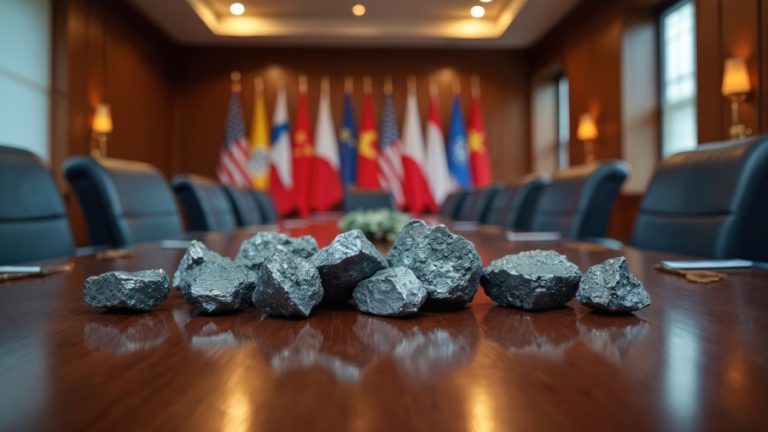
Representative Frank Lucas, who introduced the bill, left no room for ambiguity. If Beijing’s actions threaten the safety, social stability, or economic systems of Taiwan’s people, the United States shall — to the maximum extent practicable — bar Chinese representatives from the G20, the Bank for International Settlements (BIS), and the Financial Stability Board (FSB). These are not symbolic bodies. The G20 sets macroeconomic coordination among the world’s largest economies. The BIS serves as the central bank for central banks. The FSB writes the rules governing global financial stability. Together, they constitute the operating system of international finance. Exclusion from all three would sever Beijing from the architecture that makes its currency usable, its banks interoperable, and its capital mobile.
Lucas was blunt: the bill tells Beijing it will pay for any move toward conflict with Taiwan. China’s persistent aggression in the South China Sea, he argued, demands a forward-leaning American posture. The response to an invasion of Taiwan must be forceful — sweeping sanctions, economic penalties, and expulsion from every international institution that matters.

Success
You are now signed up for our newsletter
Success
Check your email to complete sign up
Republicans and Democrats are united: aggression against Taiwan triggers financial annihilation
Representative French Hill grounded the bill in law already on the books. The Taiwan Relations Act of 1979 — the statute that has governed Washington’s unofficial relationship with Taipei for nearly half a century — explicitly prohibits Beijing from using force, coercion, boycotts, or embargoes to bring Taiwan under Communist Party rule. The PROTECT Taiwan Act, Hill argued, gives that prohibition teeth. The moment Congress notifies the president that Taiwan faces a threat, Beijing faces severe financial and diplomatic penalties. There is no ambiguity, no discretion, no off-ramp.
Democrat Greg Stanton reinforced the point on X after the vote: if Beijing threatens Taiwan, it forfeits the right to profit from the global system. He endorsed the bill as a tripwire — the instant China poses a direct threat to Taiwan, ejection from major international organizations begins.
The bill now goes to the Senate. If it passes, President Trump signs it into law. The template already exists. After Russia invaded Ukraine, Congress enacted comparable financial exclusions. The message to the world was plain: break the international order, and the international order breaks you back.
Why pre-announced financial sanctions change the entire strategic calculation
Taiwanese legislator Chen Kuan-ting placed the bill in a framework that military analysts have long understood but lawmakers have been slow to codify: modern deterrence is cross-domain. Financial systems, clearing mechanisms, and capital flows are not peripheral to conflict — they are strategic weapons. By embedding sanctions and institutional exclusion into a pre-emptive deterrence architecture, the PROTECT Taiwan Act forces Beijing to price catastrophic financial consequences into any Taiwan scenario before the first ship leaves port.
Chen called the legislation the institutionalization of consequences. It transforms a vague threat of punishment into a concrete, pre-committed structure of costs. Any potential aggressor now confronts structural ruin as a built-in feature of the decision to attack — not a speculative possibility to be negotiated away afterward.
The strategic logic extends beyond Taiwan itself. Taiwan sits at the center of the First Island Chain — the archipelago running from Japan through Taiwan to the Philippines that forms the outermost defense perimeter of the Western Pacific. If Taiwan fell, China’s navy would break into the open Pacific unchecked, upending the military balance across East Asia. Taiwan also fabricates the vast majority of the world’s advanced semiconductors. Instability in the Taiwan Strait therefore threatens democratic security and the global supply chain simultaneously. Chen noted that Washington’s recent cascade of bipartisan legislation — military cooperation, technology export controls, and now financial countermeasures — signals that American policymakers have internalized this reality.

The arithmetic of China’s financial vulnerability: 2.73% and falling
Taiwanese financial commentator Hu Caipin attacked the question from a different angle. Forget the politics, she wrote in a Feb. 10 Facebook post. Whether Beijing can survive financial sanctions is not a matter of opinion. It is a matter of arithmetic.
Hawks in Beijing and their sympathizers abroad insist China could weather sanctions by forming an alternative currency bloc with Russia, Iran, and Saudi Arabia. Hu dismantled the claim number by number.
The renminbi’s share of global currency transactions: 2.73 percent. Its rank: sixth. Ahead of it: the U.S. dollar at 50.49 percent, the euro at 21.9 percent, the British pound at 6.73 percent, the Canadian dollar at 3.44 percent, and the Japanese yen at 3.42 percent. The renminbi is a marginal currency in global trade — smaller than the Canadian dollar. Chinese companies overwhelmingly conduct international business in U.S. dollars. Strip away access to dollar-denominated systems, and the entire machinery of Chinese foreign commerce seizes up.
Russia tried to survive on the Renminbi; It burned through $150 billion in three years
The renminbi’s brief moment of global relevance proves the opposite of what Beijing’s defenders claim. After the Russia-Ukraine war began and Western sanctions cut Moscow off from the dollar and euro, a surge of Russian trade shifted into renminbi. By July 2024, the currency climbed to a historic peak of 4.74 percent global market share — overtaking the yen and the Canadian dollar to rank fourth worldwide.
Then it collapsed back to 2.73 percent. The reason is simple: Russia is running out of money, and the trade volume that temporarily inflated the renminbi is evaporating with it.
Russia’s National Wealth Fund — the sovereign reserve Moscow was supposed to fight a war on — held $185 billion before the invasion. Last month it held $35.7 billion. Hu noted that President Trump has gone conspicuously quiet about brokering a ceasefire. The math explains why: Washington can afford to wait. Russia is bleeding out financially, and time is on America’s side. Without India and China continuing to purchase Russian oil — with Beijing propping up Putin through renminbi-denominated transactions — Russia would already be finished.
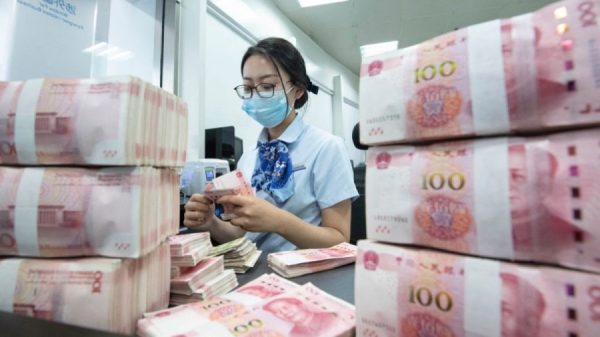
If China gets sanctioned, no currency on Earth can replace the dollar for Beijing
Hu then drove the argument to its logical conclusion. When Russia was sanctioned, it had the renminbi to fall back on — a limited lifeline, but a real one. If China itself were sanctioned, what currency would serve as its lifeline? The Russian ruble? The Iranian rial? The Saudi riyal?
The question answers itself. The ruble and the rial have been gutted by years of inflation, mismanagement, and isolation. No serious financial actor would hold reserves in either. Hu’s verdict was acid: only a fool would join a currency union with those countries.
Saudi Arabia presents a subtler problem. Even if Riyadh were willing — a large assumption — the Saudi riyal lacks the issuance volume to absorb China’s transaction needs. If Chinese firms began converting renminbi into riyals at scale, the Saudi currency would spike uncontrollably, potentially triggering a global oil price crisis. That outcome is an existential threat to China specifically, because Beijing imports 12 million barrels of crude oil every single day. An oil price explosion would function as an economic heart attack. No rational government engineers its own energy crisis.
Europe would not bail out Beijing — it would exploit the crisis to gut the Renminbi
Hu saved her sharpest analysis for last. In the entire global currency system, she argued, only two currencies besides the dollar carry enough weight to theoretically sustain Chinese trade: the British pound and the euro. And of the two, only the euro has the volume.
So the euro is Beijing’s last hope. There is a fatal catch.
The European Union runs a trade deficit with China of roughly €300 billion per year. China does not need to buy euros. Europeans buy renminbi — in vast quantities — to pay for Chinese goods. In a sanctions scenario, those European renminbi holders would not rally to Beijing’s defense. They would dump the currency. Every incentive points toward driving the renminbi down, not propping it up. For European financial institutions, a sanctioned and weakened China would be an opportunity, not a crisis.
Hu drove the point home with a historical parallel that resonates deeply in Chinese political consciousness. In the nineteenth century, European powers exploited China’s financial weakness to impose the unequal treaties — forced trade concessions, territorial seizures, and indemnity payments that Chinese historians call the Century of Humiliation. It is the defining trauma of modern Chinese national identity, invoked constantly by the Communist Party itself to justify authoritarian control. Hu’s argument was deliberately provocative: if Beijing gets sanctioned, Europe will not rescue it. Europe will do what it did 150 years ago — use financial leverage to subjugate China. The script, she wrote, has already been performed.

The PROTECT Taiwan Act is one piece of a rapid, multi-front expansion of US-Taiwan ties
The financial threat is not Washington’s only move. President Trump recently signed a comprehensive appropriations bill allocating $1.4 billion to Taiwan’s defense — a concrete military commitment embedded in the federal budget.
On Feb. 4, the House also passed the U.S.-Taiwan Space Assistance Act. Democratic Representative Jake Auchincloss said the bill enables NASA, NOAA, and the State Department to coordinate directly with Taiwan’s space programs. Its explicit purpose: to dismantle the restrictions on U.S.-Taiwan space cooperation that the One China policy has imposed for decades.
Taken together, the pattern is unmistakable. In the span of a single legislative session, Washington has moved to arm Taiwan, sanction its enemies, and integrate its institutions — on the battlefield, in the banking system, and in orbit.