By Li Jingyao
In Japan’s 51st House of Representatives election, Prime Minister Sanae Takaichi led the Liberal Democratic Party (LDP) to an overwhelming victory, winning 316 seats, securing a two-thirds absolute majority. In contrast, pro-China figure Katsuya Okada, who previously criticized Takaichi’s “Taiwan contingency” remarks and demanded she retract them, suffered defeat. DPP legislator Wang Ding-yu noted that Japanese voters used their ballots to make “pro-China parties OUT,” while the world watches how Taiwanese voters will decide in 2026 and 2028.
All 465 seats in the Japanese House of Representatives were contested, with the LDP and the Japan Innovation Party together taking 352 seats—an overwhelming majority of more than two-thirds. The LDP alone, under Takaichi, captured 316 seats, setting a new record in Japanese politics. Meanwhile, the centrist reform alliance formed by the Constitutional Democratic Party (CDP) and Komeito secured only 49 seats, a sharp decline of 71 percent from their pre-election 167 seats. CDP lawmakers fell from 144 to just 21, marking a crushing defeat.
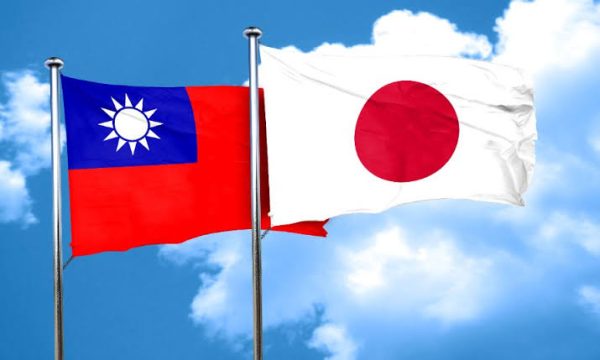
Taiwan and Japan continue promoting peace and prosperity in the Indo-Pacific
Following Takaichi’s victory, Taiwanese President Lai Ching-te congratulated her in Japanese: “Sincere congratulations to Sanae Takaichi for winning today’s election. The LDP’s majority in the House of Representatives demonstrates Japanese voters’ trust and expectations in Takaichi’s leadership and vision. This is not only a recognition of her administration’s achievements but also a clear endorsement of her long-term vision for Japan’s development.”
President Lai added that he looks forward to working with Takaichi so that Taiwan and Japan, guided by shared values and mutual cooperation, can jointly face regional challenges and promote peace and prosperity in the Indo-Pacific. He expressed hope that Takaichi’s victory will bring a more prosperous and secure future for Japan and regional partners, and wished Japan sustainable development and the well-being of its people.
The CCP poses a ‘survival threat’
Success
You are now signed up for our newsletter
Success
Check your email to complete sign up
A Washington Post editorial stated that Takaichi’s victory is good news for the U.S., and also indicates that politically confronting China is advantageous. The paper noted that Japanese voters increasingly recognize the CCP as a so-called “survival threat,” especially as Japan-China relations deteriorated, prompting voter support for Takaichi. Bloomberg observed that Chinese President Xi Jinping now faces a dilemma: whether to engage with Japan’s most popular postwar prime minister or continue a cold-war posture with the U.S., Japan’s most important ally in Asia.
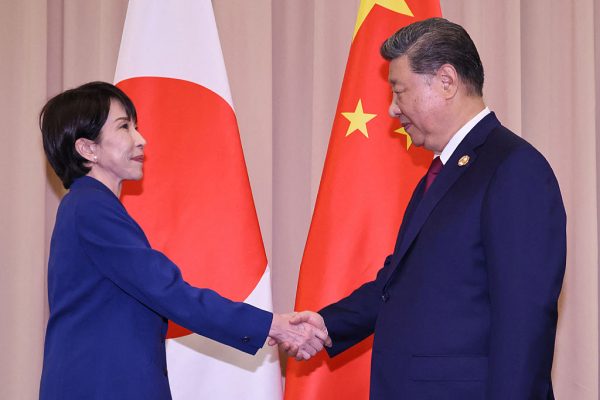
Regarding Takaichi’s landslide victory and the pro-China camp’s total defeat, CCP Foreign Ministry spokesperson Lin Jian dismissed it as “Japan’s internal affair” and even publicly demanded Takaichi retract her “Taiwan contingency” remarks. Despite CCP claims that Takaichi would face “resistance from the Japanese people,” recent polls show that 76% of Japanese citizens have little interest in improving relations with China, revealing a major perception gap.
Dr. Jiang Taijin of the China Economic Institute wrote in Liberty Times that foreign media widely reported the LDP’s sweeping win, but mainland Chinese internet coverage was nearly silent, reflecting that economic sanctions failed to achieve their intended effect.
The article notes that after Takaichi stated “Taiwan contingency” in November 2025, the CCP initiated retaliatory measures, including urging mainland citizens to cancel Japan trips, banning seafood imports, boycotting Japanese entertainers, and threatening rare earth supply cuts. However, these actions did not weaken Takaichi’s support; on the contrary, they intensified Japan’s societal focus on supply chain security.
Pro-China parties in Japan OUT, world watches Taiwan’s choice
Sanlih News reported that DPP legislator Wang Ding-yu expressed astonishment at the Japanese election results, describing them as “dreamlike and unbelievable.” The LDP not only secured a majority but also an absolute two-thirds with 316 seats. Combined with its governing ally, the Japan Innovation Party’s 36 seats, they hold 352 of 465 House seats—over three-quarters of the chamber.
Wang noted that while some say Japan has no pro-CCP “blue and white” parties, this is inaccurate; Japan does have similar parties. “But… Japanese voters made a choice: pro-China parties out!” he said. Among them, 12-term incumbent Katsuya Okada lost, serving as a clear example. Okada had opposed the “Abe Taiwan contingency” remarks but Takaichi made it clear: “China’s military attack on Taiwan would directly affect Japan’s survival; the Japanese government and Self-Defense Forces will exercise ‘collective self-defense’ under the Constitution.” The election allowed Japanese citizens to decide the country’s overall direction.
Wang explained that Okada had previously performed strongly, winning 137,953 votes in three East China prefectures in the last election. He joined the newly formed centrist reform alliance before the election but failed to secure his 13th term. Former CDP lawmakers in the district were nearly wiped out; the pro-China camp suffered a complete defeat.
Wang added that, similarly, in Honduras’ recent parliamentary election, all pro-China candidates lost, going from majority to zero seats. “Japanese voters used their ballots to remove pro-China politicians and affirm Takaichi’s stance and the ‘Taiwan contingency = Japan contingency’ doctrine. The world is watching how Taiwan will decide in 2026 and 2028, given China’s coercion far exceeds Japan’s.”
Okada family ties with China
Analysts suggest that the Okada family’s business interests in China made Japanese voters wary, leading them to abandon the CDP. Mirror News cited Japanese media reporting that Katsuya Okada’s family has long conducted business in China. His father, Takuya Okada, founded the retail giant AEON, which operates 23 large shopping centers in China. This connection led Japanese voters to believe Okada prioritized family interests over national policy toward China.
In November last year, Okada aggressively pressed Takaichi in the House Budget Committee to clarify her stance on “Taiwan contingency,” prompting Takaichi to assert that “a Taiwan contingency could threaten Japan’s survival,” confirming Japan’s right to exercise collective self-defense. Okada later demanded she retract the statement, which provoked strong criticism from Japanese conservatives and online users for being too pro-Beijing.

Tech experts: ‘Taiwan, wake up’
Regarding Takaichi’s victory, tech expert Xu Meihua called on Facebook for “Taiwanese to wake up.” She noted: “Takaichi won with 88.7% of the vote! Defense Minister Koizumi Shinjirō got 77.9%! In Kumamoto, where TSMC’s Japanese plant is located, all four seats went to the LDP.”
Xu emphasized that Takaichi, facing severe Chinese protests, firmly maintained: “Taiwan contingency = Japan contingency!” She praised Japanese voters for extraordinarily supporting the LDP’s hardline stance toward China, enabling the party to reach the constitutional amendment threshold, strengthen defense, and cause the pro-China alliance’s collapse. She added: “Facing China’s threat, is Japan more endangered than Taiwan? Japanese people have awakened; Taiwan, please don’t sleep anymore!”
Xu noted that the LDP’s unexpected vote share paves the way for Japan’s first post-WWII constitutional revision. A key goal is to normalize Japan’s Self-Defense Forces into a true military, allow arms exports, and potentially deepen Japan-Taiwan alliances.