By Lu Ke
At the Milan–Cortina Winter Olympics in Italy, two young athletes born in the United States and sharing Chinese heritage have again drawn international attention. Figure skater Alysa Liu is competing for Team USA, while freestyle skiing star Eileen Gu continues to represent China.
Their presence on the same Olympic stage has renewed debate well beyond sport. For many observers, their contrasting decisions have come to symbolize diverging approaches to national identity, political values, and the relationship between individual choice and state power in global athletics.
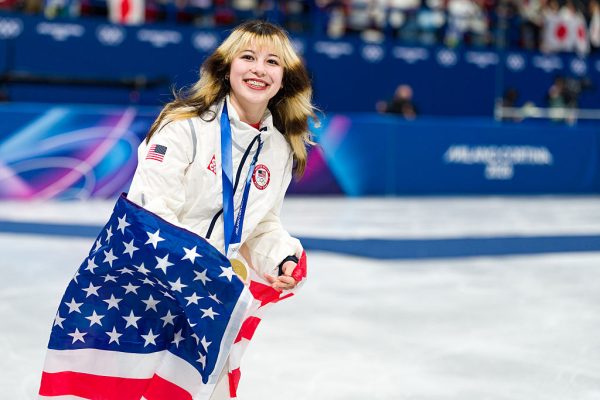
A Legacy of dissent: Alysa Liu’s family background
According to Fox News, Alysa Liu experienced an unusual encounter at age 16. In early 2022, shortly before the Beijing Winter Olympics, she met with agents from the U.S. Federal Bureau of Investigation at a Japanese restaurant. The agents told her that she and her family were believed to be under surveillance by the Chinese government.
The trip marked her first visit to mainland China, the birthplace of her father, Arthur Liu. Decades earlier, Arthur Liu had left China after participating in the 1989 Tiananmen democracy movement. Because of that history, the Liu family was reportedly identified as a target of intelligence monitoring.
Success
You are now signed up for our newsletter
Success
Check your email to complete sign up
Liu later said the information was both startling and difficult to absorb. Speaking at a U.S. Olympic Committee media summit, she described learning of the situation at such a young age as feeling “like a movie plot that didn’t seem real.” At the same time, she said it aligned with her father’s past involvement in pro-democracy activism and therefore was not entirely unexpected.
According to reports, Liu met multiple times with FBI personnel and said the presence of law enforcement made her feel protected.

Security concerns surrounding the Beijing Olympics
At the time, the Associated Press reported that the U.S. Department of Justice charged five men with acting on behalf of the Chinese government to monitor dissidents in the United States. One of the accused, Matthew Ziburis, was alleged to have impersonated a U.S. Olympic Committee official in an effort to obtain the Liu family’s passport information and to have conducted surveillance on them in the San Francisco Bay Area.
Arthur Liu told media outlets that such actions resembled political intimidation rather than direct threats. He said they appeared intended to frighten the family into silence on China’s human rights issues. He also said the U.S. government had “done a good job” protecting his daughter.
Despite the security concerns, Arthur Liu ultimately allowed his daughter to compete in the Beijing Winter Olympics. Newsweek quoted him as saying the Games were a once-in-a-lifetime opportunity. He said he would not allow intimidation to stop her or silence their family.
With enhanced security measures from the U.S. State Department and the U.S. Olympic Committee, Alysa Liu completed her events in Beijing. She finished sixth in the women’s singles competition and helped the U.S. team secure a bronze medal in the team event.
After retiring for two years, Liu returned to competition in 2024 and defeated Japan’s three-time world champion Kaori Sakamoto at the World Figure Skating Championships. She became the first American woman to win the world title since 2006. Now competing again at the Milan–Cortina Winter Olympics, Liu has said that if a biographical film were ever made about her life, she would want it to center on her father’s history of political resistance.
Eileen Gu’s different path: success and controversy
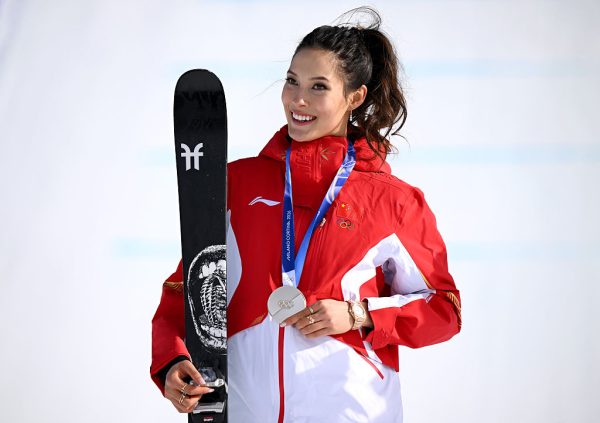
Another U.S.-born athlete of Chinese descent, Eileen Gu, chose a different course. She elected to compete for China and quickly became an international star. Vision Times cited a TIME magazine interview in which Gu described sports as a “beautiful example of globalism” and said winter sports could promote exchanges between nations.
At the 2022 Beijing Winter Olympics, Gu won two gold medals and one silver for China, becoming a dominant presence in Chinese media. State outlets reported that online discussion surrounding her victories was so intense it temporarily overwhelmed some social media platforms. She was widely referred to as the “snow princess.”
Her decision also drew criticism in the United States. Commentators questioned her silence on China’s human rights record. Reports noted that Gu has publicly supported causes such as Black Lives Matter and feminism in the United States, while responding to questions about the detention of ethnic minorities in Xinjiang by saying there was no need to “create division.”
Television host Bill Maher asked on his program whether choosing to represent China reflected a departure from Western values. Breitbart News published commentary characterizing Gu’s public positioning as complex and controversial.
Observers have also raised questions about her nationality status, noting that Chinese law does not formally recognize dual citizenship.

Beyond medals: symbols of values
As their careers continue, the stories of Alysa Liu and Eileen Gu have taken on meanings that extend beyond competition results. For some commentators, Liu and her family’s willingness to speak openly about political beliefs while continuing to compete reflects the interaction between personal conviction and institutional protection. Gu, by contrast, has built a global brand rooted in her cross-cultural identity while navigating the intersection of elite sports and state image building.
As international athletics become increasingly intertwined with politics, commerce, and identity, the paths taken by Liu and Gu illustrate the growing complexity facing athletes of Chinese descent. Their experiences, shaped by family history, national affiliation, and public expectations, reflect broader tensions between individual choice and state narratives in an era of globalization.