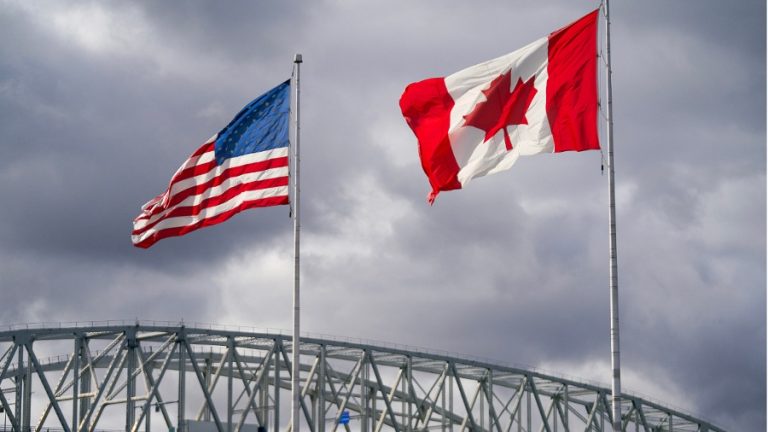
On July 1, U.S. Trade Representative Jamieson Greer announced that the United States has decided not to extend the U.S.-Mexico-Canada Agreement (USMCA) in its current form, opting instead to conduct an annual review of the pact. The move creates greater uncertainty for North American manufacturers, farmers, energy companies, and other businesses, and is expected to trigger difficult negotiations over revisions to the agreement.
According to the Canadian Broadcasting Corporation (CBC), Greer announced the decision after a video conference on July 1 with Canadian Trade Minister Dominic LeBlanc and Mexican Economy Minister Marcelo Ebrard.
Speaking to Bloomberg News, Greer said the Trump administration is “not prepared to rubber stamp the agreement.” “We think there are substantial issues,” adding that several changes are needed to address trade imbalances and other shortcomings.
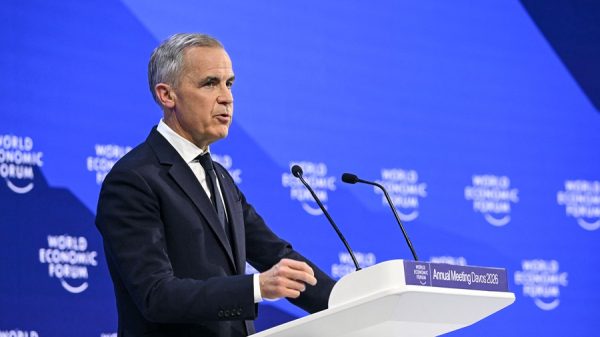
The U.S. decision had been widely anticipated. Canadian Prime Minister Mark Carney said he did not expect “any drama” at the first trilateral USMCA review meeting, which was scheduled for July 1.
“We expect a constructive exchange,” Carney said, according to the CBC.
Success
You are now signed up for our newsletter
Success
Check your email to complete sign up
The USMCA has significantly expanded economic activity among the three countries, whose combined economies account for nearly one-third of global GDP. In 2024, intra-North American trade exceeded US$1.6 trillion, up sharply from approximately US$1 trillion when the agreement took effect in 2020.
US says it will continue talks with Canada and Mexico
In a statement, Greer said the United States does not support renewing the USMCA in its current form.
“The United States will continue to engage with Mexico and Canada to address the Agreement’s shortcomings and our trade deficits with these countries,” he wrote.
LeBlanc said all three countries agreed on Wednesday that continued negotiations are essential. For Canada, that includes substantive discussions with the United States on tariffs affecting Canadian steel, aluminum, automobiles, and lumber, the CBC reported.
In practice, the United States and Mexico have already begun formal negotiations while largely leaving Canada out of the process. U.S. President Donald Trump and Carney continue to differ on issues such as reducing Canada’s dependence on trade with the United States.
Some experts warn that Canada could ultimately be forced to accept terms negotiated first between Washington and Mexico City. U.S. trade lawyer Childress told the Associated Press: “The danger for Canada is this: that the U.S. government and the Mexican government reach agreement on changes to core provisions of the treaty and then show up in Ottawa and say: ‘Here’s what we’ve agreed to. You can take it or leave it.'”
China factor complicates USMCA negotiations
The USMCA has kept most qualifying North American trade exempt from new U.S. tariffs imposed on China and other countries.
The United States is seeking stricter rules of origin for automobiles under the USMCA, including maintaining the current 75 percent North American content requirement (increased from 62.5 percent under NAFTA) and proposing that at least 50 percent of a vehicle’s content be produced in the United States. Currently, only about one-fifth of vehicles manufactured in Canada and Mexico meet that higher U.S.-specific threshold.
The United States has also raised concerns about Chinese investment in Canada and Mexico.
U.S. Trade Representative Jamieson Greer stated: “Canada has sent mixed signals. One day they say they want to help America reindustrialize, and the next day they talk about bringing in Chinese investment.”