
By Chen Jing, Vision Times
Early this year, the Central Intelligence Agency (CIA) released its third Chinese-language video aimed at encouraging cooperation from individuals within the Chinese Communist Party (CCP). Unlike earlier outreach efforts geared towards the public, this latest production is framed squarely toward military personnel. The shift has drawn attention among overseas Chinese commentators amid ongoing turbulence in China’s defense establishment, especially within the People’s Liberation Army (PLA).
The video, cinematic in tone and highly polished, portrays a disillusioned officer watching internal power struggles at the top. The central message is psychological rather than technical: Questioning whether loyalty to the system still aligns with protecting the people.
The officer asks in Chinese: “Is this the world I know? I swore to defend my country and protect my people, but the truth is, the leaders are only protecting their own interests, and their power is built on lies.” Commentators note that the quote is designed to resonate with officers who may feel caught between institutional loyalty and political insecurity.
RELATED: Beijing Launches Sweeping Early-Year Purge as Xi Seeks to Tighten Control of Armed Forces
A psychological campaign
Success
You are now signed up for our newsletter
Success
Check your email to complete sign up
The CIA has now released three Chinese-language videos over roughly 15 months, forming what some analysts describe as an escalating influence sequence.
The first, released in October 2024, focused primarily on practical guidance by explaining how to establish secure contact through encrypted channels and tools such as Tor or VPNs, framed as a “how-to” approach for those seeking safe communication beyond China’s censorship controls.
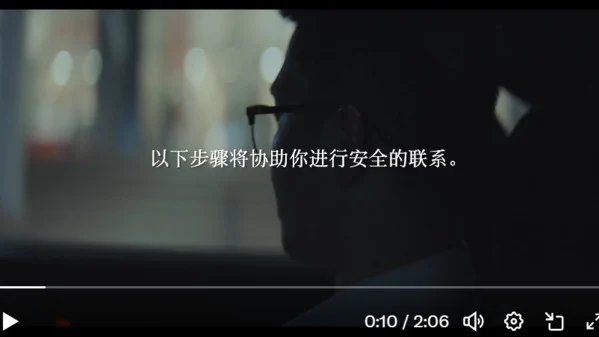
The second, published in May 2025, shifted toward emotional and professional disillusionment within the party-state bureaucracy. It depicted an exhausted official confronting endless political study, internal purges, and the gap between rhetoric and reality, asking whether the system still serves the public good.
The third, released in January 2026, is the most directly aimed at the armed forces and strategic sectors. Its narrative suggests that military officers should reflect on “who they are fighting for,” implicitly warning against becoming instruments of elite political agendas.
Raising the stakes
The video’s release comes at a moment of heightened scrutiny surrounding China’s military leadership and defense-industrial apparatus. In recent years, Beijing has carried out multiple investigations and removals across the Rocket Force, procurement networks, and aerospace-linked institutions.
RELATED: Experts on Zhang Youxia’s Downfall: A Warning Sign of Systemic Crisis in Beijing
While some overseas commentary has circulated dramatic claims about senior-level shakeups, the broader reality is that repeated anti-corruption campaigns have created an atmosphere of caution and uncertainty within the PLA’s upper ranks.
Against this backdrop, the CIA’s messaging appears calibrated: presenting itself not only as an intelligence actor, but as an alternative exit route for insiders who fear becoming politically expendable.
In authoritarian systems, military confidence is often maintained through public demonstrations of unity. Silence or restrained signaling can fuel rumors of instability, even when concrete evidence remains limited.
Information warfare in the AI era
The CIA’s Chinese-language outreach also highlights how modern intelligence competition increasingly blends traditional espionage with psychological operations, media production, and targeted messaging. Rather than relying solely on clandestine recruitment, these videos function as public-facing influence tools, aimed at shaping perceptions inside closed systems and encouraging doubt among key elites.
RELATED: Cybersecurity Experts Warn of Rising AI Fake Videos, Outline Ways to Spot Them
For Beijing, the challenge is not only preventing leaks, but maintaining cohesion inside institutions where repeated purges have already heightened suspicion. The source text concludes with a dramatic metaphor: That in moments of extreme distrust, an unexpected “black horse” figure could emerge from within the system itself.
Whether or not such scenarios materialize, the CIA’s latest video underscores a central reality: Strategic competition between Washington and Beijing is no longer confined to economics or military hardware, but increasingly extends into the psychological domain that target confidence, loyalty, and the internal stability of rival power structures.
Editorial note: Views expressed in this article are the opinions of the author and do not necessarily reflect the views of Vision Times.