As large-scale anti-government protests that erupted in Iran earlier in 2026 continue to spread, the confrontation between the U.S. and Iran has sharply escalated. Multiple mainstream U.S. media outlets reported on Feb. 12 that the Pentagon has ordered a second aircraft carrier to deploy to the Middle East. This comes as U.S. President Donald Trump considers taking a tougher military stance toward Iran. This rare dual-carrier deployment marks a new peak in U.S.-Iran tensions in recent years, putting the entire Persian Gulf region on the brink of an unprecedented military standoff.
Dual carrier deployment: Pentagon’s strategic deterrence
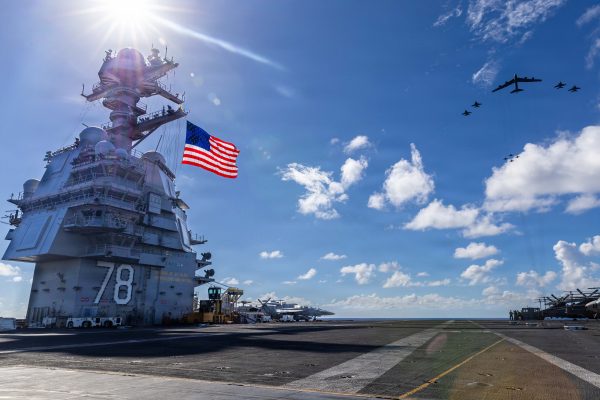
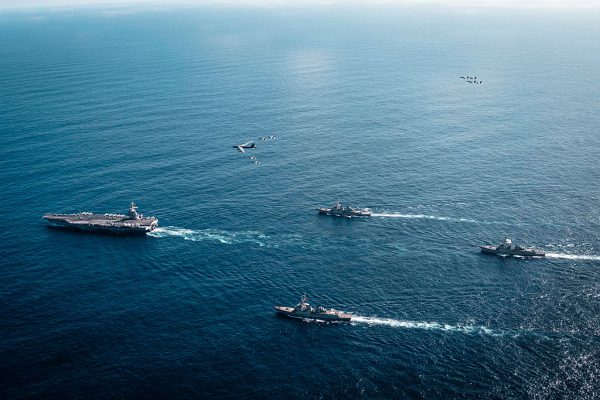
According to the Wall Street Journal and other media citing unnamed Defense Department officials, the U.S. Navy’s most advanced aircraft carrier, the USS Gerald R. Ford, along with its escort fleet, has received emergency orders to move from its current deployment in the Caribbean to the Middle East to join the previously dispatched USS Abraham Lincoln. This will be the first time in recent years that the U.S. has deployed two carrier strike groups simultaneously in the Persian Gulf, demonstrating Washington’s extreme concern over the current situation.
The USS Abraham Lincoln carrier strike group was ordered to the Persian Gulf at the end of last month, coinciding with the outbreak of large-scale anti-government protests in Iran. The deployment of this carrier strike group was seen as a direct military response to Tehran’s violent crackdown on protesters. With the addition of the USS Gerald R. Ford, U.S. air and naval power in the region will be significantly enhanced, creating a more formidable military deterrent.
Military analysts point out that each carrier strike group typically includes one nuclear-powered aircraft carrier, several missile cruisers and destroyers, one to two attack submarines, and supply ships, carrying a total of around 75 aircraft of various types. A dual-carrier deployment means the U.S. will have over 150 advanced aircraft, hundreds of Tomahawk cruise missiles, and a powerful anti-missile and anti-submarine network across the northern Arabian Sea and the Persian Gulf, forming a highly intimidating naval combat force.
An unnamed Pentagon official told the media: “This is not just about showing strength; it’s to ensure we have the capability to respond to any contingency, including a potential Iranian blockade of the Strait of Hormuz or missile attacks on neighboring countries and U.S. bases.” While the Defense Department has yet to formally respond to AFP’s inquiries, this strategic silence is interpreted as the U.S. preserving greater room for maneuver.

Success
You are now signed up for our newsletter
Success
Check your email to complete sign up
Iran’s domestic crisis
To fully understand the complexity of the current U.S.-Iran tensions, one must trace back to the severe social unrest that erupted in early 2026, regarded as the most serious since the 2022 “Women, Life, Freedom” movement. The crisis stems from long-standing social contradictions in Iran: economic hardship, political repression, social injustice, and widespread dissatisfaction with religious rule culminated in a massive social upheaval at the start of the new year.
Iran’s economy has deteriorated under years of international sanctions, with persistently high inflation and rising unemployment, particularly dim prospects for young people. The continued devaluation of the rial has sharply reduced purchasing power, shrinking the middle class. At the same time, government corruption and elite privileges have fueled widespread public resentment. The government’s decision to cut basic living subsidies in early 2026 became the spark for long-simmering public grievances.
Protests initially broke out in major cities including Tehran, Isfahan, and Shiraz, then quickly spread nationwide. Unlike previous demonstrations, these protests had a broader social base and stronger organization. Demonstrators’ demands evolved from economic issues to political reforms and even directly challenged the legitimacy of the Islamic Republic. Participants included students, workers, middle-class professionals, and even some traditionally pro-government conservative groups expressing discontent.
Facing a severe challenge to its legitimacy, the Iranian government opted for a heavy-handed crackdown. Security forces and the Revolutionary Guard used live ammunition, tear gas, and water cannons to disperse crowds, resulting in numerous civilian casualties. Human rights organizations estimate that hundreds have been killed and thousands arrested. The government also cut internet access in multiple regions to disrupt protest coordination and block information from reaching the outside world. This bloody suppression immediately drew strong international condemnation and provided the U.S. with moral justification to increase pressure on Iran.

Nuclear negotiations under a cloud: Trump’s final warning
Amid domestic turmoil, Washington and Tehran’s nuclear negotiations have reached a critical phase. Although indirect talks began last week to explore a new framework for Iran’s nuclear program, mutual trust has collapsed, and progress is extremely slow.
Since returning to the White House in January 2025, President Trump has made clear that he would adopt a tougher policy toward Iran than his predecessor. He criticized the Biden administration’s efforts to revive the 2015 Iran nuclear deal as a “disastrous agreement.” The core objectives of the Trump administration’s Middle East policy include: fully preventing Iran from developing nuclear weapons, curbing Iran’s influence in the region, and supporting the Iranian people’s struggle for freedom.
Recent U.S. intelligence assessments indicate that Tehran may be accelerating uranium enrichment during the international community’s focus on domestic unrest, attempting to cross key technological thresholds for nuclear weapons. This intelligence has triggered Washington’s most sensitive strategic nerves. In a statement on Feb. 12, President Trump issued the sternest warning yet, emphasizing that if Iran fails to reach a “permanent and irreversible” nuclear agreement in these talks, it will face “very painful” consequences.
Analysts note that the “painful consequences” Trump referred to are no longer limited to economic sanctions. With U.S. military deployments in the region sharply escalating, military strike options have clearly returned to the negotiating table. This “maximum pressure” strategy, which had some effect on North Korea during Trump’s first term, remains uncertain in its applicability to Iran.
Complex international response
The international community and regional countries have shown a complex and divided response to the U.S.’s increased military pressure on Iran, seeking a delicate balance between self-interest and regional stability.
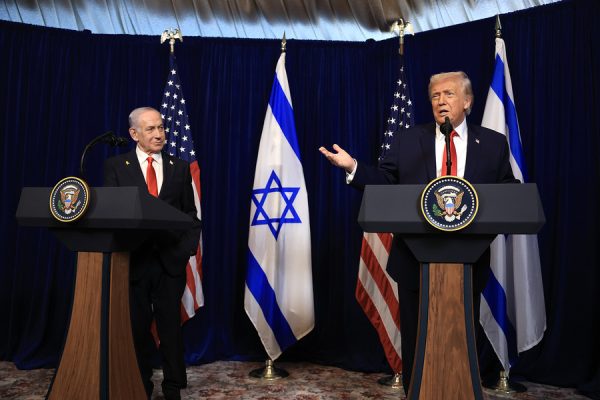
The Israeli government has explicitly supported the U.S. hardline stance, viewing it as necessary to prevent Iran’s nuclear weaponization. Israel has long considered Iran its greatest existential threat and repeatedly called for stronger international pressure on Tehran. Prime Minister Benjamin Netanyahu’s government even hinted that if the U.S. does not take decisive action, Israel might consider preemptively striking Iran’s nuclear facilities alone.
Gulf Arab states have been more cautious. Countries such as Saudi Arabia and the UAE also see Iran as a regional competitor but have sought in recent years to ease tensions with Tehran to maintain stability and economic interests. These nations deeply fear that a U.S.-Iran military conflict could engulf the Gulf region, disrupt oil production and transport, and cause economic disaster. Therefore, they publicly call for restraint and diplomatic resolution.
European countries have expressed deep concern over U.S. military threats. Traditional allies such as the U.K., France, and Germany, while worried about Iran’s nuclear program and human rights situation, prefer diplomatic and economic pressure over military conflict. The EU’s foreign policy chief issued a statement urging both sides to return to negotiations and avoid dangerous actions that could spiral out of control. Europe is particularly concerned that a Middle East conflict could trigger new refugee waves, energy crises, and terrorism threats, directly impacting continental security and stability.
Military strategic analysis
From a military strategic perspective, the U.S. dual-carrier deployment demonstrates both strong deterrence and significant risks and uncertainties. Historically, such large-scale military concentrations often signal Washington is preparing for potential military action or at least sending a clear and strong strategic signal to its opponent.
Proponents of the “enhanced deterrence” theory argue that while U.S. deployments are significant, they have not been accompanied by an announced timeline or explicit attack threats. Indirect nuclear negotiations continue, showing that diplomatic options are not entirely closed. Additionally, the U.S. must consider regional allies’ security concerns and the stability of global energy markets, as the cost of full-scale conflict would be extremely high.
President Trump has consistently used strong rhetoric on Iran and has repeatedly indicated that military options are not off the table. After the bloody suppression of Iranian protests, domestic dissatisfaction with the Tehran government surged, and some forces in Congress and public opinion called for a “stronger response.” The dual-carrier deployment to the Middle East means the U.S. military now has the capacity to rapidly escalate military action in the short term, potentially including targeted airstrikes, precision strikes, or higher-intensity maritime blockades, even if full-scale war does not occur.
Global economic impact and Iran’s internal transformation
The escalation of U.S.-Iran military confrontation poses a direct threat to global energy markets and economic stability. The Strait of Hormuz is one of the world’s most critical oil transit chokepoints, with about one-fifth of global oil supplies passing through. Any military conflict, blockade threat, or accidental skirmish could immediately drive up oil prices and trigger financial market turmoil.
The International Energy Agency has issued warnings, urging countries to prepare for potential disruptions in energy supply. Analysts predict that if the Strait of Hormuz is blocked or conflict occurs, international oil prices could surge above $150 per barrel in the short term, seriously impacting global economic recovery, especially in developing countries highly dependent on oil imports.
With the USS Gerald R. Ford carrier strike group moving toward the Middle East, the coming weeks will be critical in determining the region’s trajectory.
For the Trump administration, the dual-carrier deployment represents Washington’s attempt to compel Tehran to make substantive concessions on nuclear issues through maximum military pressure while weakening the Iranian regime’s ability and confidence to suppress domestic dissent.
However, the crisis also carries the potential for transformation. The ongoing protest wave in Iran indicates that Iranian society is undergoing profound change, with the younger generation increasingly yearning for a more open and free society.