By Tian Jingxin
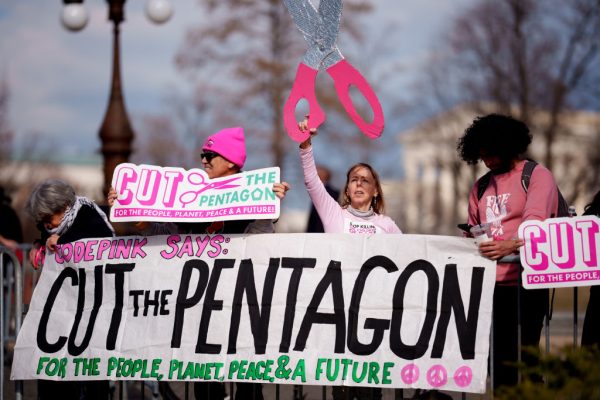
The U.S. State Department and House Republicans on Tuesday, Feb. 10, announced coordinated actions targeting several far-left activist groups operating in the United States. Officials alleged that organizations including Code Pink and The People’s Forum function as vehicles for Chinese Communist Party influence, using their status as U.S. nonprofit entities to promote political narratives aligned with Beijing’s interests.
Official characterization and congressional investigation
According to reports by the New York Post and Fox News, a recent State Department assessment identified Code Pink and other radical left-wing organizations as components of what it described as the CCP’s malign influence operations.
At the same time, Republicans on the House Select Committee on the Strategic Competition Between the United States and the Chinese Communist Party released a detailed memorandum outlining what they described as the funding architecture behind the groups. Lawmakers said their findings had “torn down the fourth wall of disguise.”
The investigation stated that although the organizations publicly advocate for causes such as anti-war activism, social justice, and anti-racism, their positions have closely tracked Beijing’s official stances on issues central to China’s foreign policy agenda. These include allegations of human rights abuses in Xinjiang, the status of Taiwan, and U.S.–China trade policy.
Success
You are now signed up for our newsletter
Success
Check your email to complete sign up
Funding network linked to Shanghai
The Republican memorandum centers on what it calls the “Singham Network.” At the center of that network is Neville Roy Singham, a U.S. technology entrepreneur who resides in Shanghai.
According to the report, Singham directed funds through a web of nonprofit entities and donor-advised funds, including legally established channels such as the Goldman Sachs Philanthropy Fund. Lawmakers alleged that hundreds of millions of dollars were ultimately distributed to U.S.-based groups including Code Pink, the Tricontinental Institute, and The People’s Forum.
In return, the memorandum states, these organizations engaged in activities within the United States that aligned with Beijing’s positions. Lawmakers cited examples including:
- Reframing human rights allegations by rejecting claims of genocide against Uyghurs in Xinjiang and characterizing such accusations as fabricated by the United States.
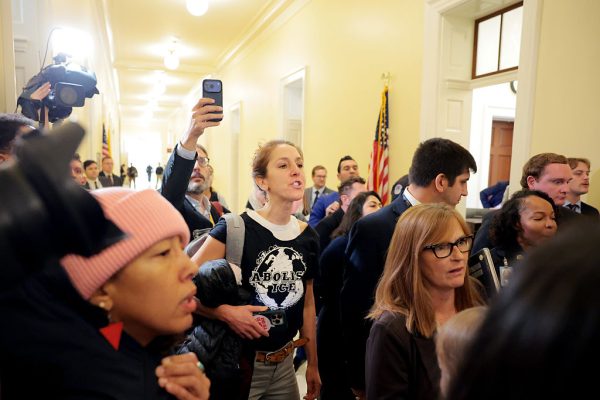
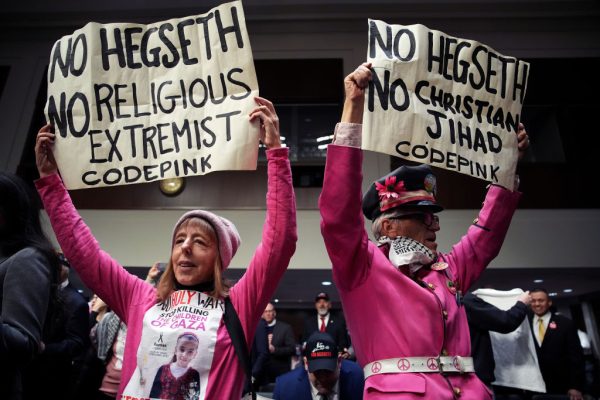
- Disrupting congressional proceedings by staging protests during hearings, interrupting lawmakers who advocated a tougher stance on China, and confronting witnesses in congressional buildings.
- Opposing U.S. security policy by describing American military support for Taiwan as “war provocation” and calling for an end to U.S.–Taiwan defense ties.
The organizations named in the report rejected the allegations.
Jodie Evans, co-founder of Code Pink and described in the memorandum as Singham’s wife, denied that the group acts as an agent of the Chinese Communist Party. She and other leaders argued that the accusations amounted to “new McCarthyism” aimed at silencing anti-war advocacy. They also accused Republican lawmakers of encouraging hostility toward Asian Americans.
In a public response, The People’s Forum said it would not be intimidated by what it called right-wing attacks and would continue its activism. The organizations indicated that they would intensify public messaging in response to what they characterized as politically motivated scrutiny.
Calls for legal action
House Republicans said that if the allegations are substantiated, legal consequences should follow.
They proposed revoking the organizations’ tax-exempt status under Section 501(c)(3) of the Internal Revenue Code if they are found to function as propaganda instruments for a foreign government.
Lawmakers also called for requiring the groups to register under the Foreign Agents Registration Act and disclose any relationships with Beijing.
In addition, they urged investigations into and potential restrictions on political funding flows that they described as “dark money” networks allegedly channeling funds from China into the United States.
Analysts said the coordinated approach between the State Department and Congress represents a more formal phase in Washington’s efforts to counter covert foreign influence. They noted that legal scrutiny of nonprofit organizations operating in areas involving foreign funding and political advocacy could intensify.