The Guardian reports that American athlete Elana Meyers Taylor has made history at the Winter Olympics. She has competed alongside men in World Cups and World Championships, helping pave the way for the women’s monobob event at the Olympics. She surpassed speed skater Shani Davis to become the Black athlete with the most Olympic medals ever and holds the record for the most Olympic medals of any female bobsledder, having stood on the podium in Vancouver, Sochi, PyeongChang, and Beijing.
Yet even at 41, with a history of back issues and concussions, parenting responsibilities, and after five previous Olympic podiums, she never gave up. Her dream of Olympic gold never wavered.
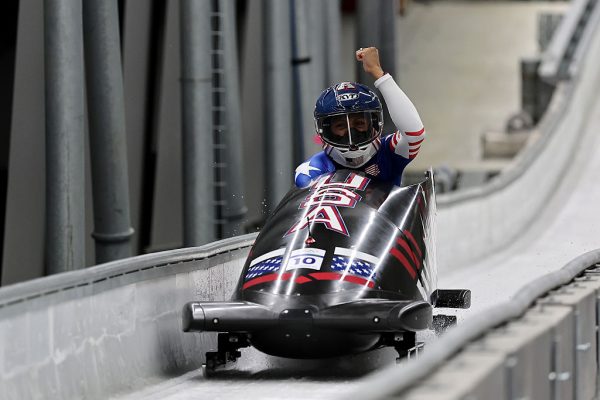
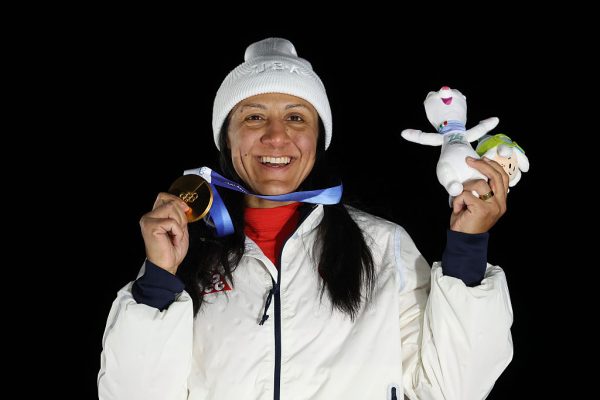
That dream became reality Monday night. In a quiet residential area in Località Gilardon, Meyers Taylor edged out Germany’s Laura Nolte by 0.04 seconds to win the women’s monobob gold, setting the closest final record in Olympic women’s bobsled history. This was her first Olympic gold after five Games—she had previously earned three silvers and two bronzes—and made her the oldest individual Winter Olympic gold medalist, surpassing Benjamin Karl.
Defying the odds: resilience and balancing family
Last year, Meyers Taylor told NBC, “The only thing missing from my resume was Olympic gold. I’ve accomplished almost everything in this sport, but if you have the chance to go for it one more time, you don’t miss it.”
Despite 21 World Cup victories, 10 World Championship medals, and two overall world titles, she continued pushing her limits. The road to Monday’s victory was her toughest yet: she did not podium all season, struggled with injuries, chronic pain, self-doubt, and a severe crash last month in St. Moritz, while also managing daily life for her two young children—five-year-old Nico Taylor (deaf with Down syndrome) and three-year-old Noah Taylor.
Success
You are now signed up for our newsletter
Success
Check your email to complete sign up
“I may need a long time to process this moment. This entire season, even many moments over the past four years, felt nearly impossible—or at least I thought it was impossible,” she said.
The hardest challenge in this Olympic cycle was not the sledding itself, but balancing parenting with elite sports. This was made possible by comprehensive support—from coaches, federation officials, to family—especially her husband, former U.S. bobsledder Nic Taylor, who works full-time at home and sometimes goes months without seeing the kids.
“The hardest mental battle was day after day juggling kids and training,” she said. “It takes a lot of people to get me to the start line. If we make it there, anything beautiful can happen.”

The path to gold: four steady runs and a decisive final push
According to NPR, on Monday night at the Cortina track, Meyers Taylor made her breakthrough in the fourth run, combining smooth sledding with precise control to earn her first Olympic gold.
“I’m so excited to finally have a gold medal; all the years of effort finally paid off. I’m very grateful to have put everything together for a run I can be proud of,” she said.
Over four runs, while competitors were faster in individual segments or top speed, Meyers Taylor’s consistency and focus secured the victory. She recalled, “I only focused on what I needed to do. In the morning, I reviewed the track with my coach; he told me the key points, and we went all in. In the end, my final run made me extremely proud.”
Beyond the track: role model and social impact
Meyers Taylor’s influence goes beyond bobsledding. As a visible role model for families with children who are deaf or have Down syndrome, she inspires families worldwide. “Many people believe in me and share their stories. Whether I win or not, I’ve already done a lot for these communities,” she said.
Her career is measured not only in medals but in perseverance and social responsibility: she has interned with the International Olympic Committee, chaired the Women’s Sports Foundation, advocated for gender equality, and spoken publicly against racial discrimination. Her actions and vision make it easy to imagine her eventually leading the IOC.
At around 10 p.m. Monday, on the edge of the Dolomites in Cortina, Meyers Taylor finally realized her wildest dream. “I didn’t have to get it; I just wanted it. And that desire kept me moving forward. If I treated it as something I had to have, I probably wouldn’t have made it this far,” she said.