According to the Daily Mail, U.S. President Donald Trump is on the brink of a major military operation that could reshape the Middle East. With nuclear negotiations on the verge of collapse and U.S. forces rapidly mobilizing in the region, Washington and its allies have begun discussing a more severe scenario—a weeks-long military campaign targeting the core of the Iranian regime.
This potential conflict could become the most impactful U.S. military intervention since the 2003 Iraq War and would have far-reaching implications for Trump’s remaining term and the Republican Party’s prospects in the midterm elections.
Nuclear negotiations stalled
Axios reports that the Trump administration is approaching a critical point for launching a major military operation. Sources say that if negotiations fail completely, U.S. actions would far exceed the “precision strikes” previously carried out in Venezuela, approaching the scale of full-scale war.
Trump’s “nuclear red line”—demanding Iran fully halt its nuclear program—remains the main point of contention. Vice President JD Vance revealed that talks held in Geneva this Tuesday were “progressing in some areas,” but Iran has yet to directly respond to the president’s key demands.
The talks, led by Trump’s son-in-law Jared Kushner and special envoy Steve Witkoff, involved a three-hour closed-door session with Iranian Foreign Minister Abbas Araghchi. Although both sides publicly claimed “progress,” U.S. officials privately acknowledge that major differences remain, leaving little optimism for an agreement.
Success
You are now signed up for our newsletter
Success
Check your email to complete sign up
Vance emphasized that the president prefers a diplomatic solution, but if negotiations “reach their natural end,” the military option will be on the table.

Military pressure: two carriers, 150 transport planes, and air strike groups
Alongside the diplomatic deadlock, unprecedented military deployments are underway.
According to Axios and the Daily Mail, the U.S. has positioned two aircraft carriers, more than a dozen warships, and hundreds of fighter jets equipped with advanced air defense systems near Iran. In the past 24 hours, an additional 50 aircraft—including F-35s, F-22s, and F-16s—have been deployed to the Middle East theater.
Meanwhile, over 150 military transport planes are rapidly delivering weapons systems and ammunition to Middle East bases. Several sources indicate that such a concentration of forces is not merely “bluffing.”
A Trump advisor told Axios: “The president is growing increasingly impatient. Some have advised him not to go to war, but I think there’s a 90 percent chance of real military action in the coming weeks.”
Israel is also stepping up preparations. Two Israeli officials said the government is planning for a scenario in which war could erupt within days, advocating for “extreme” measures targeting not only Iran’s nuclear and missile programs but also broader regime-level strikes.
Strait of Hormuz warning: risk to 20% of global oil
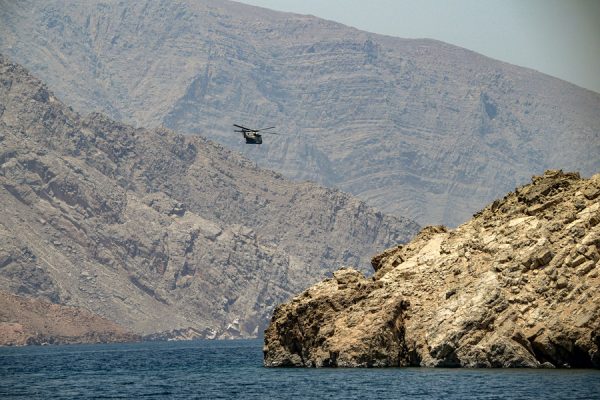
As U.S. forces assemble, Iran announced live-fire military exercises in the Strait of Hormuz and temporarily closed parts of the waterway.
Iranian media stated this was for “security and navigation considerations,” lasting several hours. However, observers interpret the move as a clear warning: a U.S. attack would come at a cost to the global economy.
The Strait of Hormuz carries roughly 20 percent of global oil exports and is a critical route in international energy markets. Historically, during the Iran-Iraq War, both sides attacked oil tankers and laid mines, repeatedly disrupting shipping. But since the 1980s, Iran has never fully closed the strait, even during last year’s 12-day conflict in which Israel and the U.S. bombed Iranian nuclear facilities.
Regional allies like Turkey and Saudi Arabia have privately urged the White House to avoid military action, fearing escalation into a wider regional war.

Politics and timing: two-week window and midterm pressure
Axios notes that Washington has set a “two-cycle deadline” for Iran to submit a more concrete nuclear proposal. Notably, a similar two-cycle deadline was set by the White House on June 19 last year, after which Trump launched the “Operation Midnight Hammer” three days later.
Currently, public discussion in the U.S. about what could become the most important Middle East military action in a decade is relatively limited. Congressional and media attention is fragmented, concentrating decision-making largely in the hands of the president.
For Republicans, a war could shift the political climate ahead of the midterms. A protracted or costly conflict could turn Trump into a “lame-duck president,” whereas a swift victory could bolster his image as a strong, decisive leader.
Overall, while there are no signs of a diplomatic breakthrough, military preparations continue to escalate. There is no evidence that a breakthrough is imminent, but mounting signs suggest that war could be imminent.